
Local service guide
Roof cleaning and repair in Halifax, NS
Roof cleaning and repair in Halifax starts with a clear scope: ask a roofer to assess leaks or visible damage before approving cleaning, then compare written quotes for the same work. Settle roof access, cleaning methods, washwater handling and drainage changes before booking. Halifax Water identifies street catchbasins as part of the stormwater system and reserves them for rainwater runoff. [1]
Choose the work before comparing quotes
Send photographs taken from the ground and describe what prompted the job: roof growth, debris, a ceiling stain, missing material or overflowing gutters. Include the roof material and approximate age if you know them. Mention previous repairs and identify where you first noticed water.
For a leak or visible damage, request an assessment and repair proposal before approving a wash. Ask the roofer to photograph the suspected defect and explain the proposed work. Keep cleaning as a separate decision so you can approve urgent repairs without committing to the whole package.
For cleaning, ask the provider to name the method, product and surfaces they intend to treat. Request the roof manufacturer's cleaning instructions and an explanation of how the proposed method follows them. Agree on the expected appearance at completion and whether the price includes a return visit.
Get a complete written price
Request a property-specific quote with the roof areas, access equipment, debris removal, gutter work, washwater handling and cleanup listed. Ask for a total that states taxes and exclusions. Compare the included tasks before comparing the final amounts.
For repairs, ask the contractor to identify the location, materials and extent of work. Have them distinguish temporary weather protection from the completed repair. Agree that the crew will provide photographs and a written price for additional damage before you authorize extra work.
Request proof of liability insurance and ask whether the coverage includes the proposed cleaning or roofing work. Identify the business responsible for each task if a cleaner and roofer share the job. Put payment stages, cancellation terms and any workmanship warranty in writing.
Discuss roof access and weather
Ask where the crew will place ladders, equipment and any roof anchors, and how they will protect entrances below. Request an explanation of the fall-protection arrangements for your roof rather than accepting a general assurance about safety.
Nova Scotia's published unofficial consolidation, amended through September 1, 2025, sets a general fall-protection threshold of three metres and covers specified hazards at lower heights. It also directs readers to check for subsequent amendments. Ask the contractor to confirm the requirements that apply when your work takes place. [3]
Agree on weather postponements before paying a deposit: who will contact you, how the crew will protect unfinished work and how the provider will reschedule. In the same provincial consolidation, the fall-protection procedure and plan provisions include consideration of weather conditions. [3]
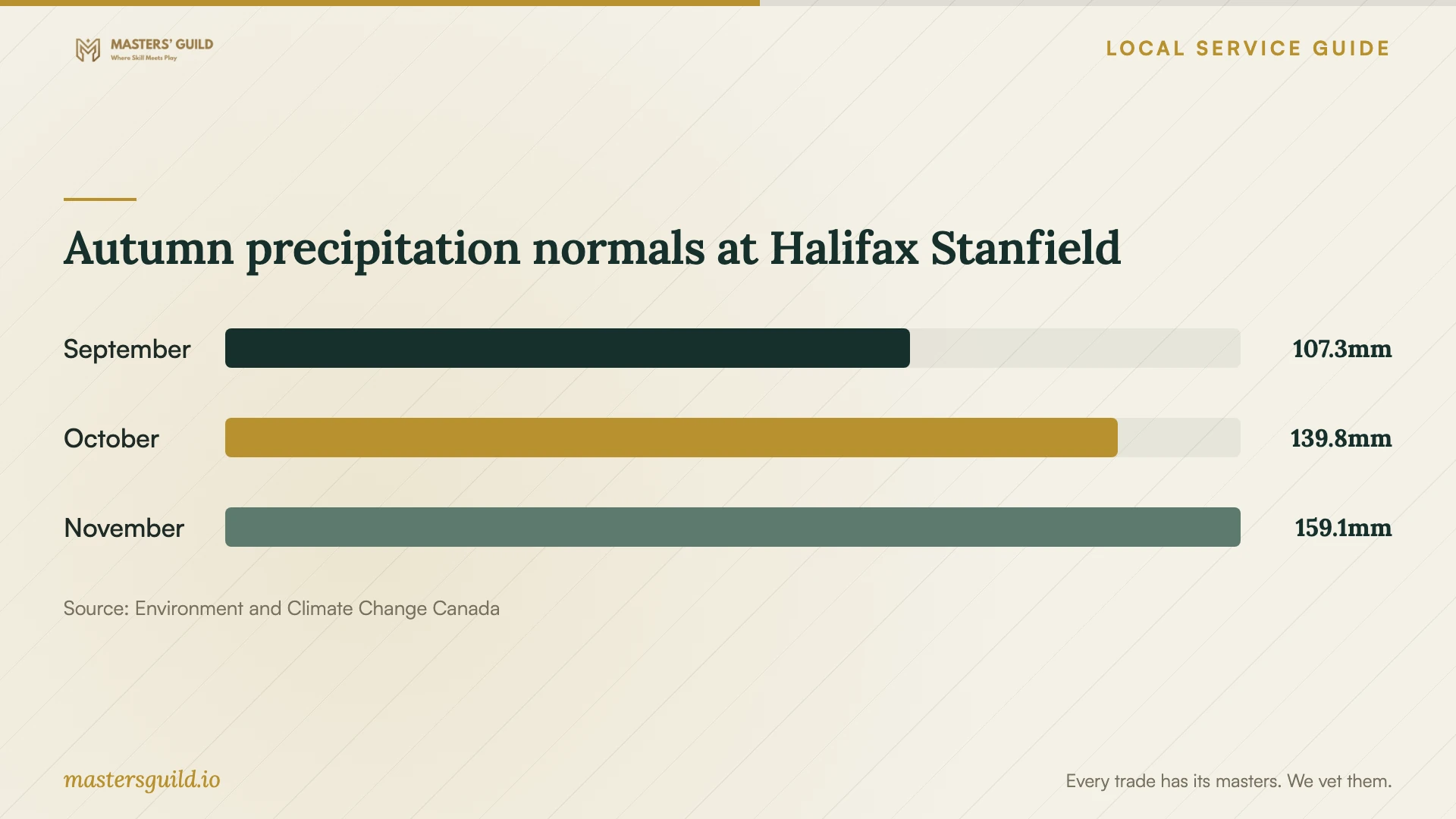
Use the airport climate chart for seasonal context. Environment and Climate Change Canada reports September, October and November precipitation normals of 107.3, 139.8 and 159.1 mm at Halifax Stanfield for 1991 to 2020. Check the appointment forecast and the contractor's working requirements before confirming the date. [4]
Prepare the property and check completion
Agree on water access, parking and entry through gates. Move vehicles and outdoor belongings from the agreed work zone. Tell the provider about rain barrels, planted areas and downspouts that disappear underground. Request instructions about windows, pets and use of entrances during treatment.
At completion, request photographs of treated areas and repairs. Compare the invoice with the approved scope, including gutter clearing and waste removal. Ask the contractor to identify inaccessible areas and record unfinished work or follow-up visits before you settle the final payment.
Autumn precipitation normals at Halifax Stanfield
Local details that affect your job
Resolve washwater disposal before treatment
Halifax Water identifies street catchbasins as part of the stormwater system, reserved for rainwater runoff. Ask the cleaner to trace where rinse water will travel and explain collection and disposal before applying products. Seek guidance from the utility's Pollution Prevention team if the discharge arrangement remains unclear. Its general guidance provides no approval for a particular roof-cleaning product or disposal route. [1]
Trace buried downspouts before drainage changes
Halifax Water warns that a downspout entering the ground or foundation may connect improperly to wastewater. Ask the contractor to establish its destination before reconnection or relocation. The utility directs downspouts onto the property and advises keeping discharge away from foundations, avoiding flooding neighbouring properties and preventing icing on roads or sidewalks. Discuss uncertain connections with the utility before changing them. [2]
Choose your next step
| Your concern | Arrange first | Ask before approval |
|---|---|---|
| Roof growth or staining | Cleaning assessment | Which method and product will you use, and how will you handle washwater? |
| Leak or visible damage | Roofing assessment | Can you photograph the defect and distinguish temporary protection from the completed repair? |
| Overflowing gutter | Gutter and outlet inspection | Does the scope include clearing, repairs and checking the discharge route? |
| Downspout enters the ground | Drainage connection check | Where does it drain? Halifax Water warns that buried downspouts may connect improperly to wastewater. |
Your hiring checklist
- Send ground-level photographs and describe leaks, roof damage or drainage concerns.
- Separate cleaning, repairs and gutter work in the written scope.
- Request the product name, cleaning method and roof manufacturer's instructions.
- Agree on washwater collection and disposal before treatment.
- Establish where buried downspouts drain before approving changes.
- Discuss access equipment, fall protection and applicable training.
- Confirm insurance, total price, payment stages and weather postponement terms.
- Request completion photographs and a written list of follow-up work.
Frequently Asked Questions
How much should I budget?
Request a property-specific written quote. Ask bidders to separate cleaning, repairs, access equipment, gutters and disposal, and state the total with taxes. Compare offers after checking that they cover the same roof areas and tasks. Ask how the contractor will price additional work discovered during the job.
Can the cleaner send rinse water into a street drain?
Require a washwater plan before work starts. Halifax Water says street catchbasins belong to the stormwater system and are only for rainwater runoff. Ask its Pollution Prevention team about an uncertain discharge arrangement before approving treatment. [1]
What training information should I request?
Ask for applicable fall-protection training records and confirmation of the requirements for your job. Nova Scotia's unofficial consolidation, amended through September 1, 2025, specifies training before covered work, renewal at least every three years and workplace availability of training certificates or cards. The publication advises checking for subsequent amendments. [3]
Should I combine downspout changes with roof cleaning?
Request a separate drainage scope and establish the outlet before approval. Halifax Water prohibits stormwater connections to wastewater and warns against discharge that floods properties or causes road and sidewalk icing. Ask the cleaner to address chemical washwater disposal separately from ordinary rainwater drainage. [1] [2]
Sources and scope
This guide combines the sources below with practical planning guidance. Figures apply to the stated geography and period; request a written quote for your property.