
Local service guide
Pest Control Services in Halifax, NS
Arrange Pest Control in Halifax by asking for pest identification, a written treatment scope, preparation instructions, and follow-up terms before accepting a quote. For commercial or restricted pesticide applications, check both the worker’s certification and the company’s Business Operator certification. Nova Scotia requires these credentials; ask a separate wildlife specialist about suspected bats before anyone seals an occupied entrance. [1] [2] [3]
Start with identification and an inspection scope
Describe what you have seen, where you saw it, and when you first noticed it. Send clear photographs if you can take them without approaching a nest or handling an animal. Mention affected rooms, sounds in walls or the attic, and any treatment you have tried. Ask the provider whether photographs will support an initial assessment or whether they need an inspection before proposing treatment.
Ask what the inspection covers and whether you must pay for it if you decline treatment. For an attic or wall complaint, request identification before authorizing pesticide work or entry-point sealing. If you share walls or common spaces, tell the provider and arrange access with the other owner or property manager before agreeing to work outside your own space.
Check Nova Scotia pesticide credentials
Nova Scotia requires certification for anyone using commercial or restricted class pesticides. Businesses selling an application service for those products also need Business Operator certification. Ask for the name of the person attending, their certificate details, and the business certificate before pesticide treatment begins. [1] [2]
Check expiry dates on both documents. The province lists applicator certificates as valid for five years and Business Operator certificates as valid for one year. Its Business Operator page provides a link to the certified operator list. Use that route to check the business, and direct unresolved credential questions to Nova Scotia Environment and Climate Change. [1] [2]
Ask the provider to explain which credentials apply to your proposed work, including the treatment method and certificate class. Request proof of liability insurance as a separate hiring check. Keep copies of the quote, credential details, treatment instructions, and invoice together so you can refer to the agreed scope during follow-up.
Compare the complete treatment price
Request a written total for your property. Ask the provider to separate inspection, treatment, monitoring, return visits, entry-point repairs, and cleanup. Confirm taxes, travel charges, and any access charges in the total. If the provider proposes a recurring plan, ask for its visit schedule, cancellation terms, and the work included at each visit.
Ask what happens if you see activity after treatment: when to report it, how the provider will assess it, and whether another visit costs extra. Get any guarantee in writing, including its duration, exclusions, and homeowner obligations. Compare those terms alongside the initial price before choosing an offer.
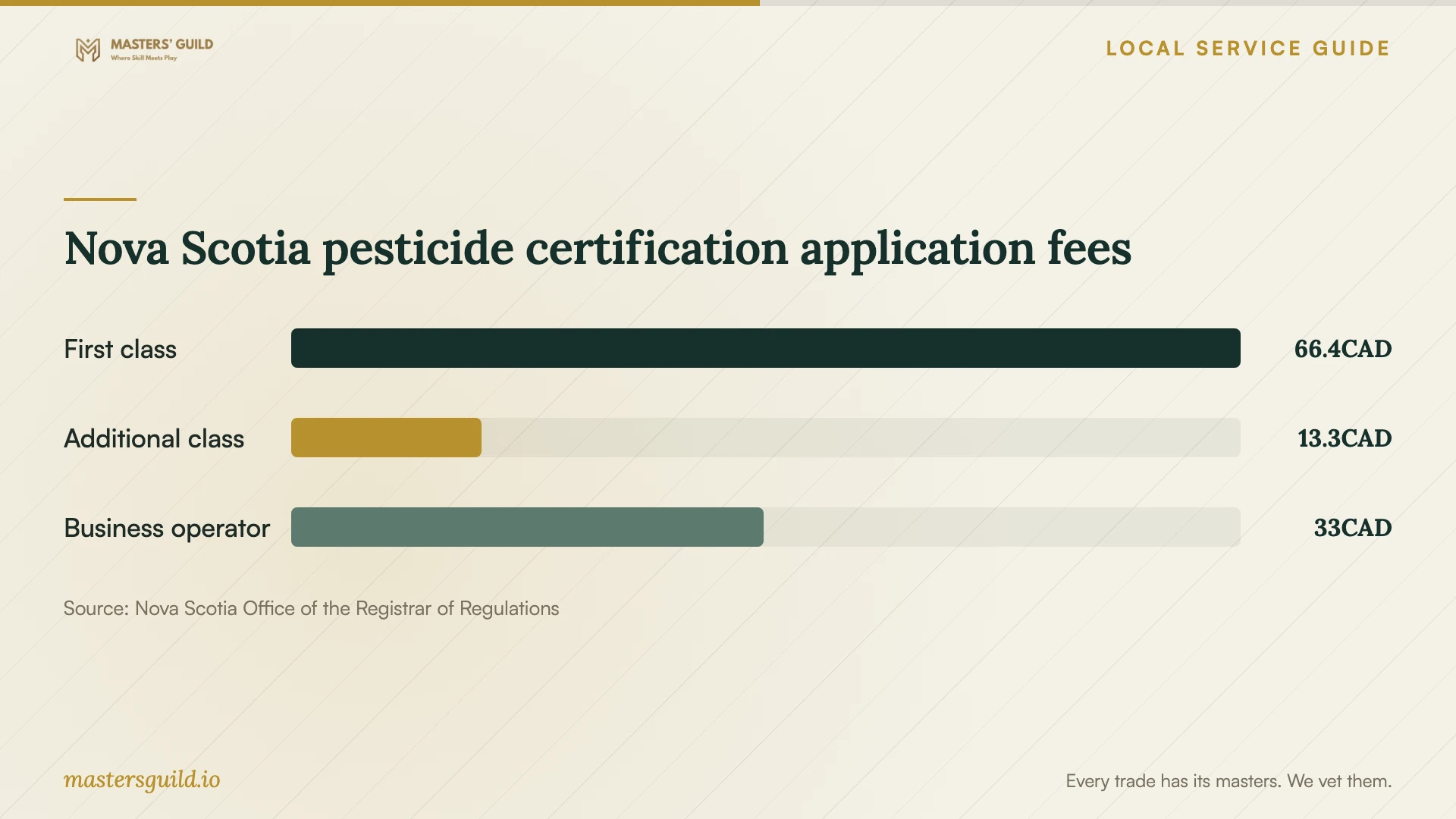
The provincial certification fees shown in the chart are administrative charges paid by certificate applicants. They are not household treatment prices. Use them only to understand the distinction between an individual certificate, an additional certificate class, and a business certificate; request a property-specific quote for the work itself. [4]
Prepare the home and agree on follow-up
Get preparation instructions for the proposed method before you move furniture, empty cupboards, wash belongings, or discard possessions. Ask which rooms the technician needs to enter and whether they need access to the attic, basement, or exterior. Tell the provider about children, pets, aquariums, and any household needs that could affect preparation or temporary relocation.
Request written instructions on leaving and re-entering treated areas, cleaning afterwards, and avoiding interference with traps or monitoring equipment. Confirm who will remove equipment and complete any agreed repairs. At the end of the visit, ask the technician to record what they treated, what you should monitor, and the date or trigger for the next assessment.
Nova Scotia pesticide certification application fees
Local details that affect your job
Use the provincial operator list for a business check
For a Halifax pesticide application, use Nova Scotia’s Business Operator page to reach its certified business list. The province requires both business certification and individual certification for employees who use commercial or restricted products. Check the proposed worker as well as the company, and compare each expiry date with your treatment date because the two certificates have different validity periods. [1] [2]
Confirm bat exclusion timing before sealing
Nova Scotia’s wildlife guidance states that bats have complete legal protection and cannot be killed without a permit. It also warns that one-way exclusion doors can leave flightless young trapped inside. For suspected attic bats, ask a wildlife specialist to establish occupancy and a suitable exclusion window before authorizing sealing. Have them explain how they will confirm that bats have left before closing the final entrance. [3]
Choose the next step for your situation
| Situation | Next step | Confirm before agreeing |
|---|---|---|
| You cannot identify the pest | Request an identification assessment | Inspection scope, fee, and whether treatment needs a separate quote |
| The provider proposes commercial or restricted pesticides | Check worker and business certification | Names, applicable credentials, and expiry dates |
| You suspect bats in the attic | Request a wildlife exclusion assessment | Protected-species requirements and timing around flightless young |
| You are comparing a single visit with a recurring plan | Request written scopes for both options | Visit schedule, return charges, cancellation terms, and repairs |
Your hiring checklist
- Record sightings, affected rooms, photographs, and previous treatment attempts.
- Confirm the inspection charge and what the provider will inspect.
- Request applicable worker and business certificate details, plus proof of insurance.
- Get an itemized total with taxes, repairs, cleanup, and return visits addressed.
- Read preparation, departure, re-entry, and cleaning instructions before booking.
- Agree on how to report continuing activity and who pays for reassessment.
- For suspected bats, confirm identification and exclusion timing before sealing.
Frequently Asked Questions
Does a pest control company need certification in Nova Scotia?
A business selling the service of applying commercial or restricted pesticides needs Business Operator certification. Employees who use those products must also hold certification. Ask which requirements apply to the proposed method and check both the business and the attending worker. [1] [2]
Can I apply a domestic pesticide on my own property?
Nova Scotia says homeowners do not need this pesticide certificate to apply domestic class pesticides on their own property. That exemption concerns certification. Before choosing DIY treatment, confirm the pest identification and read the product’s instructions and restrictions. [1]
Can a contractor seal an opening used by bats?
Arrange an exclusion assessment before sealing. Provincial guidance warns against using one-way doors while young bats cannot fly because the young can remain trapped inside. Ask the specialist to explain the timing and how they will check that the building is clear. [3]
What should a treatment quote include?
Ask for the identified pest, areas covered, method, preparation requirements, total price, and follow-up terms. Have the provider specify whether sealing, cleanup, monitoring equipment, and additional visits form part of that price.
Sources and scope
This guide combines the sources below with practical planning guidance. Figures apply to the stated geography and period; request a written quote for your property.