
Local service guide
Lighting Installation in Halifax: Hiring and Planning
For Lighting Installation in Halifax, hire a construction electrician and ask them to identify whether your job qualifies for a permit exemption before agreeing to the scope. Nova Scotia exempts dwelling light-fixture replacements from electrical permits only when a construction electrician performs the work and keeps a record. For added lights or changed wiring, have the contractor confirm the permit and inspection requirements for your exact plan. [1]
Define the job before comparing quotes
Start with a room sketch showing existing lights, proposed locations and switches. Mark which fixtures you want to replace and which locations need new lighting. Tell the electrician whether you want a brighter work surface, softer room lighting or better control from a doorway.
Ask the electrician to review the existing box, fixture weight, ceiling access and proposed wiring route before you buy the fittings. Send product specifications and photos taken from floor level. For a pendant, include the intended position of the table or island and your preferred hanging height.
Request a written quote that separates fixture supply, electrical work, controls, permit or inspection charges where applicable, and ceiling repairs. Identify who removes packaging and old fixtures. Agree on how the contractor will price additional work if they discover a problem after removing the existing light.
Check credentials and the permit decision
Ask who will perform the work and request their construction electrician qualification details. Nova Scotia’s Electrical Code Regulations define a construction electrician through a valid certificate of qualification or a recognized qualification from another jurisdiction. The regulations restrict electrical permits to qualifying electrical contractors. [1]
For a dwelling fixture replacement, ask the electrician to confirm that the work falls within section 12(c) and that they will maintain the required record. That exemption does not give a homeowner permission to perform the replacement themselves. [1]
Avoid deciding permit requirements from fixture count alone. The regulations also contain a conditional exemption for installing one branch circuit within specified ratings and locations. Ask the contractor to explain which provision applies to your proposed wiring, or whether they will obtain a permit. [1]
Choose fixtures around how you use the room
Use a mix of general, task, accent and decorative lighting where those functions matter. Natural Resources Canada advises against relying on recessed lights for all lighting layers. Its design guide recommends separate controls for different layers and task lighting for kitchen preparation areas. [4]
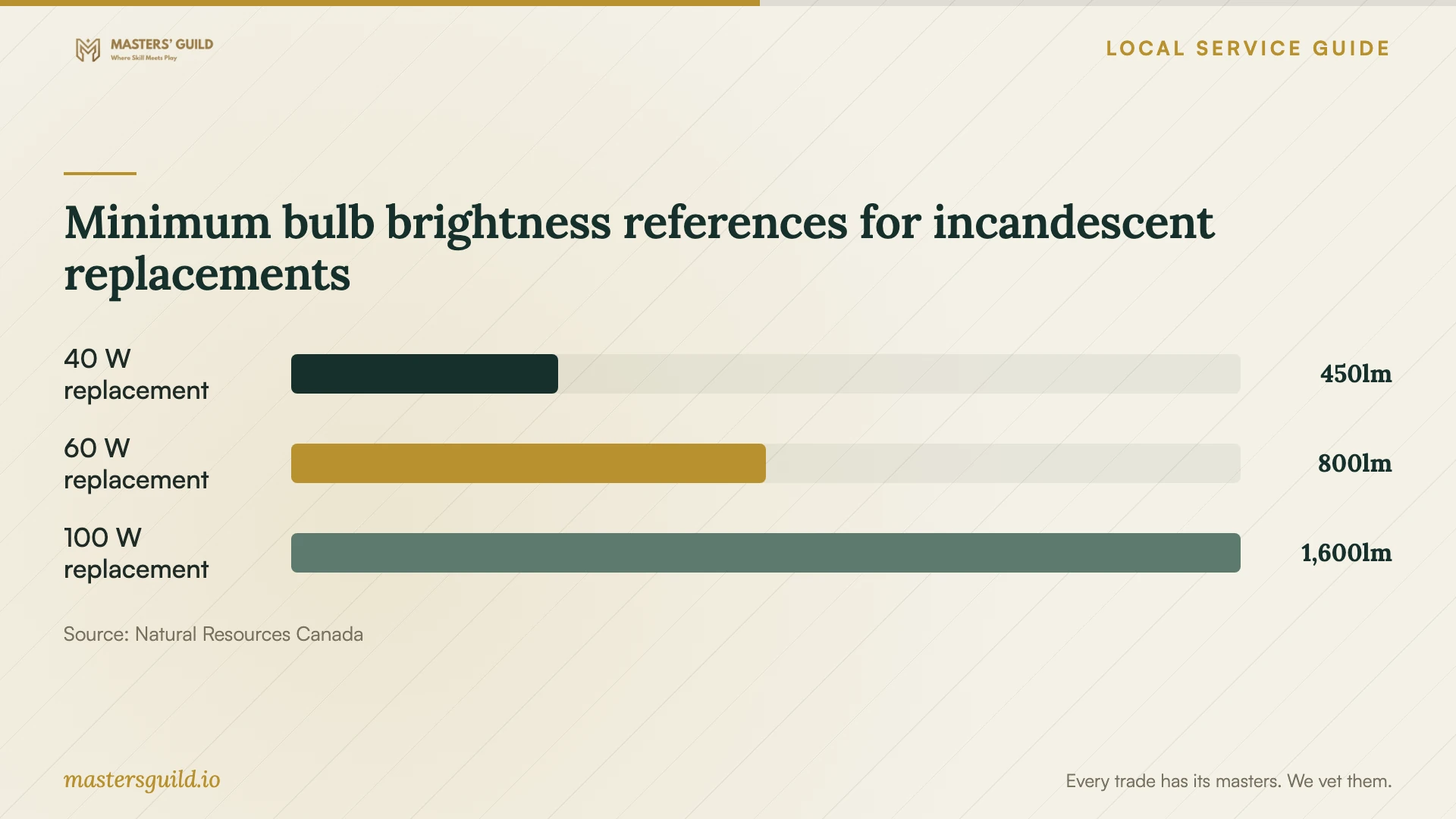
Write down the brightness and colour you want before comparing products. Natural Resources Canada uses 800 lumens as the minimum brightness reference for replacing a traditional 60-watt incandescent bulb. Lower Kelvin values describe warmer, more yellow light; higher values describe cooler, bluer light. [3]
Ask the electrician to confirm compatibility among the selected lamps, fixtures and dimmers. For integrated lighting, ask how you would replace a failed component. Try a sample light in the room before committing to matching fittings throughout the home.
Confirm equipment approval before ordering imported or decorative fixtures. Nova Scotia requires electrical equipment certified by a certification organization acceptable to the Chief Inspector. For deck lighting, Natural Resources Canada advises selecting fixtures approved for wet locations and controlling glare. [1] [4]
Arrange access, inspections and completion
For permitted work, ask the contractor to include inspection stages in the schedule. Nova Scotia Power says the project scope determines the type and number of inspections. Its inspectors require a rough-in inspection before anyone conceals wiring, and the contractor arranges a final inspection after completing the wiring. [2]
Before the appointment, clear furniture beneath the work area and discuss access to the electrical panel. Agree on the expected power interruption and whether anyone needs access to an attic or another room. Coordinate ceiling patching and painting with the electrician’s inspection plan.
At handover, operate each switch and dimmer with the installer. Check the agreed fixture positions and ask them to explain any maintenance instructions. For permitted work, request the final inspection report; the provincial regulations require the inspection department to issue one after the final inspection. [1]
Minimum bulb brightness references for incandescent replacements
Local details that affect your job
Nova Scotia’s replacement exemption affects who you hire
In Halifax, the provincial exemption for replacing light fixtures in a dwelling depends on a construction electrician doing the work and maintaining a record. Ask for confirmation of that arrangement when booking a replacement. Do not treat a contractor’s statement that no permit is needed as a substitute for checking who will perform the work. [1]
Resolve inspection timing before closing the ceiling
Nova Scotia Power’s inspection process requires inspection before wiring is concealed with boarding, insulation or other coverings. If your lighting plan involves opening a ceiling, ask the electrical contractor to coordinate the rough-in stage before booking the ceiling repair. For wiring-permit or inspection questions, its Wiring Permit Contact Centre number is 1-800-464-1520. [2]
Match the scope to the next step
| Your plan | Decision to resolve | Ask the electrician |
|---|---|---|
| Replace a dwelling light fixture | The provincial exemption requires a construction electrician and a work record. | Will you confirm the exemption and keep the required record? |
| Add recessed lights or move wiring | Confirm the permit decision and any inspection before concealing wiring. | Which inspection stages must happen before ceiling repairs? |
| Improve kitchen work lighting | Consider task lighting alongside general lighting and separate controls. | Can you quote the preparation-area lights and controls separately? |
| Install deck lighting | Select wet-location-approved fixtures and address glare. | Are these fixtures suitable for this location and mounting position? |
Your hiring checklist
- Sketch existing and proposed fixture locations and switch positions.
- Send fixture specifications, room photos and ceiling-height measurements.
- Request the construction electrician’s qualification details.
- Ask the contractor to document the permit or exemption decision.
- Compare quotes using the same fixture supply and repair responsibilities.
- Confirm lamp, fixture and dimmer compatibility before purchasing.
- Coordinate any required inspection before ceiling repairs.
- Test controls at handover and collect applicable inspection paperwork.
Frequently Asked Questions
Does replacing a ceiling light require an electrical permit?
Nova Scotia exempts light-fixture replacements in dwelling units when a construction electrician performs the work and maintains a record for inspection. Ask the electrician to confirm that your scope qualifies, especially if you also want changed wiring or additional lights. [1]
Can I finish the ceiling before the electrical inspection?
For wiring that requires inspection, Nova Scotia Power requires the rough-in inspection before anyone conceals it with boarding, insulation or other coverings. Have the contractor confirm the inspection schedule before arranging repairs. [2]
How much should I budget for installation?
Get a written quote for your actual scope. Specify fixture supply, wiring changes, controls, access arrangements, applicable permit or inspection charges, and ceiling repairs. Ask the contractor to explain any minimum charge and how they will approve additional work.
How do I choose replacement bulb brightness?
Compare lumens. Natural Resources Canada lists minimum brightness references of 450 lumens for a traditional 40-watt incandescent bulb, 800 for 60 watts and 1,600 for 100 watts. Use those as starting points, then consider the fixture and where you need the light. [3]
Sources and scope
This guide combines the sources below with practical planning guidance. Figures apply to the stated geography and period; request a written quote for your property.