
Local service guide
Kitchen Remodeling in Halifax: Plan and Hire
For Kitchen Remodeling in Halifax, hire around a written scope: identify what you will keep, which fixtures you will move and who will coordinate the trades. Ask each contractor to name the electrician, explain permit responsibilities and include debris removal in the quote. Nova Scotia Power requires a construction electrician for electrical installations, while HRM requires construction and demolition debris disposal at licensed facilities within municipal boundaries. [1] [2]
Define the kitchen you want before comparing contractors
Start with the problems you want to solve: awkward storage, limited preparation space, worn finishes or an appliance arrangement that interrupts cooking. Mark the cabinets, sink, range and refrigerator you want to retain or move. Ask bidders to price an alternative that keeps existing locations if you have not settled the layout.
Give each bidder the same information. Include room measurements, photographs, appliance model numbers and your cabinet and countertop preferences. Identify who will supply appliances, handles, taps and lighting. Ask the contractor to check dimensions and connection requirements before you place orders.
For a wall removal or a change to the building exterior, ask the contractor to identify the design work and municipal approvals to confirm before demolition. Treat that confirmation as a planning task rather than assuming a cabinet replacement and a structural alteration follow the same process.
Compare complete quotes and set a budget
Request separate amounts for demolition, cabinetry, countertops, flooring, plumbing, electrical work, ventilation, finishing and disposal. Ask bidders to distinguish fixed selections from allowances, which are amounts set aside for items you have yet to choose. Record what happens if your selection exceeds an allowance.
Ask for a total that identifies taxes, design charges and permit responsibilities. Agree on a written change process for concealed damage or revised selections: the contractor should describe the work, price and schedule effect before you authorize it. Choose a contingency amount you can keep available without cutting essential work.
Statistics Canada tracks kitchen remodels within its Residential Renovation Price Index and includes Halifax among its surveyed metropolitan areas. The index measures price changes over time; it does not establish a dollar budget for your kitchen. Its contractor-price measure includes materials, labour, equipment, overhead and profit, but excludes value-added taxes and project design. [3]
Confirm electrical responsibilities before opening walls
Ask for the electrician’s construction-trade qualification and the proposed electrical scope. Nova Scotia Power states that electrical installations require someone holding a Certificate of Qualification in the Electrical Construction trade. Its guidance also limits who can obtain wiring permits. [1]
Some electrical work qualifies for permit exemptions under specified conditions. Have the electrician assess the whole kitchen scope, including appliance connections, lighting and outlets. Nova Scotia Power requires a construction electrician to perform the listed exempt work and maintain a record for inspection. [1]
For work requiring inspection, put the inspection stages into the construction schedule. Nova Scotia Power requires inspection before anyone conceals wiring with boarding, insulation or other covering materials. The electrical contractor arranges a final inspection when the wiring work is complete. [1]
Agree on demolition, disposal and household access
HRM requires construction and demolition debris generated within the municipality to go to a licensed construction and demolition facility within municipal boundaries. It also requires haulers to secure or tarp loads. Ask the contractor to identify the receiving facility and include hauling, disposal charges and cleanup in the scope. [2]
Before removing older materials, ask how the contractor will assess suspect materials and price any investigation. HRM’s demolition-permit guidance requires a hazardous-material assessment for properties built before 1980 within that demolition process. That passage does not establish that every kitchen strip-out requires a demolition permit or the same assessment; confirm how your proposed work fits before disturbance. [2]
Plan where workers will enter, store materials and load debris. Agree on floor protection, dust separation, daily cleanup and access to water. For a condominium, ask the property manager about renovation approvals, elevator bookings and work hours before accepting a start date.
Set a sequence and define completion
Ask the contractor for a sequence covering demolition, rough services, required inspections, wall repairs, cabinet installation, countertop measurement and final connections. Confirm which deliveries must arrive before demolition. Request an estimate of the period without a working sink or cooking area and decide how you will prepare meals.
Before signing, request proof of insurance, references for comparable kitchen work and written warranty terms. Agree on payment milestones and responsibility for subcontractor coordination. At handover, inspect doors, drawers, finishes and appliance clearances together; record remaining work and obtain the inspection records applicable to the project.
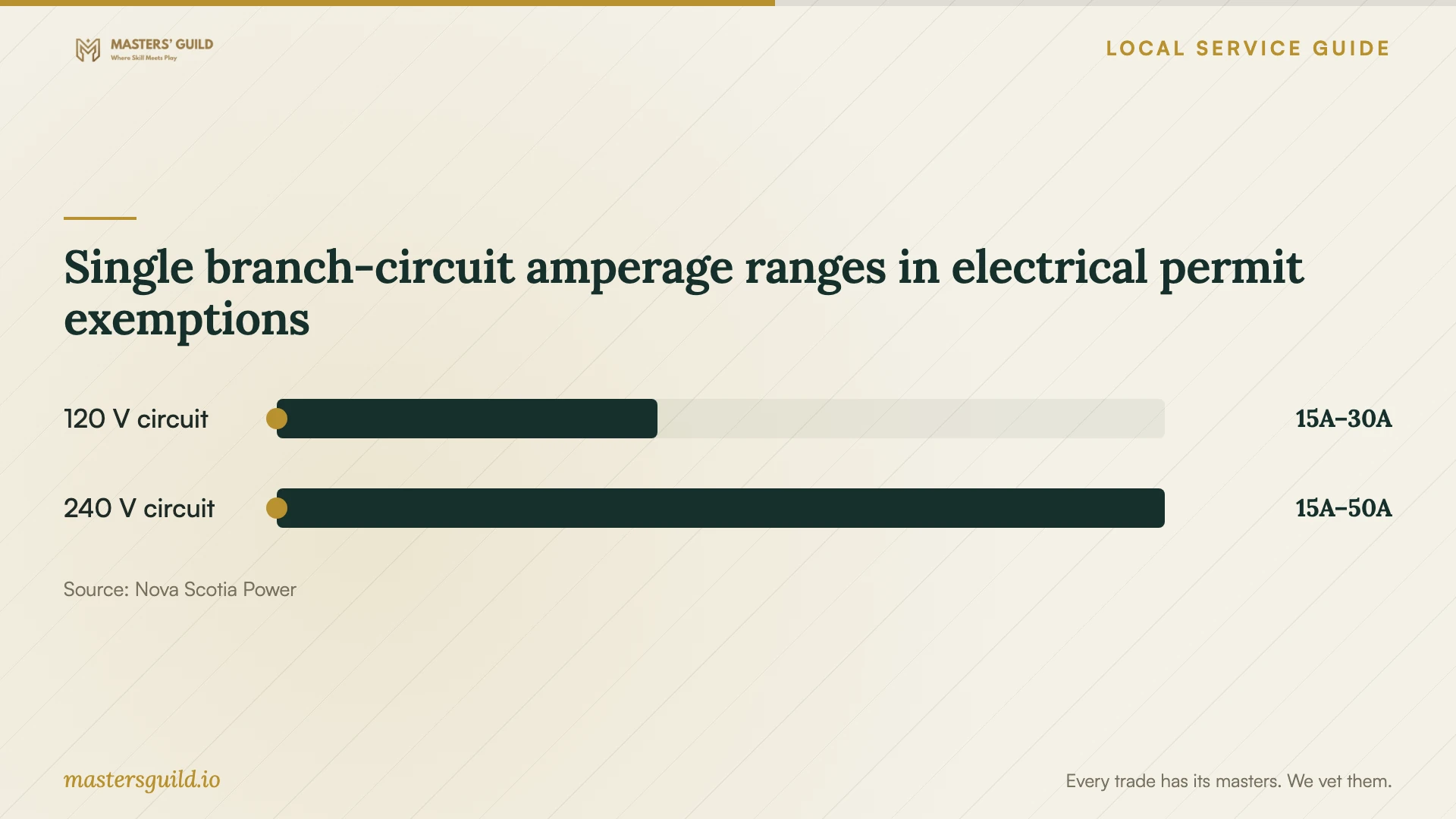
Single branch-circuit amperage ranges in electrical permit exemptions
Local details that affect your job
Electrical questions go through a separate utility process
Nova Scotia Power operates the Wiring Permit Contact Centre at 1-800-464-1520. Ask your electrician to confirm the permit decision and inspection bookings through that process. A municipal approval should not substitute for checking the electrical requirements. [1]
Debris destination belongs in the Halifax quote
HRM prohibits disposal of locally generated construction and demolition debris outside municipal boundaries and requires a licensed facility. Ask bidders to name that facility so you can compare disposal arrangements before hiring. [2]
Choose the next step for your scope
| Planned work | Question to resolve | Next step |
|---|---|---|
| Cabinet and finish refresh | Which existing items will stay? | Prepare a keep-and-replace list for matching quotes. |
| Appliance or lighting changes | Does the electrical scope qualify for an exemption? | Have the construction electrician assess the conditions and document the decision. |
| Wiring behind new wall finishes | When must the inspector attend? | Schedule required rough-in inspection before covering wiring. |
| Kitchen demolition | Who will haul the debris and where? | Specify a licensed facility within HRM and include disposal in the quote. |
Your hiring checklist
- Write down the layout, items to retain and appliance specifications.
- Give each bidder the same selections and supply responsibilities.
- Request itemized allowances, exclusions, taxes and design charges.
- Record who confirms municipal approvals and electrical requirements.
- Agree on delivery readiness, inspection stages and kitchen downtime.
- Name the debris facility and include hauling and cleanup.
- Set written change approvals, payment milestones and handover documents.
Frequently Asked Questions
Does every kitchen electrical change need a wiring permit?
Nova Scotia Power lists limited exemptions, including certain equipment replacements and single branch-circuit installations. Conditions apply, and a construction electrician must perform the listed work and retain records. Ask the electrician to assess your complete scope before work starts. [1]
Can the contractor cover the wiring before inspection?
For work requiring inspection, Nova Scotia Power requires the rough-in inspection before anyone conceals wiring with boarding, insulation or other coverings. Confirm that booking before scheduling wall closure. [1]
How should I compare kitchen renovation prices?
Compare quotes for the same layout, materials and supply responsibilities. Check allowances, exclusions, taxes, design charges and disposal. Ask each bidder to explain any missing work before choosing by total price.
Does an older kitchen require a hazardous-material assessment?
HRM’s demolition-permit guidance requires an assessment for properties built before 1980 within that process. It does not resolve the requirement for every interior kitchen renovation. Describe the proposed removal work to HRM and ask the contractor how suspect materials will be assessed before disturbance. [2]
Sources and scope
This guide combines the sources below with practical planning guidance. Figures apply to the stated geography and period; request a written quote for your property.