
Local service guide
Furniture assembly in Halifax: Plan your booking
Arrange furniture assembly in Halifax by sending the assembler your item links, quantities, instructions and access details before agreeing to a written price. Include final placement, any anchoring specified in the instructions and packaging cleanup in the agreed scope. Plan unloading, parking and old-furniture removal before choosing an appointment.
Get a quote for the complete job
Send the product name, model number or retailer link for each piece. Include the assembly instructions if you have them, plus photographs of the boxes or any work you have started. Tell the assembler whether you want them to carry boxes from the entrance, assemble in the final room or move existing furniture.
Ask for a fixed price or an hourly rate with an agreed spending limit. Confirm travel charges, minimum booking charges, parking reimbursement and applicable tax before accepting. For an hourly booking, ask whether carrying boxes, sorting parts and cleaning up count toward billed time.
Agree on a stopping point if the assembler finds damaged panels or missing hardware. Ask them to document the problem, leave the parts organized and discuss any return-visit charge before proceeding. Keep the packaging until you have checked the completed piece and resolved replacement-part questions.
Agree on anchoring and final placement
Use the manufacturer's instructions to define the work. Ask the assembler to review any anchoring steps before quoting and identify who supplies the specified hardware. If you need permission to drill into a wall, arrange that permission before the visit.
For a tall cabinet, bunk bed or heavy piece, ask how the assembler plans to handle lifting and placement. Confirm whether they will bring another worker if the instructions call for one. Avoid committing to provide lifting help unless you are comfortable with the task.
Before paying, walk through the completed work with the assembler. Check doors, drawers and moving parts together. Ask them to identify any unfinished steps and explain what you need to resolve before using the furniture. Retain the instructions and spare hardware.
Prepare the room and building access
Clear the assembly area and the route from the entrance. Share stair details, elevator dimensions and building access instructions in advance. Ask your building manager about elevator reservations, contractor access and permitted working hours before you choose the appointment.
Measure the intended location and compare it with the product's finished dimensions. Leave room to open drawers and doors. Tell the assembler about delicate flooring, agree on floor protection and choose where to stack packaging during the work.
Separate unloading from parking
Halifax permits loading-zone use for a maximum of 30 minutes while the driver loads or unloads passengers or materials. Ordinary loading zones operate from 6 a.m. to 6 p.m., Monday to Friday, unless signs specify otherwise. Designated 24-hour loading zones operate seven days a week, including weekends and holidays. Arrange a separate parking space for the assembly portion of the visit. [2]
For downtown Saturday visits, Halifax applies paid on-street parking in zones B and C from 8 a.m. to 6 p.m. Drivers must register at a pay station or through HotSpot to receive the free first hour, then pay $2 per additional hour. Ask who will cover parking and check the signs at the chosen space. [1]
Halifax limits commercial vehicles to two hours of on-street parking without moving. If the assembler will use a commercial vehicle, discuss where they will park and how they will accommodate that limit during the appointment. [1]
Decide who handles packaging and old furniture
Ask whether cleanup means stacking boxes, carrying materials to your building's collection area or hauling them away. Agree on each task and its price before the assembler starts.
Halifax requires buildings to separate garbage, recycling, organics, paper and cardboard for collection. Ask your building manager where the assembler should place each packaging material. [3]
For eligible curbside properties, Halifax allows one bulky item per garbage collection day at a single-unit home, or two per building at a property with two to six units. Each item must weigh no more than 200 kg and measure no more than 8 ft in length. Check the old furniture against both limits before relying on collection. [3]
Buildings with more than six units do not receive municipal curbside bulky-waste collection. Contact the landlord or property manager to arrange collection before asking the assembler to move old furniture outside. [3]
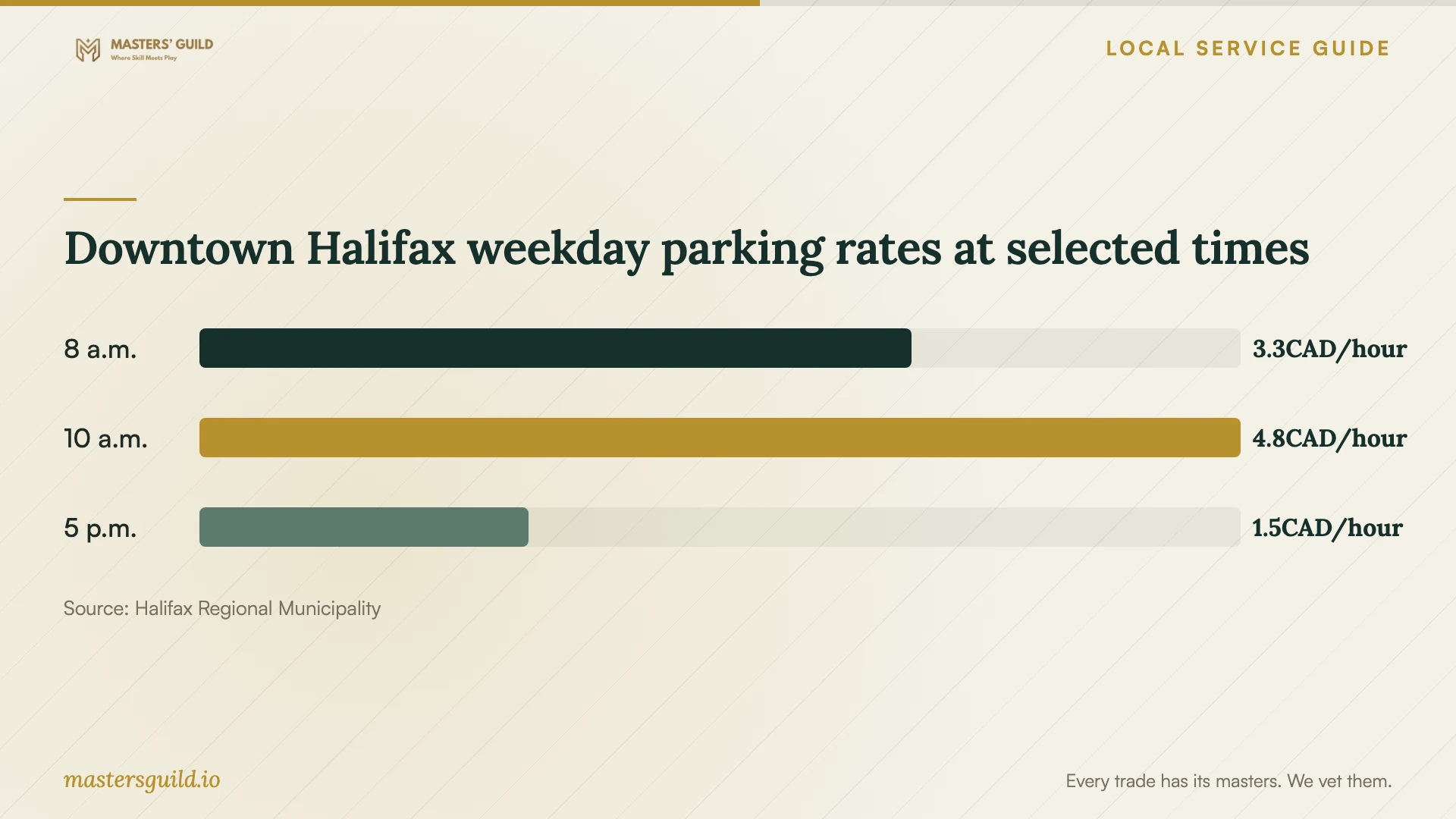
Downtown Halifax weekday parking rates at selected times
Local details that affect your job
Reserve unloading access and a parking location
Halifax limits loading-zone stays to 30 minutes during loading or unloading. Once the driver finishes unloading, remaining in the loading zone violates the rules. Give the assembler an unloading location and a separate place to park while working inside. Check the posted hours at both locations. [2]
Building size changes the furniture-removal plan
Halifax does not provide curbside bulky-waste collection to buildings with more than six units. Contact property management before booking removal with assembly. For buildings with two to six units, the municipal allowance is two bulky items for the entire building per garbage collection day, each weighing no more than 200 kg and measuring no more than 8 ft in length. Check whether another resident plans to use that allowance. [3]
Choose what to include in the booking
| Your situation | Arrange before booking |
|---|---|
| Boxes need carrying upstairs | Include carrying and stair access in the written scope. |
| Instructions specify anchoring | Confirm hardware, wall assessment and any permission to drill. |
| Downtown Saturday appointment | Check the parking zone. Zones B and C require a registered session from 8 a.m. to 6 p.m., including the free first hour. |
| Replacing furniture in a building with more than six units | Ask property management about bulky-waste collection or include agreed removal. |
| Assembly has started | Send photographs and identify missing, damaged or uncertain parts. |
Your hiring checklist
- Send item links, quantities, instructions and photographs of any partially assembled pieces.
- Confirm the price basis, spending limit, parking charges and missing-parts policy.
- Agree on carrying, anchoring, final placement and cleanup tasks.
- Arrange building access and any elevator reservation or drilling permission.
- Clear the work area and agree on floor protection.
- Identify unloading access and parking for the visit.
- Confirm where packaging and old furniture will go.
- Inspect the completed work and keep instructions and spare hardware.
Frequently Asked Questions
How much should I budget for assembly?
Request a quote for your exact models and quantities. Ask for the full scope and any minimum charge, travel, parking, cleanup and return-visit costs. Compare offers using the same item list. Agree on how much hourly work can proceed before the assembler needs your approval for additional spending.
Can the assembler park in a loading zone?
During loading or unloading, Halifax allows a maximum loading-zone stay of 30 minutes, subject to signage. Ordinary loading zones operate from 6 a.m. to 6 p.m., Monday to Friday, unless signs specify otherwise. Designated 24-hour loading zones operate seven days a week, including weekends and holidays. Arrange another space while the assembler works inside. [2]
Can I put my old dresser out for collection?
Check your property's collection arrangement and the dresser's size and weight. Halifax allows one bulky item per garbage collection day for a single-unit home and two per building for properties with two to six units. Each item must weigh no more than 200 kg and measure no more than 8 ft in length. Buildings with more than six units must arrange collection through the landlord or property manager. [3]
Sources and scope
This guide combines the sources below with practical planning guidance. Figures apply to the stated geography and period; request a written quote for your property.