
Local service guide
Electrical repairs in Halifax: Hiring and Permits
Electrical repairs in Halifax start with choosing an electrical contractor who is or employs a qualified construction electrician, agreeing on a diagnostic charge and confirming who will handle permits. Nova Scotia exempts some minor work from electrical permits only when a construction electrician completes it and keeps records. After storm damage, check whether you need utility restoration, repairs to your own service equipment, or both. [1] [2] [3]
Describe the fault before agreeing to a repair
Tell the electrician which rooms, outlets or lights have lost power, when the problem started and what you were using at the time. Mention repeated breaker trips, heat, burning smells or visible damage when arranging the visit. Avoid removing covers or touching damaged equipment to get a better photograph.
Ask for diagnosis before committing to a specific replacement. Request a written explanation of the fault, the proposed repair and any further investigation the electrician recommends. For an intermittent problem, keep a short record of when it happens and which appliances you were using.
For a power loss, check Nova Scotia Power’s Outage Centre and report the outage at 1-877-428-6004. A neighbour having power does not establish that your house wiring caused the problem: the utility says homes can use different distribution circuits, and damage can affect the equipment serving one property. [3]
Check qualifications and the permit plan
Ask the contractor to identify the construction electrician responsible for your work and provide their qualification details. Nova Scotia’s regulations define a construction electrician as someone with a valid provincial certificate of qualification or a recognized qualification from another jurisdiction. For residential work, the inspection department issues electrical permits to an electrical contractor who is or employs a construction electrician. [2]
Ask the electrician to explain whether your exact repair qualifies for a permit exemption. The regulations include specified repairs or replacements within electrical rating limits, replacement light fixtures in a dwelling and certain single branch-circuit installations. Conditions apply, including location restrictions for some categories, and the construction electrician must keep a record for inspection. [2]
Have the contractor write the permit decision into the scope. If the repair expands after diagnosis, ask them to reassess that decision before proceeding. Request proof of liability insurance and clarify who will repair any wall or ceiling openings.
Compare the diagnostic visit and repair quote
Ask each contractor to separate the initial visit from the repair authorization. Confirm the callout charge, what diagnostic time it includes, the rate for additional time and whether you must approve work beyond an agreed amount. Ask about after-hours charges before accepting an emergency appointment.
Compare quotes using the same scope: diagnosis, replacement parts, labour, permit or inspection charges where applicable, taxes, cleanup and any return visit. Ask whether the electrician will supply the devices. Nova Scotia requires approved electrical equipment, so have the electrician confirm that any homeowner-supplied replacement meets the provincial approval requirements. [2]
For work that needs an inspection, ask who books it and whether the quote covers attendance and any follow-up. Nova Scotia Power says the project scope determines the type and number of inspections. Avoid assuming that the electrician’s repair appointment and the utility’s reconnection will happen together. [1]
Prepare access and agree on completion records
Clear a safe route to the affected rooms and panel without touching damaged equipment. Tell the contractor about access restrictions and discuss how a planned power interruption would affect heating, refrigeration or medical equipment. Agree on the expected interruption before work begins.
If your repair involves open walls, coordinate the electrician and finishing crew around inspection. Nova Scotia Power requires a rough-in inspection before workers conceal wiring with insulation, boarding or other covering materials. For permitted work, the contractor must notify the inspection department when the installation is ready for final inspection. [1] [2]
At handover, ask what the electrician repaired, what they tested and whether they identified any remaining concerns. Keep the itemized invoice and request a description of permit-exempt work. For permitted work, request the permit reference and final inspection report for your property records. [2]
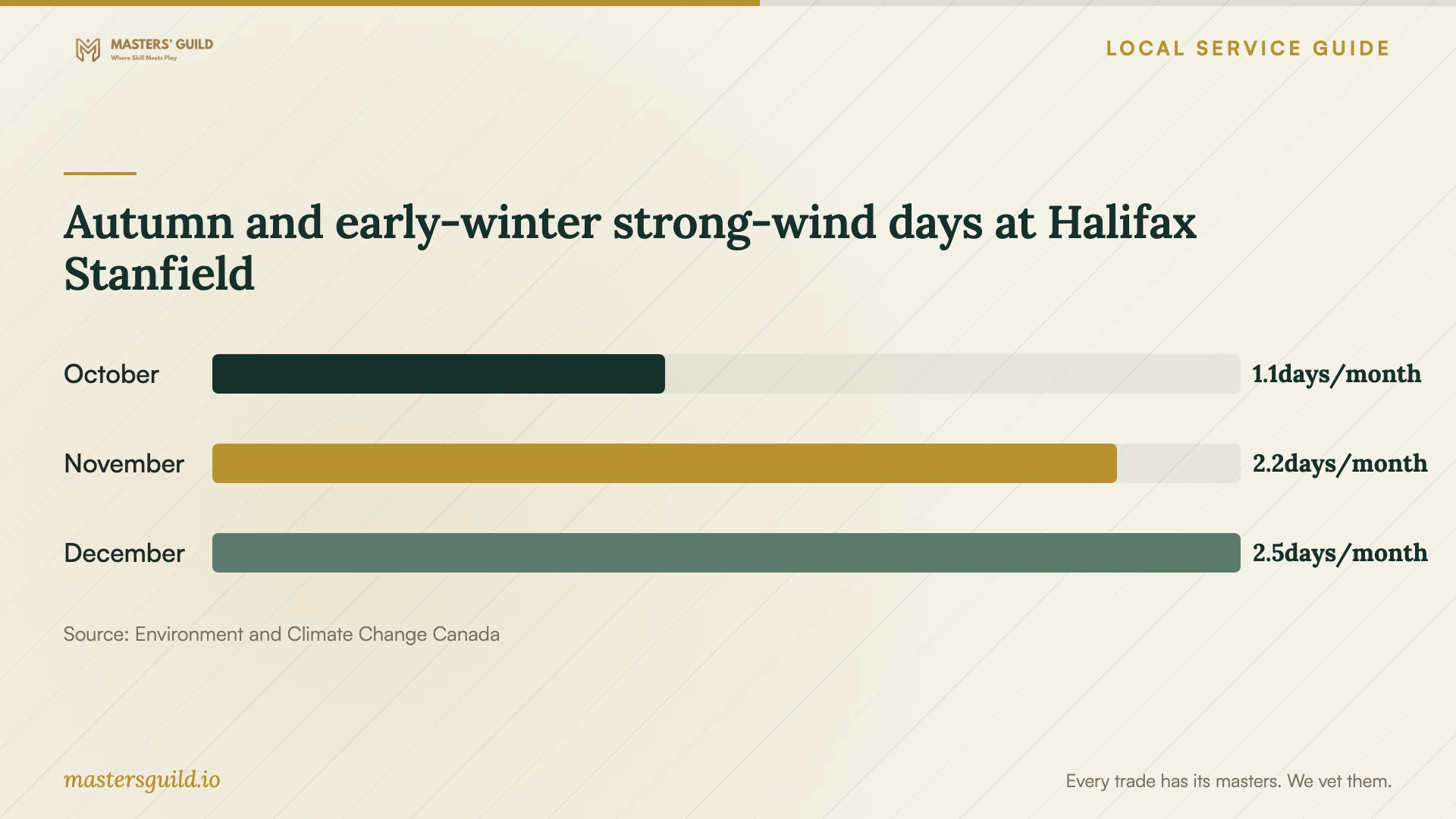
Autumn and early-winter strong-wind days at Halifax Stanfield
Local details that affect your job
Storm damage can require two separate arrangements
For a Halifax home served by Nova Scotia Power, the utility owns the meter and incoming service wire, while you own the mast and meter base. If your equipment suffers damage, arrange repairs through a certified electrician and coordinate reconnection with the utility. Nova Scotia Power says it cannot reconnect until the required repairs are complete. Treat wires as live, stay clear and report them. [3]
Use the electrical inspection contact for wiring questions
Nova Scotia Power handles wiring permits and electrical inspections through its Wiring Permit Contact Centre at 1-800-464-1520, Monday through Friday, 7 a.m. to 6 p.m. Ask your contractor to resolve permit questions there before scheduling work or closing walls. [1]
A long-disconnected property needs an extra step
If electrical service has been disconnected for more than one year, Nova Scotia Power requires a general inspection permit. Tell the electrician how long the property has been disconnected and include inspection coordination in the scope before arranging reconnection. [1]
Choose the next step for your repair
| Situation | Next step | Confirm before proceeding |
|---|---|---|
| Power loss with no clear cause | Check and report through Nova Scotia Power’s Outage Centre. | A neighbour having power does not rule out a utility-side problem. |
| Damaged meter mast or meter base | Arrange a certified electrician and coordinate utility reconnection. | These components belong to the homeowner. |
| Minor device or fixture replacement | Ask the construction electrician whether the exact work qualifies for an exemption. | The exemption requires work records and compliance with its conditions. |
| Wiring exposed during renovation | Coordinate the required rough-in inspection before covering wiring. | Keep the finishing crew’s schedule dependent on inspection. |
| Service disconnected for more than one year | Arrange an electrician for the general inspection permit process. | Include inspection coordination before reconnection. |
Your hiring checklist
- Record the affected rooms, symptoms and circumstances without opening electrical equipment.
- Identify the qualified construction electrician responsible for the work.
- Confirm the diagnostic charge and the spending limit that requires further approval.
- Get the permit decision and any inspection coordination in writing.
- Separate parts, labour, additional fees and taxes in the quote.
- Discuss access, power interruption and responsibility for wall repairs.
- Keep the invoice, repair description and applicable inspection records.
Frequently Asked Questions
Can I replace an outlet myself because no permit is needed?
The minor-work exemption does not authorize homeowner electrical work. Section 12 makes the exemption conditional on a construction electrician performing the work and keeping a record, along with the applicable rating and location conditions. [2]
Should I approach the panel if the basement has flooded?
Nova Scotia Power says not to access your electrical panel when water is in the immediate area. Stay clear and explain the flooding when reporting the problem and arranging professional help. [3]
Will the utility repair my damaged meter base?
You own the meter base and mast. Nova Scotia Power says a certified electrician must repair damaged homeowner equipment before it can reconnect power. The utility owns the meter and service wire. [3]
How should I compare prices before the electrician finds the fault?
Compare the diagnostic terms first: callout charge, included time, additional labour rate and authorization limit. After diagnosis, ask for a written repair scope and price before approving further work.
Sources and scope
This guide combines the sources below with practical planning guidance. Figures apply to the stated geography and period; request a written quote for your property.