
Local service guide
Business Plan Consulting in Halifax, NS
Hire Business Plan Consulting in Halifax by defining who will read your plan, what decision they need to make and which research or financial work you need help completing. Ask for a written scope covering the narrative, editable forecasts, assumptions and revisions. Before commissioning paid work, registered businesses in Halifax Regional Municipality can explore Halifax Partnership’s no-cost, one-on-one SmartBusiness support and advisor connections. [1]
Define the assignment before comparing consultants
Start your brief with the purpose: testing a startup idea, requesting financing, planning an expansion or evaluating a premises commitment. Identify the reader and ask that reader for their required format and financial schedules. Give the consultant those instructions alongside your deadline and available records.
Separate writing from analysis in the quote. Ask who will interview you, research customers and competitors, build the financial model and check that the numbers agree with the narrative. Request an anonymized work sample and ask the consultant to explain one assumption they challenged. Judge the explanation as well as the presentation.
Specify the handover: an editable document, a spreadsheet with working formulas, a list of research sources and a walkthrough of the assumptions. Agree on review dates, included revisions, payment milestones and charges for additional work. Include confidentiality terms and ask who else will have access to your financial records.
Check supported planning routes before paying
Halifax Partnership’s SmartBusiness team offers no-cost, one-on-one support to registered businesses across Halifax Regional Municipality. Its stated role includes connecting owners with funding, expertise, programs and advisors. Ask the team which resources fit your situation, then define any paid research or modelling work you still need. [1]
Employment Nova Scotia’s Self Employment Program offers entrepreneurial support and may provide financial assistance to eligible unemployed individuals. Applicants access an assessment through an employment service provider, such as a Nova Scotia Works Centre or ISANS. Eligibility includes personal and business-idea checks; unemployment alone does not establish eligibility. [5]
The Self Employment Program excludes people who have already started their business. If you want to pursue that route, speak with an employment service provider before launching. Ask the case manager how your proposed activities affect eligibility and what planning support you can access. [5]
Require forecasts you can explain and update
Ask the consultant to connect sales assumptions to concrete inputs: customers served, purchases per customer, prices and your capacity to deliver. Supply supplier quotes, proposed rent, staffing plans and existing sales records. Label assumptions you have not confirmed so you can see which figures need more work.
Request a cash-flow forecast that separates receiving money from making a sale and paying bills from recording expenses. Include owner pay, startup purchases and the proposed financing terms. Ask for a slower-sales scenario and a delayed-opening scenario, then discuss how much funding each would require.
At handover, change a sales assumption together and follow the effect through the spreadsheet. Ask the consultant to reconcile any differences between the plan and model. For a financing submission, confirm the recipient’s forecast requirements before accepting the final deliverables.
Build registration and premises checks into the plan
Nova Scotia directs owners with legal-structure questions to legal and accounting advisors. The province explains that structure affects liability, taxes and reporting, and that most businesses operating in Nova Scotia must register with the Registry of Joint Stock Companies, subject to listed exceptions. Ask your consultant to document the structure you and your advisors select. [4]
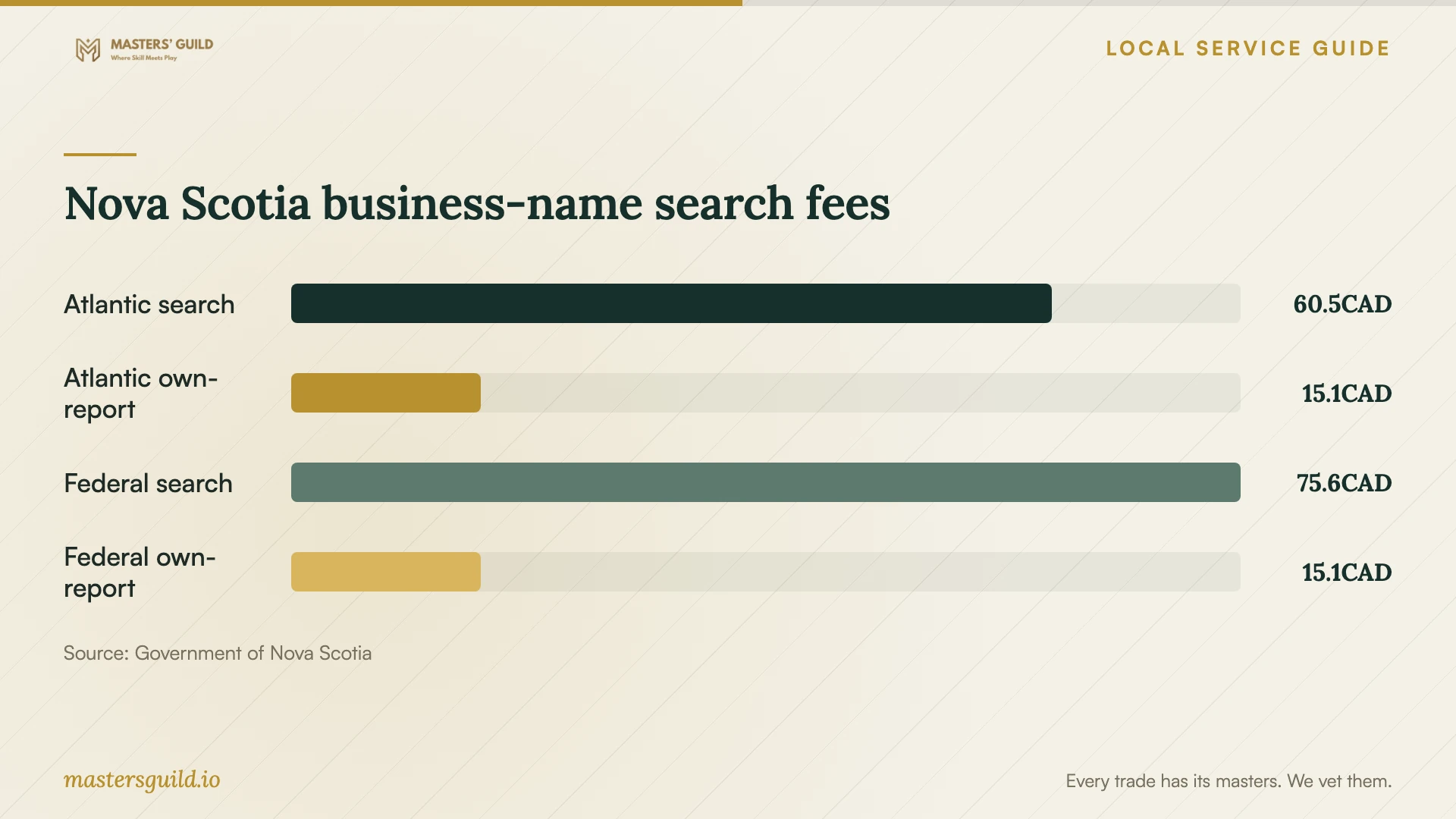
For name reservation, the province directs applicants planning to operate only in Nova Scotia to choose the Atlantic-region search. It directs applicants planning to operate beyond the Atlantic region, or using Canada or Canadian in the name, to choose the federal search. Align that choice with the expansion geography in your plan. [3]
For a shop or office, Halifax’s occupancy guidance covers changes of operator, tenant and use. The municipality explains that renovation-related occupancy permissions form part of the building permit. It also distinguishes development approval from permission to begin construction. Confirm the applicable route with municipal staff and give the consultant the resulting costs and dependencies. [2]
Compare quotes without assuming a local price
The supplied sources do not establish a Halifax consulting-fee range. Request itemized proposals and compare the work included: research, interviews, forecasts, review meetings and revisions. Ask whether the consultant will respond to the recipient’s follow-up questions and how they charge for that work.
The name-search fees shown in the chart are provincial administration costs. Budget for your applicable search separately from consulting and registration work. Nova Scotia gives applicants 90 days after name approval to register or incorporate; applicants who miss that deadline must reserve the name and pay again. [3]
Nova Scotia business-name search fees
Local details that affect your job
Registered HRM businesses can start with SmartBusiness
Halifax Partnership limits the stated no-cost, one-on-one SmartBusiness offer to registered businesses across Halifax Regional Municipality. If that describes your business, request a discussion about your goals and advisor needs before buying a broad consulting package. Ask which remaining tasks you should commission. [1]
Check commercial occupancy before fixing the launch date
Halifax requires occupancy approval for relevant changes of commercial tenant, operator or use. For renovations, the municipality includes occupancy permissions in the building permit. Commercial occupancy applications require floor-plan information such as exits, emergency lighting and washrooms. Confirm the requirements for your proposed premises before asking a consultant to finalize fit-out costs and opening cash flow. [2]
A supported startup route has a pre-launch restriction
Nova Scotia’s Self Employment Program excludes applicants who have already started their business. An employment service provider assesses eligibility and refers eligible applicants for further business-idea assessment. If you are unemployed and considering this program, arrange that assessment before proceeding with launch activities. [5]
Choose your next planning step
| Your situation | Next step | Scope to discuss |
|---|---|---|
| Registered business in HRM | Contact SmartBusiness about its no-cost support | Advisor connections and remaining paid research or modelling |
| Unemployed and considering a startup | Request a Self Employment Program eligibility assessment before starting | Available coaching and application planning |
| Commercial premises proposed | Confirm occupancy, renovation and land-use requirements with Halifax | Fit-out budget and opening dependencies |
| Financing submission planned | Obtain the recipient’s requirements before seeking quotes | Required narrative, forecasts and follow-up revisions |
| Legal structure undecided | Discuss options with legal and accounting advisors | Document the selected structure in the plan |
Your hiring checklist
- Identify the plan’s reader, purpose, required format and submission deadline.
- Collect sales records, supplier quotes, premises information and your proposed funding request.
- Ask prospective consultants to quote the same narrative, research and modelling deliverables.
- Request a work sample and an explanation of how the consultant tests assumptions.
- Agree on editable files, confidentiality, revisions, review dates and payment milestones.
- Confirm registration and premises decisions with the relevant advisors or authorities.
- Review a slower-sales scenario and a delayed-opening scenario before accepting the model.
- Complete a handover meeting in which you update assumptions and trace the financial effects.
Frequently Asked Questions
How much should I budget for a consultant?
These sources do not establish local consulting prices. Ask for a written proposal that separates research, writing, financial modelling and revisions. Compare equivalent scopes and request the price for additional meetings or recipient-requested changes.
Can I get planning support before hiring someone?
Registered HRM businesses can access no-cost SmartBusiness support and advisor connections. Eligible unemployed applicants may qualify for entrepreneurial support through Nova Scotia’s Self Employment Program. Ask the relevant team about your situation before commissioning paid work. [1] [5]
Can the consultant choose my legal structure?
Ask the consultant to coordinate the plan with your advisors. Nova Scotia recommends discussing structure-specific questions with legal and accounting advisors because the choice affects liability, taxation and reporting. [4]
Does taking over an existing shop avoid occupancy checks?
Halifax’s guidance requires occupancy approval for relevant changes of tenant, operator or use. Confirm your proposed activities with municipal staff. If you renovate, the municipality includes occupancy permissions in the building permit. [2]
Sources and scope
This guide combines the sources below with practical planning guidance. Figures apply to the stated geography and period; request a written quote for your property.