
Local service guide
Lawn Mowing in Greensboro, NC: Hiring and Scheduling
Arrange Lawn Mowing in Greensboro by asking the provider to identify your grass, agree on a cutting height, and adjust visits to growth. For a tall-fescue blend, NC State Extension says late-spring mowing may be needed every five to seven days. Request a written scope covering trimming, edging, cleanup, rain delays, and any charge for an overgrown first visit before choosing a recurring plan. [2]
Choose the schedule after identifying the grass
Ask the person quoting the job to identify the lawn’s grass and explain the proposed mowing height. NC State Extension describes cool-season grasses as strongest in spring and fall, while warm-season grasses grow best in summer and go dormant after the first heavy frost. Use that regional guidance to discuss when your provider should increase or reduce visits. [1]
For a lawn containing tall fescue, hard fescue, and Kentucky bluegrass, Extension recommends cutting often enough to remove no more than one-third of the grass height. Its calendar says this may mean mowing every five to seven days in late spring. Ask how the provider handles extra growth between visits rather than committing to biweekly service throughout the growing season. [2]
Keep a way to change the schedule in writing. Agree who checks growth, who approves an additional visit, and how the provider bills a skipped visit. Ask for the same flexibility during slow growth, with a clear notice period for schedule changes.
Compare quotes for the same scope
Request a property-specific quote that separates the first visit from recurring maintenance. Give each provider the same description: areas to mow, current grass height, slopes, narrow gates, obstacles, and any sections you want left alone. Send photographs of access points and overgrowth, and ask whether the provider needs a site visit before confirming the price.
Ask the provider to list mowing, trimming around obstacles, edging along pavement, and cleanup as included or excluded. Specify whether cleanup means blowing clippings off paved areas, collecting heavy clippings, or removing material from the property. Keep leaf removal, aeration, seeding, fertilizer, and weed treatment as separate scope items unless you want them included.
Before accepting, request proof of liability insurance and ask how the provider handles property damage. Confirm payment timing, cancellation terms, access arrangements, and who answers service questions. For a seasonal agreement, ask how the provider calculates the bill when weather or growth changes the number of visits.
Plan for rain delays and overgrown grass
Agree that the provider will assess wet conditions before mowing. Extension recommends mowing dry grass on dry soil and keeping mower blades sharp. Ask how the crew communicates a postponement and where your property falls in the rescheduled route. [1]
For an overdue lawn, request a recovery plan rather than asking the crew to reach the maintenance height in one pass. Extension describes raising the mower for an initial cut after excessive growth, then returning to the proper height in a day or two. Ask whether the quote includes a return visit and collection of heavy clippings. [1]
Leave routine clippings on the lawn when they can decompose without covering the grass. Extension recommends removing clippings when delayed mowing leaves enough material to shade or smother the turf. Tell the provider where you want collected material taken and confirm the charge before work begins. [1]
Coordinate mowing with fall lawn work
Tell the mowing provider about planned seeding or aeration before either crew arrives. NC State’s Piedmont planting table places the optimum tall-fescue seeding window from September 1 to October 1 and warns that seeding beyond recommended dates increases the chance of failure. For work considered after that window, discuss timing and establishment care before adding seed to a mowing package. [1]
After seeding, agree on the first cut based on growth rather than a prepaid visit date. Extension advises beginning mowing when new grass reaches 50 percent above the desired height, giving the example of cutting tall fescue to 3 inches once it reaches 4.5 inches. Have the mowing and seeding providers agree on access and clipping handling. [1]
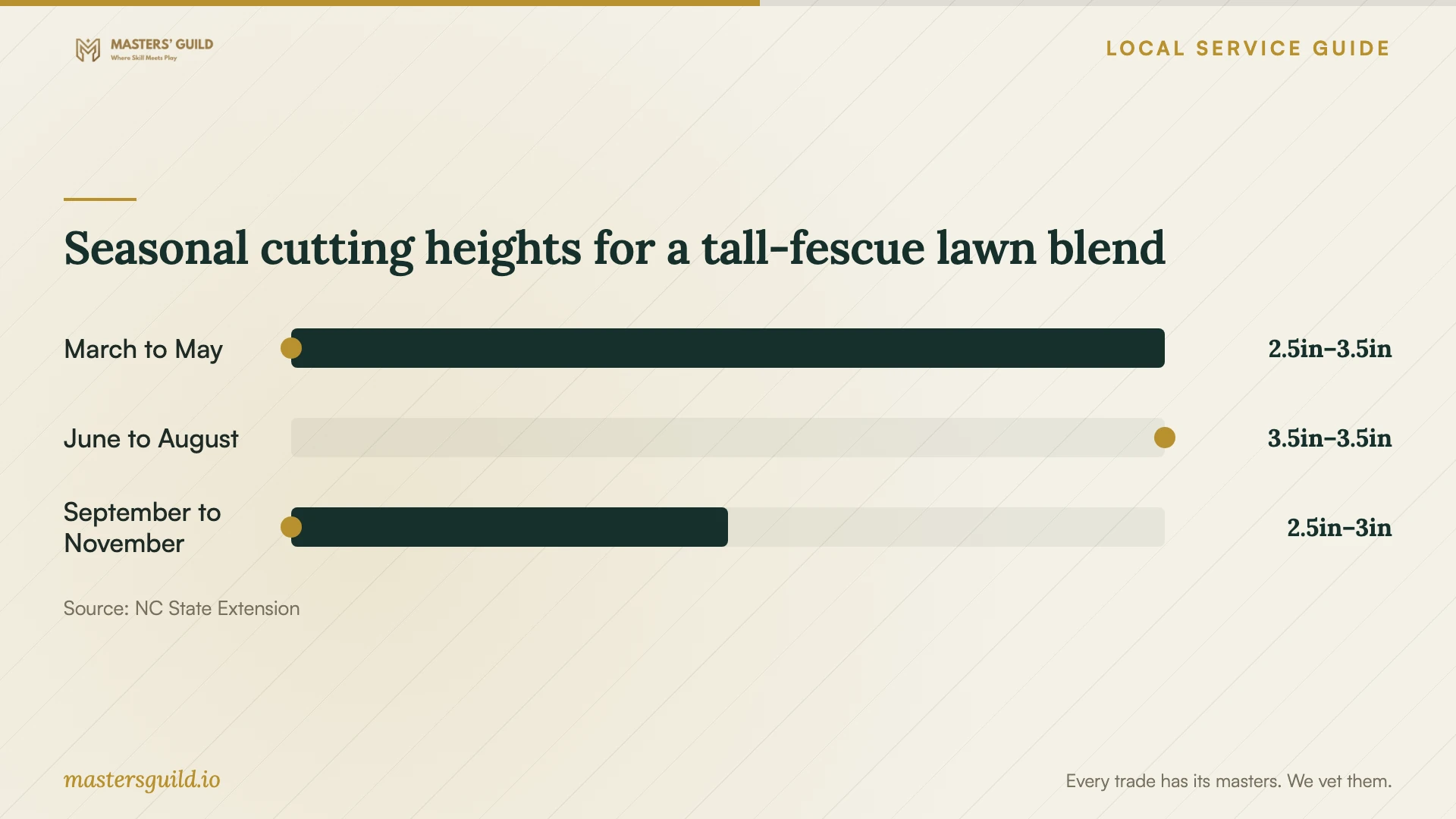
Seasonal cutting heights for a tall-fescue lawn blend
Local details that affect your job
Apply Piedmont guidance to spring scheduling
For a Greensboro lawn with a tall-fescue blend, use NC State’s regional guidance to question a fixed biweekly spring plan. The blend calendar allows for five-to-seven-day mowing in late spring. Ask for a shorter interval during that growth period and permission to reduce visits when growth slows. [1] [2]
Check the Piedmont seeding window before booking fall extras
NC State lists September 1 through October 1 as the optimum Piedmont tall-fescue planting window. If you are arranging work in mid-October, ask the provider to address the increased failure risk of later seeding before approving an aeration-and-seed add-on. This is regional planting guidance, not a Greensboro service deadline. [1]
Treat a city notice as a separate scheduling constraint
If you have received a Greensboro nuisance notice, share its deadline with the provider and confirm completion in writing. The city’s September 16, 2025 adopted ordinance text describes correction within ten days of notice, emergency abatement exceptions, and city abatement after failure to comply. That document concerns a graffiti amendment and reproduces the general nuisance process; it does not establish a grass-height threshold. Follow your actual notice and contact the issuing office about any uncertainty. [3]
Match the mowing arrangement to the lawn
| Situation | Arrangement to discuss | Confirm before accepting |
|---|---|---|
| Tall-fescue blend growing in late spring | Visits every five to seven days when growth requires | Height and frequency that avoid removing more than one-third |
| Slow growth between visits | A schedule the homeowner and provider can adjust | Approval process and skipped-visit billing |
| Wet lawn or rain-delayed visit | Postponement until grass and soil are dry | New visit date and handling of excess growth |
| Overgrown first cut | An initial higher cut and a possible return visit | Separate pricing and heavy-clipping removal |
| Newly seeded tall fescue | First mowing based on seedling height | A 3-inch cut once grass reaches 4.5 inches, following Extension’s example |
Your hiring checklist
- Identify the grass and agree on the cutting height.
- Describe the mowing area, slopes, gates, and obstacles.
- Separate the first-cut price from recurring charges.
- Confirm trimming, edging, pavement cleanup, and clipping disposal.
- Agree on rain-delay communication and rescheduling.
- Provide access instructions and mark items the crew should avoid.
- Confirm insurance, damage reporting, and cancellation terms.
- Share any seeding plans or city-notice deadline before scheduling.
Frequently Asked Questions
Is weekly or biweekly mowing better?
Choose the interval that matches growth and the agreed height. Extension says a tall-fescue blend may need mowing every five to seven days in late spring. Ask the provider to reassess frequency through the season. [2]
Should the provider bag grass clippings?
Extension recommends leaving clippings to decompose when possible. Collect them when heavy clippings could shade or smother the lawn. Confirm whether collection and hauling carry separate charges. [1]
What height should the crew use for tall fescue?
Extension’s general guidance says tall fescue performs best at 3 to 3.5 inches and should stay at or above 2.5 inches. Its blend calendar varies the target by season, including 3.5 inches in summer. Ask the crew to explain its seasonal settings. [1] [2]
Sources and scope
This guide combines the sources below with practical planning guidance. Figures apply to the stated geography and period; request a written quote for your property.