
Local service guide
Gardening in Greensboro: Hiring and Planning Guide
Arrange Gardening in Greensboro by separating the initial cleanup, planting work, and ongoing care in your quote. Identify the plants you want to keep, agree on debris removal, and name who will water new plants. If you want pesticide treatment, ask for the applicator’s current North Carolina commercial license and appropriate category: the state requires a license for compensated pesticide applications. [2]
Define what the gardener should accomplish
Walk through each bed and write down the result you want: remove unwanted growth, restore an existing border, plant a new area, or maintain what you have. Mark plants to keep and photograph unfamiliar plants before anyone removes them. Ask the gardener to flag uncertain plants for your review.
For an overgrown garden, request an initial cleanup quote and a separate maintenance proposal. Specify whether the gardener should remove roots, collect cuttings, edge beds, or spread mulch. If you want planting, agree on plant names, quantities, sizes, and substitutions before purchase.
Compare quotes without guessing a local rate
Ask each gardener to quote the same bed areas and tasks. For hourly work, clarify whether the rate covers one person or a crew, and set a spending limit that requires your approval to exceed. For a fixed quote, ask the gardener to list exclusions and explain how you will approve extra work.
Request separate amounts for labor, materials, delivery, and disposal. Ask who buys plants, whether you can approve substitutions, and what happens if you cancel before materials arrive. For recurring care, define the tasks per visit, the visit frequency, and the process for rescheduling missed work.
Ask for proof of liability insurance and examples of comparable garden work. Describe narrow gates, steps, parking arrangements, and access to water before the gardener prices the job. Include those details in the written agreement so both of you can review the same expectations.
Schedule soil sampling before buying amendments
If you want soil testing, make sampling and report review part of the work scope before approving amendments. North Carolina’s agriculture department offers free soil tests to state residents from April 1 through late November. For 2026, the department starts charging its $5-per-sample peak-season fee on December 1. [1]
The department must receive your samples at its physical Raleigh lab by November 30, 2026, at 5:00 PM to avoid that fee. Handing samples to an Extension office before the deadline does not establish timely lab arrival. Ask about transport arrangements before choosing a sampling date. [1]
Set clear limits for pesticide work
Ask whether the proposed service includes pesticide application. North Carolina requires commercial applicators to hold a pesticide license when they apply any type of pesticide for compensation. The state identifies the Commercial Ground Applicator license for compensated non-aerial applications on another person’s property, including landscape and lawn-care work. [2]
Request the applicator’s name, current license, and category before approving treatment. The state’s Ornamental & Turf category covers pesticide work involving ornamental plants, shade trees, and turf. A pesticide consultant license permits paid advice but does not authorize the consultant to apply pesticides. [2]
Ask the provider to identify the target problem, proposed product, treatment area, and instructions you must follow afterward. If you prefer hand weeding, state that in the agreement and require your approval before any treatment.
Agree on care between visits
Before approving planting, name the person responsible for watering between visits and ask for written care instructions. Tell the gardener about planned absences and any limits on hose access. Agree on who checks the plants after installation and how you will report concerns.
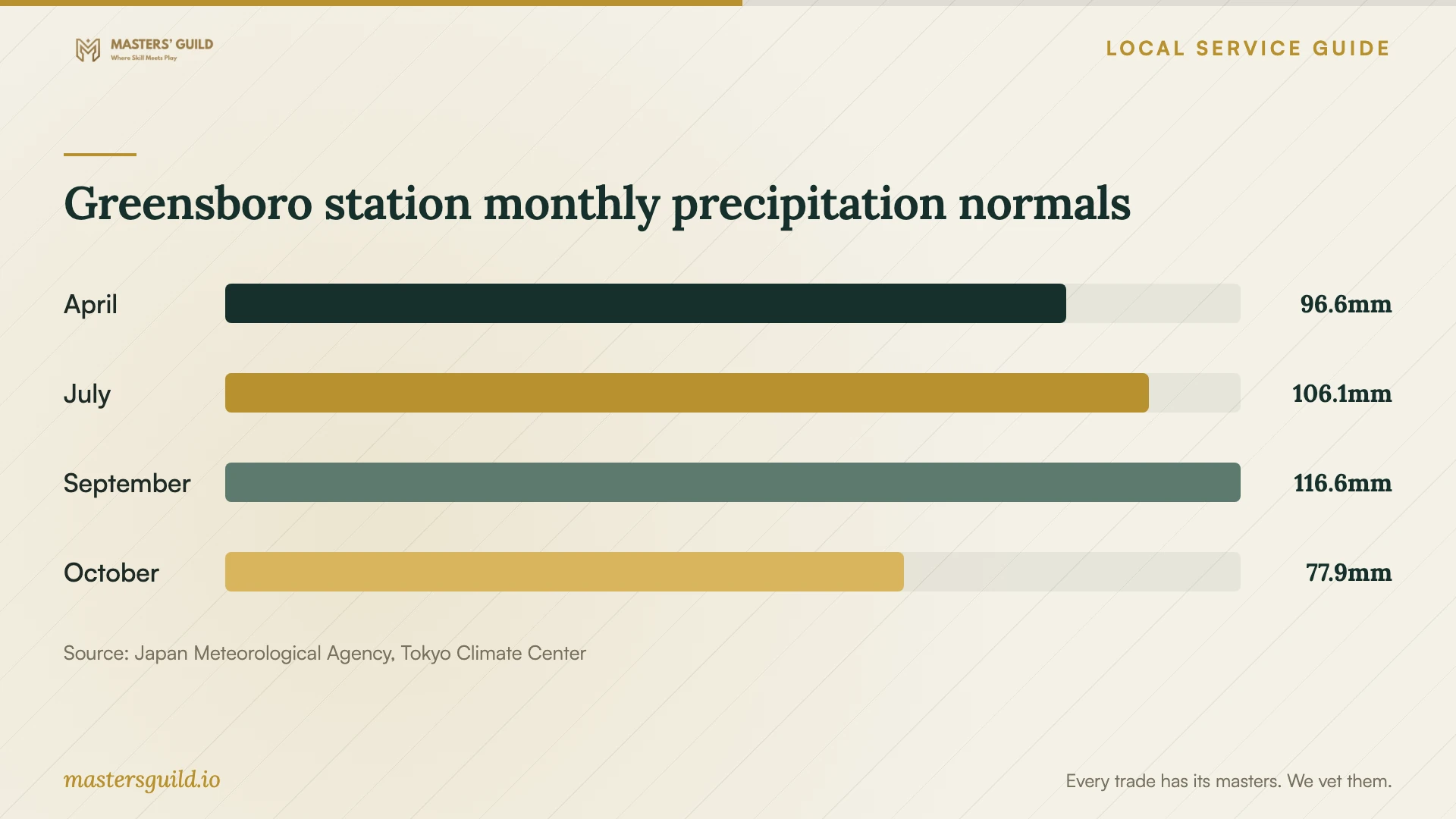
The Japan Meteorological Agency publishes monthly normals for the Greensboro/G.-High Pt. station, including 77.9 mm of precipitation in October and 116.6 mm in September. Treat these station averages as planning context. Ask the gardener to assess moisture and drainage at your property before deciding whether to plant or reschedule. [3]
Greensboro station monthly precipitation normals
Local details that affect your job
North Carolina soil-test delivery deadline
For a Greensboro homeowner using the state testing program, arrange delivery to 4300 Reedy Creek Road in Raleigh by 5:00 PM on November 30, 2026, to receive free testing before peak season. The department charges $5 per sample arriving from December 1. USPS does not deliver to that physical location; arrival at the mailing address alone does not satisfy the deadline. Ask your county Extension office whether it transports samples and when they should reach the lab. [1]
North Carolina credentials for garden treatments
Separate manual gardening from pesticide treatment when reviewing offers. Statewide rules apply to compensated applications at Greensboro homes: request a Commercial Ground Applicator license with the appropriate category. Ornamental & Turf covers ornamental plants, shade trees, and turf. Check the current license because North Carolina requires annual license renewal; a consultant credential alone does not authorize application. [2]
Choose the scope to request
| Your goal | Request | Confirm before agreeing |
|---|---|---|
| Reclaim an overgrown bed | An initial cleanup with a defined boundary | Plants to retain, root removal, and disposal |
| Keep existing beds tidy | A recurring maintenance scope | Tasks per visit, frequency, and missed-visit arrangements |
| Add or replace plants | An itemized planting proposal | Plant sizes, substitutions, and watering responsibility |
| Include pesticide treatment | A provider with the required commercial application license | Current license and appropriate category; consultant status alone does not authorize application |
| Test soil before amendments | Sampling, delivery, and report review | Physical lab arrival by November 30 at 5:00 PM for free testing before the 2026 peak season |
Your hiring checklist
- Photograph the beds and mark plants you want to keep.
- List cleanup, planting, and maintenance as separate tasks.
- Describe gates, steps, parking, and water access.
- Request itemized labor, materials, delivery, and disposal charges.
- Agree on a spending limit and approval process for extra work.
- Request pesticide credentials if the scope includes treatment.
- Assign watering and follow-up responsibilities before planting.
- Confirm sample transport timing if you commission soil testing.
Frequently Asked Questions
Should I request hourly gardening or a fixed quote?
Request a fixed quote when you can define the work area and finished result. If you choose hourly work, clarify crew size, set a spending cap, and ask the gardener to contact you before exceeding it. Keep materials and disposal explicit in either arrangement.
Does paid garden spraying require a license?
Yes. North Carolina requires a pesticide license for commercial applicators applying any type of pesticide for compensation. For non-aerial work on someone else’s property, ask about the Commercial Ground Applicator license and the category appropriate to the proposed treatment. [2]
Can I leave soil samples at Extension on November 30?
Do not assume that meets the free-testing deadline. The state bases its fee on physical arrival at the Raleigh lab. For 2026, samples must reach that location by November 30 at 5:00 PM. Ask the Extension office about transport timing before leaving samples. [1]
Do monthly rainfall averages tell me how often to water?
Use the station normals as background rather than a watering schedule. They describe monthly precipitation at the Greensboro/G.-High Pt. station. Ask your gardener for a plan based on the plants, bed conditions, and observations at your home. [3]
Sources and scope
This guide combines the sources below with practical planning guidance. Figures apply to the stated geography and period; request a written quote for your property.