
Local service guide
Duct cleaning in Greensboro, NC: Hiring and Planning
Duct cleaning in Greensboro starts with an inspection and a written scope. Ask the contractor to show the contamination, identify your duct materials, and quote the affected heating and cooling system components. EPA recommends cleaning as needed for substantial contamination. If access work or repairs would disturb suspect asbestos-containing materials, seek specialist guidance before scheduling that work. [1] [2]
Decide whether cleaning addresses your problem
Ask the inspector to show you substantial debris, evidence of pests, or suspected mold inside the ducts or equipment. EPA identifies these as reasons to consider cleaning, including excessive debris that clogs ducts or particles that discharge through supply registers. You can clean a dusty return grille without assuming the rest of the system needs treatment. [1]
Treat a mold diagnosis with care. EPA says appearance alone may not establish that a substance is mold; an expert may need laboratory confirmation. Ask which material is affected and how the contractor will correct the moisture source. EPA recommends replacing wet or moldy duct insulation because cleaning cannot address it effectively. [1]
Evaluate health and efficiency promises before buying. EPA says duct cleaning has not been shown to prevent health problems, and little evidence supports efficiency gains from cleaning ducts alone. For a comfort or airflow complaint, ask an HVAC professional to investigate the cause before approving cleaning as the remedy. [1]
Compare the work behind each quote
EPA recommends written estimates from at least three providers. Give each contractor the same description: the problem you noticed, recent construction, equipment locations and the systems you want inspected. Request a total price and a component list before agreeing to work. [1]
The scope should identify supply and return ducts, registers, grilles, the blower, coils, drain pans and air-handler housing. EPA warns that leaving a contaminated component uncleaned can contaminate the system again. Have the contractor identify exclusions and explain who will handle them. [1]
Discuss vacuum exhaust and duct protection. EPA recommends outdoor exhaust or HEPA-filtered vacuum equipment when exhausting indoors. Ask how the crew will protect furnishings and close access openings. For flexible ducts, Building America guidance says crews should use appropriate tools and should not cut access holes in the duct. [1] [3]
Coordinate renovation cleanup and repairs
Schedule post-renovation cleaning after dust-producing work finishes. Building America applies its construction-debris guidance to major home renovations: protect openings, keep the HVAC system off during dusty work, clean affected ducts and equipment, and replace filters. Ask your renovation contractor and cleaner to agree on that sequence before work starts. [3]
Request separate descriptions of cleaning, duct replacement and moisture repairs. EPA recommends correcting contamination causes before cleaning or replacement. Building America also warns that flexible ducts can suffer punctures, tears or crushing during cleaning, so ask the contractor to document their condition beforehand. [1] [3]
Review optional chemical treatments before authorizing them. Ask the contractor to explain the purpose, show the product label and identify compatible duct materials. EPA reports no registered biocides for fiberglass duct board or fiberglass-lined ducts and advises against routine interior sealant application. [1]
Prepare for the appointment and verify completion
Confirm which rooms, equipment cabinets and access points the crew needs. Clear those routes, arrange a place for pets, and discuss the expected interruption to heating or cooling. Request an estimated duration for your scope and agree on how the contractor will seek approval for additional work.
Agree on completion evidence before work begins. EPA recommends a visual inspection and asking the provider to show the cleaned components. Request photographs of inaccessible areas, check that registers are secure, and ask the crew to demonstrate system operation and explain remaining defects. [1]
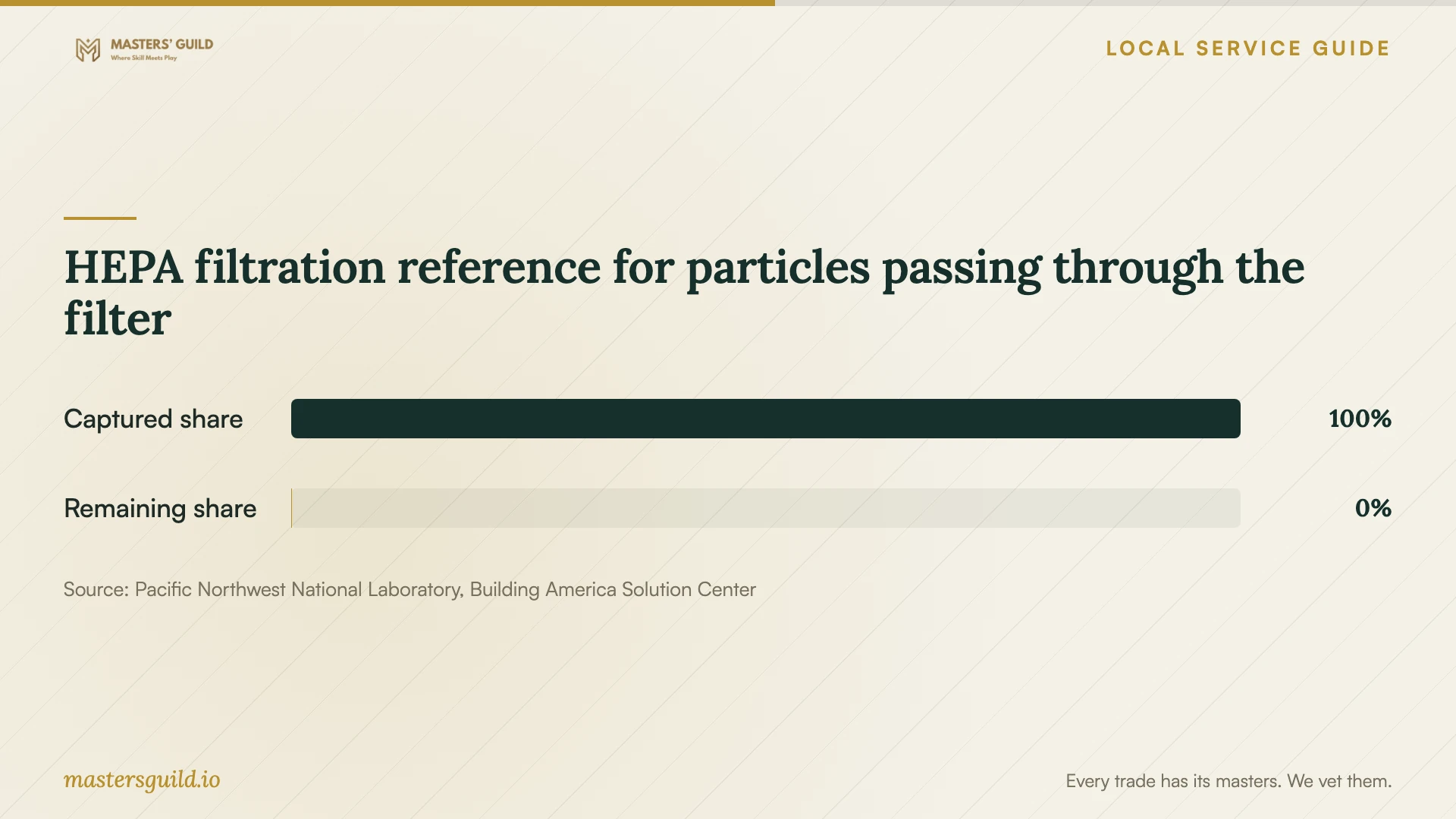
HEPA filtration reference for particles passing through the filter
Local details that affect your job
North Carolina specialist review before disturbing suspect materials
If proposed access work or duct repairs would disturb suspect insulation or register-boot materials, pause that part of the job. EPA calls for specialized handling of asbestos-containing HVAC materials. North Carolina directs owners planning demolition or renovation to consult its Health Hazards Control Unit at 919-707-5950 and describes inspection by an accredited asbestos professional. Explain your residential scope and ask which requirements apply before approving disturbance. [1] [2]
North Carolina asbestos paperwork affects scheduling
If specialist review identifies regulated asbestos removal, confirm paperwork before choosing a start date. The state specifies removal-permit thresholds of more than 35 cubic feet, 160 square feet or 260 linear feet, and submission at least 10 working days before work. It also directs owners to check local inspections requirements because local permits are separate. Ask the specialist to determine applicability to your home and scope; these asbestos-project requirements do not establish a permit requirement for ordinary duct cleaning. [2]
Choose the next step from the inspection findings
| Finding | Next step | Approval question |
|---|---|---|
| Dust on return grille | Clean the grille and assess the system before buying a larger service. | Can you show substantial contamination beyond this grille? |
| Excessive debris or pest contamination | Investigate the cause and arrange an appropriate cleaning scope. | Who will correct the cause before cleaning? |
| Wet or moldy duct insulation | Discuss replacement and moisture correction. | Which sections need replacement? |
| Renovation debris in flexible ducts | Coordinate careful cleaning after dusty work ends. | How will you protect the ducts and clean the air handler? |
| Suspect asbestos near access work | Pause disturbance and seek specialist review. | Which state and local requirements apply to this scope? |
Your hiring checklist
- Describe the symptom and ask the contractor to show supporting evidence.
- Request the same component scope from each bidder.
- Confirm duct materials and the proposed cleaning method.
- Resolve moisture, pests and suspect-material questions before approving work.
- Record exclusions, optional treatments and the total agreed price.
- Confirm access needs, expected duration and HVAC downtime.
- Review cleaned components, photographs and system operation before signing off.
Frequently Asked Questions
How often should I arrange duct cleaning?
EPA recommends cleaning as needed rather than on a routine schedule. Ask for inspection evidence of substantial contamination before agreeing to recurring appointments. [1]
Does this guidance cover dryer-vent cleaning?
The EPA guidance discussed here addresses forced-air heating and cooling systems. If you also want a dryer exhaust cleaned, request a separate scope so you can see which service you are buying. [1]
How should I budget for cleaning?
Request a written quote for your inspected Greensboro system. EPA identifies scope, system size, accessibility and contamination level as cost factors. Compare the component lists and exclusions alongside the totals. [1]
Sources and scope
This guide combines the sources below with practical planning guidance. Figures apply to the stated geography and period; request a written quote for your property.