
Local service guide
Business Plan Consulting in Greensboro, NC
Arrange Business Plan Consulting in Greensboro by defining who will read your plan and what they require before requesting quotes. Consider GTCC’s free, confidential business-planning counseling first. For paid work, agree on research, financial modeling, editable files, revisions, and delivery dates in a written scope. [1]
Choose counseling or a paid assignment
Start with the decision you need to make: test a startup idea, prepare a financing request, or evaluate an expansion. Write that purpose at the top of your brief. Identify the intended reader and the questions you need answered, such as how much cash you need before opening or whether you can support another employee.
GTCC’s Small Business Center offers business-planning and cash-flow counseling, plus Business Plan 101 training. The SBTDC offers comprehensive business-planning assistance, financial analysis, and market research. It describes most services as free and all as confidential. Ask each program what assistance fits your project and which tasks you would complete yourself. [1] [3]
For a paid engagement, identify the work you want someone else to complete. Separate drafting from research, spreadsheet modeling, and presentation preparation. Ask the consultant to price those tasks and explain which inputs you must supply. Use that discussion to decide whether you need a full assignment or a review of work you have already prepared.
Write a scope you can compare
Give each candidate the same brief. Specify your business concept, operating location, current stage, target customers, intended funding use, and deadline. For a financing submission, attach the recipient’s instructions and ask the consultant to identify missing information before work begins.
Request a written list of deliverables: the narrative plan, research sources, financial workbook, assumptions notes, and any presentation materials. Agree on the forecast period and monthly detail with the intended recipient. Specify editable file formats, ownership of the completed work, and access to any supporting research.
Ask candidates to explain a relevant sample with confidential client information removed. Discuss how they would investigate customer demand and build revenue assumptions for your business. Request a demonstration of how you could change sales, payroll, or opening dates in the model after handoff.
Prepare numbers you can explain
Gather available sales records, expense reports, debt details, supplier quotes, lease terms, and staffing plans before the first working session. For a startup, label estimates and keep supporting quotes or calculations beside them. Tell the consultant which figures you have confirmed and which still need investigation.
Ask the consultant to connect projected sales to customer numbers, purchase frequency, prices, and capacity. Test a delayed opening or slower sales scenario. Review when customers would pay you and when you would need to pay suppliers, employees, and lenders. Ask for an explanation of any cash shortfall and discuss the operating choices available to you.
Keep unresolved questions in a shared list. Assign each question to you, the consultant, or another adviser, and agree on a due date. At handoff, explain the assumptions back to the consultant. Identify the figures you will update as actual results arrive and ask for instructions for making those changes.
Agree on fees, milestones, and revisions
Request an itemized written fee. Ask whether the quote covers interviews, research purchases, financial modeling, meetings, and revisions. Define how you will approve extra work and its cost before the consultant starts it. Compare the scope of public counseling with the specific work in a paid proposal.
Set milestones for the assumptions review, first model, narrative draft, and final handoff. Agree on your feedback dates and ask how missing records would affect delivery. Include the process for answering lender questions after submission, the support period, and any additional fee.
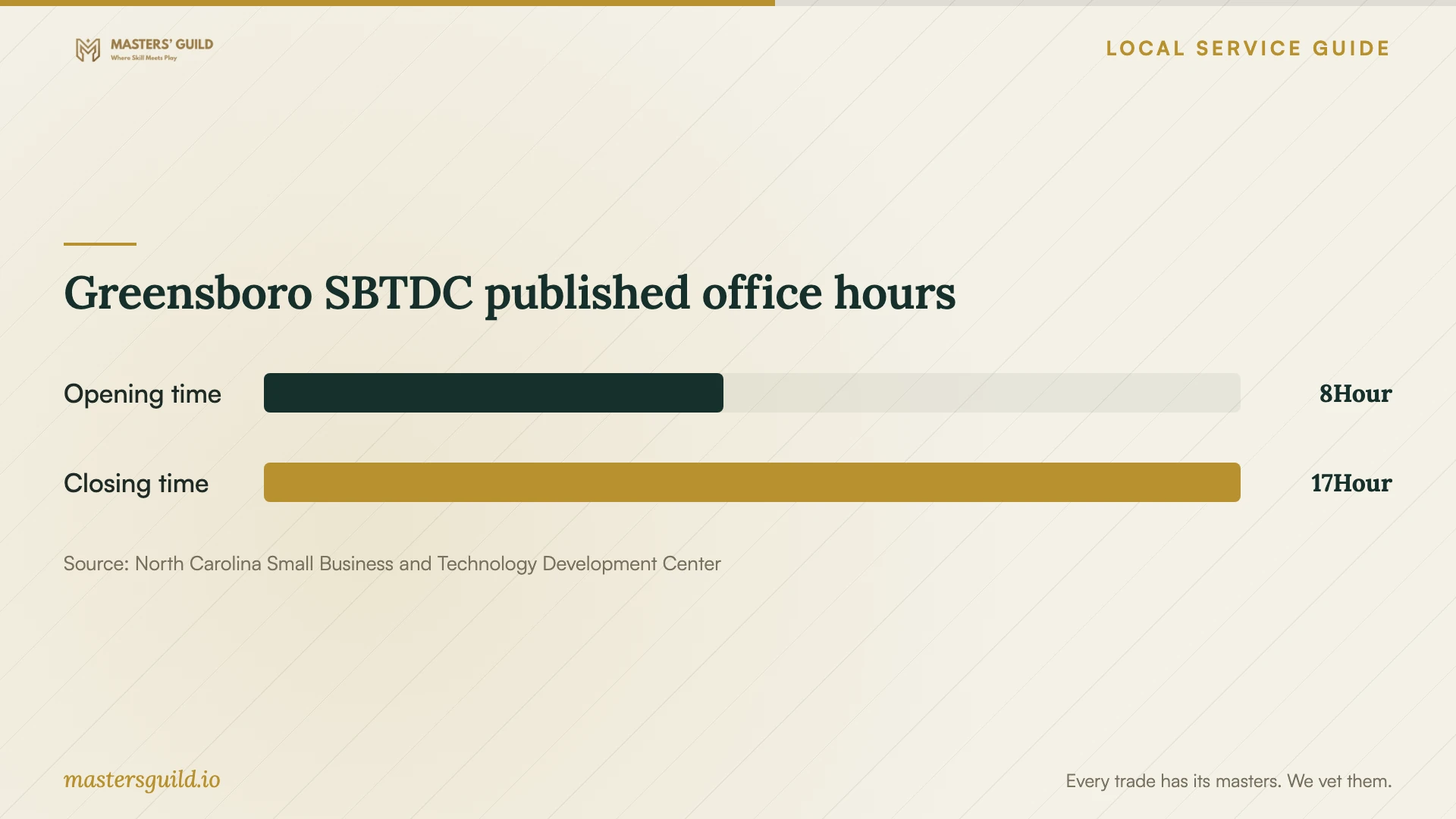
Greensboro SBTDC published office hours
Local details that affect your job
GTCC offers a free starting point for planning
GTCC places its Greensboro Small Business Center in Suite 1201 at the Nussbaum Center for Entrepreneurship, 1451 S. Elm Eugene St. It offers free, one-on-one confidential counseling for startups and small businesses, including planning and cash-flow help. Its page includes registration for counseling. Consider a session to clarify your needs before commissioning a complete document. Most workshops are free; some advanced topics carry a nominal fee. [1]
Arrange an appointment with the Greensboro SBTDC
The SBTDC at NC A&T State University serves Caswell, Guilford, Randolph, and Rockingham counties. It lists its office at 1451 S. Elm-Eugene St., Suite 2203, with hours of 8:00 AM to 5:00 PM, by appointment only. Its local team offers help with financing access, financial performance, and market opportunities. For those needs, arrange counseling before visiting. Confirm the suite because GTCC and SBTDC list separate offices at the same street address. [1] [2]
Match your next step to the work you need
| Your situation | Option to consider | Clarify before proceeding |
|---|---|---|
| You need help organizing a startup plan | GTCC’s free confidential counseling and Business Plan 101 training | Ask what to prepare and which writing tasks you will complete |
| You need financing or market analysis | The Greensboro SBTDC, with statewide financial-analysis and market-research services | Confirm service fit, appointment availability, and any fee |
| You want someone to draft a complete submission | A paid proposal against your written brief | Specify recipient requirements, research, files, and revisions |
| You cannot explain the forecast in your existing plan | A model review and owner walkthrough | Identify assumptions to test and files you need to update |
Your hiring checklist
- Identify the plan’s reader, purpose, deadline, and required format.
- Gather available financial records and label startup estimates.
- Attach lender or investor instructions to the project brief.
- Specify research, forecast detail, editable files, and ownership.
- Ask for a relevant sample and a financial-model walkthrough.
- Agree on fees, milestones, revisions, and extra-work approval.
- Define who will answer questions after submission.
Frequently Asked Questions
Can I get free business-plan help in Greensboro?
GTCC offers free, confidential one-on-one counseling that includes business planning and cash-flow management. The SBTDC also offers business-planning assistance and says most services are free and all are confidential. Confirm what assistance each program can provide for your project. [1] [3]
Will a counselor write the entire plan for me?
GTCC and SBTDC describe counseling and planning assistance without promising to write a complete document on your behalf. Ask who will draft the narrative, conduct research, and build the spreadsheet before choosing this route. [1] [3]
How should I compare consulting prices?
Give candidates the same scope and ask them to identify inclusions and exclusions. Compare research depth, financial-model detail, meetings, editable files, revisions, and support after submission. Require your written approval before additional charges.
What should I ask about a funding submission?
Ask the intended recipient for its current requirements. Then ask the consultant which requirements the engagement covers, what information you must provide, and how you will handle follow-up questions. Request written terms for any commitment concerning funding outcomes.
Sources and scope
This guide combines the sources below with practical planning guidance. Figures apply to the stated geography and period; request a written quote for your property.