
Local service guide
Window Cleaning in Grand Rapids, MI
Arrange Window Cleaning for your Grand Rapids business by requesting a written scope, an access plan, and clear weather rescheduling terms. Before accepting a quote, establish who handles any public sidewalk closure: the city includes safety buffers for overhead window washing in its Temporary Occupancy Permit guidance. Ask the cleaner to price the agreed glass, access arrangements, and cleanup together. [1]
Define the job before comparing quotes
Send each cleaner the same description and photos. Identify the storefront glass, entrance doors, upper windows, and interior surfaces you want cleaned. Ask whether the provider counts a window opening, an individual pane, or each side of the glass. Request a total for that scope so you can compare offers without guessing what each includes.
List screens, tracks, sills, frames, stickers, paint spots, and visible staining as separate items for discussion. Ask the cleaner to inspect unfamiliar marks before promising removal. Require approval before the crew adds restoration work or uses a treatment beyond the agreed routine cleaning.
For recurring service, request both the initial visit price and the repeat visit price. Specify which surfaces the crew will clean at each visit, how you can change the schedule, and whether missed visits carry a charge. Choose a frequency around your presentation needs and budget rather than accepting an unexplained maintenance package.
Settle sidewalk access and permit responsibility
Grand Rapids requires a Temporary Occupancy Permit when a person or company uses public right-of-way for short-term private purposes. Its examples include equipment staging and safety buffers for overhead window washing. Ask the provider to describe the work area and identify whether its proposed setup uses a public sidewalk, road, or another part of the right-of-way. [1]
For this permit, the city requires a certificate of insurance with at least $500,000 in liability coverage, naming the city as additionally insured and identifying the project location. The application also calls for a traffic control plan. If parking meters fall within the closure or job site, the city requires reservation and hooding through Mobile GR. [1]
Put responsibility for the application, traffic control arrangements, and any meter reservations in the quote. Ask who pays the associated charges. The city says applicants should expect a response within 1–2 business days and may need to revise incomplete or incorrect submissions. Leave room for that review rather than treating the response window as guaranteed approval. [1]
Protect drains and agree on cleanup
Ask the cleaner to walk the frontage with you and identify curb drains before work starts. Grand Rapids tells people not to dump waste into storm drains and directs disposal of unwanted cleaners through household hazardous waste collection guidance. For your business job, have the contractor confirm an authorized disposal route and whether the receiving facility accepts its waste. [2]
Request a practical explanation of how the crew will collect leftover solution, removed debris, and any products used for stain removal. Do not assume that a household disposal program accepts commercial or contractor waste. Keep the contractor's disposal arrangements in the work agreement, especially when approving a treatment beyond ordinary glass cleaning.
Include interior cleanup too. Decide who moves displays, protects nearby stock, removes floor coverings, and checks for drips before reopening the work area. Ask the crew to leave doors, screens, and movable furnishings in the agreed positions.
Plan around weather and business hours
Agree on the provider's weather decision process before booking. Ask who contacts you, when the crew decides to postpone, and how the replacement appointment works. Specify whether the cleaner can complete interior work during an exterior postponement and how that affects the invoice.
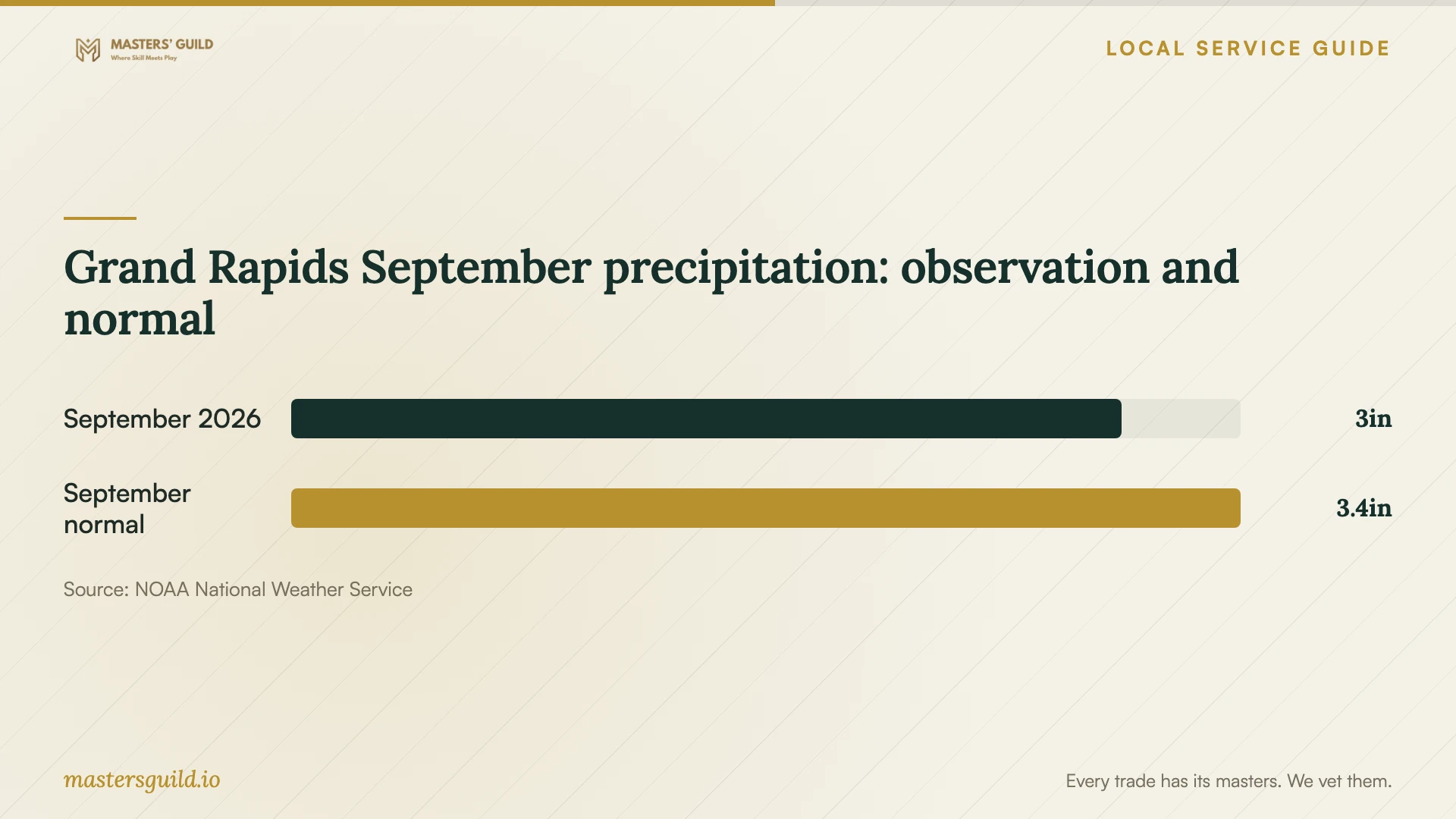
The National Weather Service's September 2026 report recorded 3.00 inches of precipitation in Grand Rapids, compared with a September normal of 3.43 inches for 1991–2020. The chart supplies historical scheduling context. Use the appointment forecast and the provider's stated working limits to arrange your visit. [3]
Choose an arrival window around deliveries, customer traffic, and staff availability. Identify a person who can admit the crew and approve access changes. Ask how the provider will maintain an agreed customer route while cleaning entrance glass, and resolve any proposed closure before the appointment.
Check the result before closing the job
Ask for evidence of insurance appropriate to the proposed work and clarify who performs it. Have the provider explain its access method for upper glass, how it protects your property, and how you report damage. Keep photos of existing chips, scratches, damaged seals, or other concerns with the agreed scope.
Arrange a final walkthrough with the crew lead. Check the agreed surfaces, frames, and cleanup areas together. If a mark remains, ask whether it needs another cleaning pass or a separate assessment. Record any follow-up work and its timing before authorizing an additional charge or agreeing to the next visit.
Grand Rapids September precipitation: observation and normal
Local details that affect your job
Public frontage changes the booking process
For work that occupies public right-of-way, Grand Rapids uses Citizen Access for Temporary Occupancy Permit applications. The city lists overhead window-washing safety buffers as an example. Have the provider settle the application responsibility, insurance certificate, traffic control plan, and any parking-meter reservations before committing to the work date. [1]
Curbside cleanup needs a disposal plan
Grand Rapids instructs people to keep waste out of storm drains and to report dumping through 311. Before approving cleaning beside curb drains, ask the contractor to explain collection and disposal. The city's general environmental page does not establish a commercial waste acceptance arrangement for your contractor. [2]
Match the arrangement to the work
| Job situation | Discuss before accepting | Put in writing |
|---|---|---|
| Entrance and storefront glass | Interior sides, door glass, displays, and customer access | Exact surfaces and arrival window |
| Overhead work using public right-of-way | The city's Temporary Occupancy Permit process | Application responsibility, traffic control, and access charges |
| Parking meters inside the job site | City-required meter reservation and hooding | Who arranges and pays for reservations |
| Stains or adhesive residue | Inspection and proposed treatment | Approval requirement for additional work |
| Recurring visits | Initial scope, repeat scope, and postponement arrangements | Visit price, frequency, and cancellation terms |
Your hiring checklist
- Photograph the glass and list interior and exterior surfaces.
- Request a written total with screens, tracks, stains, and exclusions identified.
- Ask for insurance documentation and the proposed upper-window access method.
- Assign responsibility for any right-of-way application and access charges.
- Confirm drain protection, residue collection, and an authorized disposal route.
- Agree on arrival, customer access, weather postponement, and return-visit terms.
- Name a staff contact and arrange a final walkthrough.
Frequently Asked Questions
Does every window cleaning job require a city permit?
The cited city guidance addresses short-term private use of public right-of-way, including overhead window-washing safety buffers. Ask the provider whether its actual setup occupies that space. Do not assume the permit applies to every cleaning job. [1]
How much time should I allow for a sidewalk permit?
The city says to expect a response within 1–2 business days. It also warns that applicants may need to revise their submissions. Have the provider allow for review and corrections before confirming a closure-dependent appointment. [1]
What should the cleaner include in the quote?
Request the surfaces and sides of glass, preparation, screens or tracks, access method, cleanup, and exclusions. Ask for separate approval of stain treatment or other additional work. Include any permit-related responsibilities and weather terms.
Can the crew pour leftover cleaner into a curb drain?
Grand Rapids instructs people not to dump waste into storm drains. Ask the contractor to collect leftover cleaner and confirm an authorized disposal route. Have it verify facility acceptance for business or contractor waste before the job. [2]
Sources and scope
This guide combines the sources below with practical planning guidance. Figures apply to the stated geography and period; request a written quote for your property.