
Local service guide
TV Mounting in Grand Rapids, MI: Plan Your Installation
Arrange TV Mounting in Grand Rapids by asking an installer to confirm the wall attachment, bracket compatibility, viewing position, and cable route before quoting. Separate bracket installation from electrical work: the city requires an electrical permit when you alter, change, or add electrical equipment or home wiring. For a new outlet behind the screen, ask the electrical contractor to include the permit and inspection arrangements in the scope. [2]
Define the installation before comparing quotes
Send the installer your TV model, the bracket model if you own one, and photographs of the wall and nearest outlet. Ask them to explain how they will confirm the wall construction and choose the attachment method. Have them check the TV and bracket instructions before agreeing to use hardware you supply.
Describe how you want to use the screen: straight ahead from the sofa, angled toward another seat, or moved between viewing positions. Mark a proposed screen outline and check it while seated. Ask the installer to confirm the final position with you before drilling, including room for plugs and access to connections.
Request separate quote items for the bracket, installation, cable management, electrical work, and patching or painting. Ask whether the installer will bring a helper and whether they need you to clear furniture or provide access behind the wall. Agree on who approves extra work if the installer finds a different wall construction.
Choose the cable and power route
Ask the installer to sketch the proposed route for power and signal cables. For a surface route, review the appearance and access to the existing outlet. For a concealed route, ask what openings they propose, what materials they will use, and who will repair the wall. Have an electrical contractor assess any proposed change to the home's wiring.
Grand Rapids requires an electrical permit for alterations or additions to home electrical equipment and wiring. The city's renovation guide also says many projects involving electrical permits require a building permit. Before authorizing wall openings or a new receptacle, ask the Development Center which permits apply to your exact scope. [2]
The city says a hired contractor should apply for the permit. Its guide also requires inspection and approval of permitted work and advises contacting the Development Center before covering uninspected work. Include inspection scheduling and any necessary return visit in your agreement. [2]
Discuss painted-wall disturbance in older homes
The City of Grand Rapids reports more than 30,000 homes built before 1978. EPA says homes from that period are more likely to contain lead-based paint and warns that renovation or repair work can create lead dust. Ask about your home's construction year and any existing paint assessment before the installer drills mounting holes or cuts cable openings. [3] [5]
Ask the contractor to explain the planned paint disturbance, dust containment, and cleanup. EPA recommends determining whether lead-based paint is present or assuming it is present when planning renovation work in a pre-1978 home, and hiring a lead-safe certified contractor. Discuss the scope before choosing between small mounting holes and broader wall work. [5]
Do not assume that every mounting job has the same certification requirements. EPA's minor repair and maintenance definition includes a painted-surface threshold and exceptions, including demolition of painted components and certain prohibited or restricted practices. EPA also combines non-emergency work in the same room within 30 days when assessing that exception. Tell the contractor about other recent or planned wall work. [4]
Agree on completion checks
Before work starts, agree on what you will inspect together: the screen position, attachment method, bracket movement, cable appearance, and access to the TV connections. Ask the installer to demonstrate any locking or adjustment mechanism and leave the bracket instructions with you.
Test the inputs and devices you intend to use before the installer leaves. Review any wall damage and the agreed repairs. If the job includes permitted electrical work, distinguish the installer's handover from the city's required inspection and approval. Keep the written scope, invoice, and permit information together. [2]
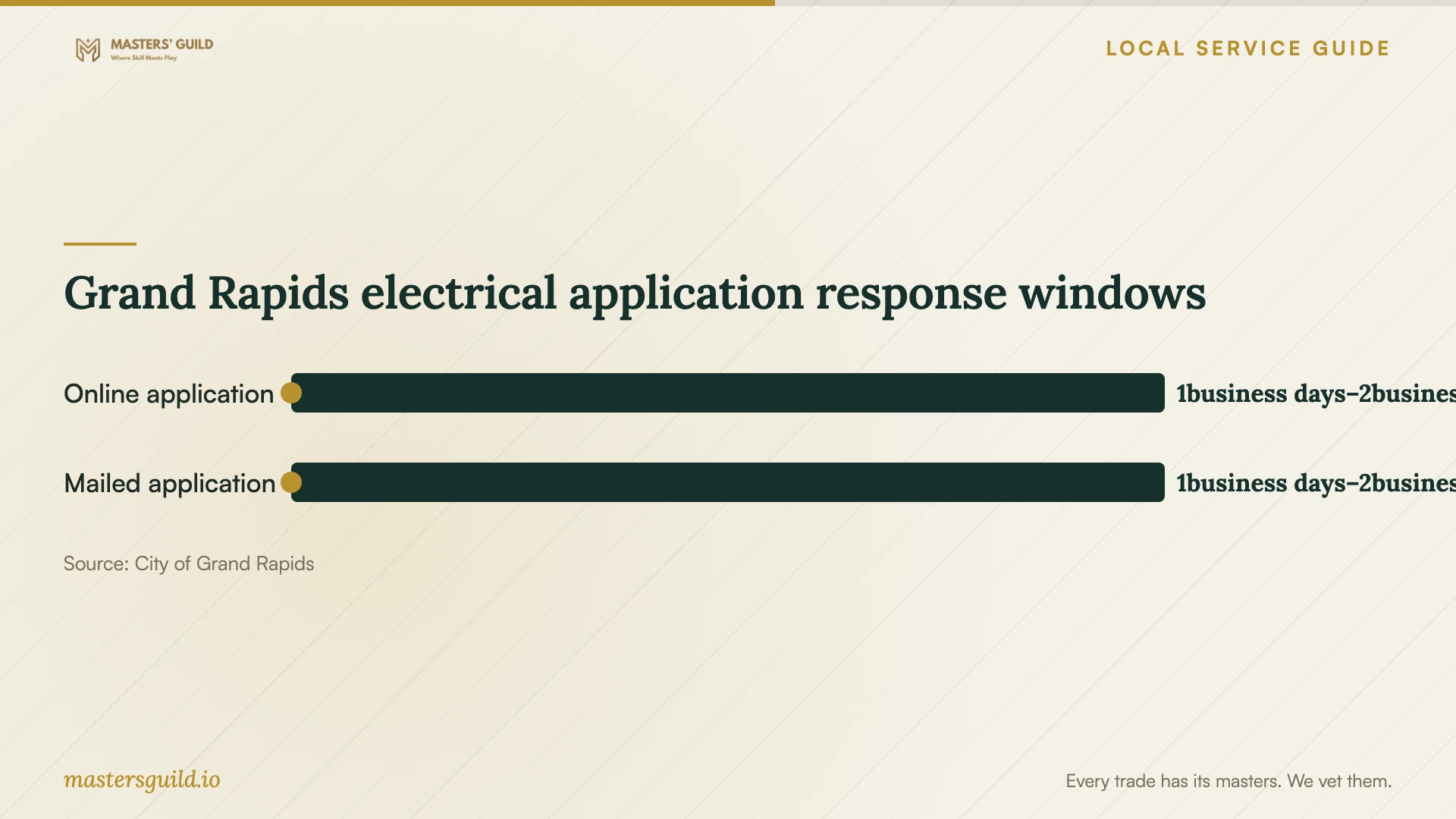
Grand Rapids electrical application response windows
Local details that affect your job
Confirm electrical scope with the Development Center
For a proposed outlet or wiring change, contact the Grand Rapids Development Center at 616-456-4100. The city lists its office at 1120 Monroe Ave. NW, 3rd Floor, with hours Monday through Friday, 7:30 AM to 4 PM. Describe the cable openings and electrical changes so staff can advise on permits before you commit to the installation. [1]
Match the permit applicant to the property
The city allows a single-family homeowner to apply in person for an electrical permit for their primary residence. A homeowner who is also a licensed electrical contractor may apply online. Properties with two or more units must use a licensed contractor. If you own a duplex, resolve the electrical contractor and permit arrangements before booking the mounting visit. [1]
Allow for application review before installation
The city tells online electrical applicants to expect a response within 1–2 business days and gives the same window after receiving a mailed application. Staff may request corrections or attachments. Ask the contractor to confirm permit issuance before setting the date for work that requires it. [1]
Choose the next step for your installation
| Your planned work | Before booking | What to include in the scope |
|---|---|---|
| Bracket installation with existing power | Ask the installer to confirm the wall attachment and bracket compatibility. | Screen position, hardware, cable appearance, and completion checks. |
| New outlet or altered home wiring | Arrange an electrical contractor and confirm city permit requirements. | Electrical permit, inspection arrangements, and wall repairs. |
| Electrical work in a property with two or more units | Use a licensed contractor under the city's residential electrical permit process. | Permit applicant, tenant access arrangements, and inspection scheduling. |
| Painted-wall work in a pre-1978 home | Discuss lead assessment, precautions, and the proposed disturbance with the contractor. | Dust containment, cleanup, and responsibility for wall openings. |
Your hiring checklist
- Send the TV model, bracket model, and clear wall and outlet photographs.
- Mark the proposed screen position and review it from your usual seat.
- Ask how the installer will identify wall construction and select attachments.
- Choose a cable route and identify any proposed electrical changes.
- Disclose the home's construction year and recent painted-wall work.
- Request an itemized scope covering hardware, repairs, permits, and return visits.
- Agree on handover checks and keep the invoice and permit records.
Frequently Asked Questions
Does mounting a TV require a permit?
The supplied city guidance does not give a TV-bracket-specific exemption. It does require an electrical permit when you alter or add electrical equipment or home wiring. Describe your bracket, wall openings, and proposed outlet work to the Development Center and confirm the requirements for that scope. [2]
Can I apply for the electrical permit myself?
Grand Rapids allows a single-family homeowner to apply in person for their primary residence. Properties with two or more units must use a licensed contractor. If you hire a contractor, the city's renovation guide says the contractor should apply for the permit. [1] [2]
How should I compare installation prices?
Ask each installer to quote the same TV, bracket, wall, cable route, and repair scope. Request separate amounts for hardware and electrical work, and ask how they price unexpected conditions. Use those written quotes to set your budget.
Do a few mounting holes trigger lead certification requirements?
Ask the contractor to assess the actual work. EPA describes a minor repair and maintenance exception with limits and exclusions, including demolition of painted components. It also combines non-emergency jobs in the same room within 30 days. A small work area alone does not settle whether the exception applies. [4]
Sources and scope
This guide combines the sources below with practical planning guidance. Figures apply to the stated geography and period; request a written quote for your property.