
Local service guide
Tile Setting in Grand Rapids, MI: Plan and Hire
For Tile Setting in Grand Rapids, choose an installer after you define the surface, removal work, preparation, and any plumbing or electrical changes. Request an itemized scope and an inspection plan before agreeing to a start date. The City exempts a tile backsplash alone from a building permit, but says a typical bathroom remodel requires building, electrical, and plumbing permits. Describe the whole renovation when checking requirements. [1]
Define the job before comparing offers
Send each installer the same photos and measurements. Identify whether you want a kitchen backsplash, floor, shower surround, or exterior surface. Include close views of damaged areas and wider views showing cabinets, doorways, fixtures, and adjoining flooring. Ask the installer to confirm measurements before ordering materials.
Describe what you expect the installer to remove and replace. Ask who will disconnect fixtures, move appliances, protect the route through your home, and remove debris. For a floor, request a written plan for thresholds and finished height. For a backsplash, agree on where the tile ends and how the installer will finish exposed edges.
Separate tile work from the wider renovation
The City says you do not need a building permit when you only add a tile backsplash. It requires an electrical permit for alterations or additions to electrical equipment and a plumbing permit for work beyond the fixture replacements described in its renovation guide. Check the permit requirements for the complete kitchen project before starting. [1]
For a shower project, list any proposed drain, supply-line, wall, or electrical changes before requesting a permit determination. Ask each bidder to identify who will perform that work and who will coordinate with the tile installer. Assign each task to a named person or company in the written agreement.
The City says the contractor should apply for the permit when you hire one. It also instructs homeowners to contact the Development Center before covering uninspected work if they are unsure whether an inspection must happen first. Ask the contractor to identify those inspection points before setting the tile schedule. [1]
Request a quote you can compare
Ask bidders to separate tile and setting materials, removal, surface preparation, installation, disposal, and any permit or trade work. Specify the tile product, size, pattern, grout selection, and edge treatment. Ask whether you or the installer will buy the tile and who will handle shortages, damaged pieces, and returns.
For a shower, request the proposed waterproofing system by name and ask how the installer will handle corners, penetrations, the drain connection, and any niche or bench. Ask what testing they propose before tiling. Request the relevant manufacturer instructions and have the installer explain the planned sequence.
Agree on a process for discoveries after demolition. Require photos, a description of the proposed repair, and your approval of the added price before the installer proceeds. Ask for examples of comparable completed work and written terms explaining how the contractor will address installation defects.
Plan access, inspections, and room use
Ask for separate dates for demolition, preparation, inspections, tile installation, and return to use. Have the installer state when you can walk on the floor, reinstall fixtures, or use the shower, based on the products they propose. Arrange another bathroom if your project requires taking your only one out of service.
For permitted projects, the City requires inspection and approval and directs homeowners to schedule a final inspection after completing the work. You can schedule building and trade inspections through Citizen Access or by calling 311. Confirm who will arrange access and attend each appointment. [1]
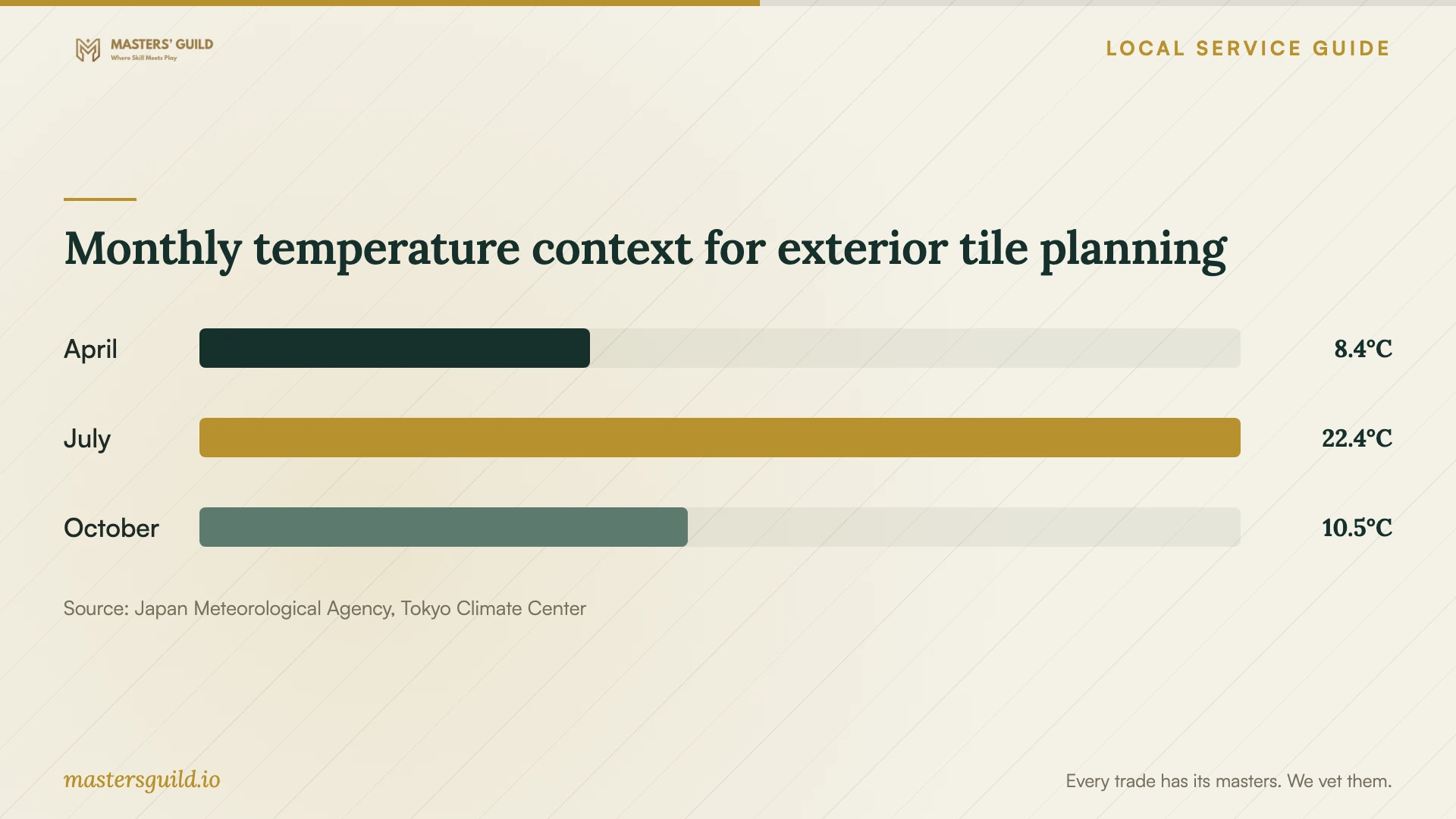
For exterior tile or an unheated work area, ask the installer to document product suitability, required installation temperatures, and weather protection. The station temperature averages in the chart provide seasonal context rather than installation limits. Use the proposed product instructions and the jobsite forecast when agreeing on work dates. [3]
Monthly temperature context for exterior tile planning
Local details that affect your job
Arrange plumbing for a duplex shower project
The City's residential plumbing page requires a licensed contractor for properties with two or more units. A homeowner of a single-family primary residence may apply for a plumbing permit at the Development Center. To apply online as a homeowner, you must also be a licensed plumbing contractor. Establish the property's unit count and who will handle plumbing before booking associated shower work. [2]
Confirm inspections before closing walls
For a backsplash combined with other renovation work, describe the wall, wiring, and piping changes when checking permits. The Development Center lists 616-456-4100 and an office at 1120 Monroe Ave. NW, 3rd Floor. The City directs homeowners to resolve inspection questions before covering uninspected work. Have your contractor include the required appointments in the schedule. [1]
Match the hiring plan to the project
| Project | Local requirement | Next step |
|---|---|---|
| Tile backsplash alone | The City says no building permit is needed. | Define whether the quote includes any wall or system changes. |
| Bathroom remodel | The City says a typical remodel requires building, electrical, and plumbing permits. | Have the contractor confirm permits for the complete scope. |
| Permitted plumbing in a duplex | Properties with two or more units must use a licensed contractor. | Identify the plumbing contractor before scheduling related tile work. |
| Work that will conceal wiring or piping | The City directs owners to resolve inspection requirements before covering uninspected work. | Confirm the inspection sequence with the Development Center. |
Your hiring checklist
- Send matching photos, measurements, and scope notes to each bidder.
- Choose the tile, pattern, edge treatment, and grout before comparing final quotes.
- Ask for a written preparation and waterproofing proposal where relevant.
- Assign responsibility for fixture work, permits, inspections, and debris removal.
- Require approval of added work and its price before it begins.
- Confirm room access, protection, and dates for returning the surface to use.
- Keep the contract, product information, progress photos, and completion records.
Frequently Asked Questions
Do I need a permit for a kitchen backsplash?
The City says a tile backsplash alone does not need a building permit. If your project also changes walls, wiring, or piping, check the requirements for that additional work before starting. [1]
Can I handle the plumbing myself during a shower renovation?
The City's plumbing page allows a homeowner of a single-family primary residence to apply at the Development Center. Properties with two or more units must use a licensed contractor. Confirm your eligibility and the permit requirements before assigning the work. [2]
How should I compare tile installation prices?
Compare written offers using the same tile and finish choices. Ask bidders to identify removal, preparation, waterproofing where proposed, disposal, and associated trade work. Request a separate price and approval process for repairs discovered after demolition.
How long should I allow before using the room?
Ask the installer for a product-specific return-to-use schedule. Separate working days from inspection appointments and required waiting periods. Put the agreed dates and any conditions for changing them in writing.
Sources and scope
This guide combines the sources below with practical planning guidance. Figures apply to the stated geography and period; request a written quote for your property.