
Local service guide
Grand Rapids mold removal: Hiring and repairs
Arrange mold removal in Grand Rapids by asking the contractor to identify the moisture problem, define the cleanup area and separate remediation from repairs. EPA says homeowners can handle most patches smaller than about 10 square feet, with exceptions for contaminated water and other concerns. For rebuilding or trade repairs, check the scope with the city’s Development Center before approving work. [1] [3]
Choose the right cleanup scope
Measure the visible affected area without disturbing the material. EPA says that, in most cases, you can handle mold covering less than about 10 square feet yourself. EPA directs homeowners with sewage or contaminated-water damage to an experienced professional and advises consulting a health professional before cleanup if they have health concerns. [3]
For a small hard-surface patch, EPA recommends detergent and water followed by complete drying. Moldy porous materials, including carpet and ceiling tiles, may need disposal because cleanup can be difficult or impossible. Do not paint or caulk over mold. Ask the contractor to distinguish materials they intend to clean from materials they intend to remove. [3]
If you suspect mold in the HVAC system, EPA advises against running it because it could spread mold through the building. Tell the contractor about growth near an intake or an identified moisture problem involving the system before the visit. Ask how they will assess that concern before you restart the equipment. [3]
Compare written bids by what they include
Give each bidder the same photographs, affected-room list and description of the water event. Ask for a written scope covering inspection, cleanup, material removal, disposal, drying and any proposed containment. Request separate prices for moisture-source repairs and reconstruction, plus a list of exclusions. Compare each line of work before choosing a contractor.
EPA recommends hiring a contractor with mold cleanup experience, checking references and asking the contractor to follow EPA or professional guidance such as IICRC recommendations. Ask who will supervise your job and request a reference for a similar cleanup. Have the bidder explain the proposed method in language you understand. [3]
Agree on how the contractor will handle additional affected material discovered after opening a wall or ceiling. Request photographs and written approval before expanding the scope. Ask for expected work dates, access needs, payment stages and the records you will receive at completion. Identify who will repair the leak and who will rebuild the opened area.
Connect cleanup with the moisture repair
EPA advises fixing plumbing leaks and other water problems and drying items completely. For recurring bathroom mold, EPA says increased ventilation and more frequent cleaning can help limit recurrence. Ask your contractor to explain which moisture problem they found, who will correct it and which tasks must finish before repainting or replacing finishes. [3]
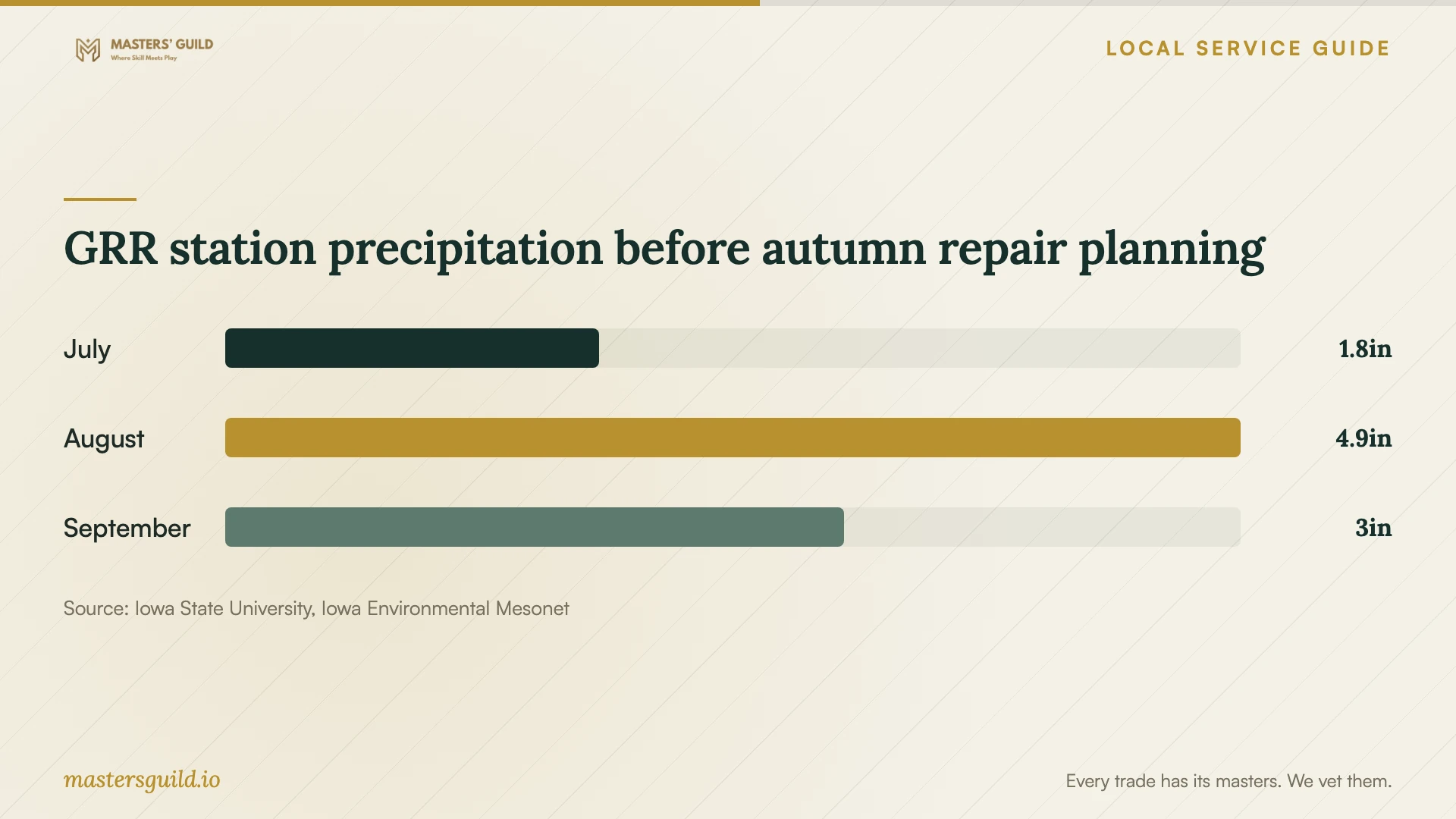
For suspected rain-related entry, record the date, room and location of each wet patch. IEM’s GRR station summaries report 1.81 inches of precipitation in July 2026, 4.92 in August and 3.00 in September. Use your own leak dates and photographs to guide the inspection. Those station totals cannot establish how water entered your home or whether hidden mold exists. [4]
Ask the repair contractor to inspect the locations associated with your observations, such as the ceiling below a roof leak or the wall near a leaking fixture. Keep the cleanup and repair scopes together in your project records. Before closing an opened area, request photographs of the repair and the contractor’s drying documentation.
Prepare the home and agree on completion
Before the crew arrives, agree on entry arrangements, work-area boundaries, belongings you should move and rooms you can use during the job. Ask whether the proposed work affects heating or cooling, bathroom access or sleeping arrangements. Tell the contractor about household health concerns, and consult a health professional before cleanup as EPA recommends. [3]
At the final walkthrough, compare the work with the written scope. Request a record of removed materials, cleaned areas, moisture repairs and unresolved concerns. Ask the contractor to explain remaining stains, since EPA notes that mold can leave cosmetic damage even after cleaning. Keep the records for future repair discussions and questions about recurring moisture. [3]
GRR station precipitation before autumn repair planning
Local details that affect your job
Check repair permits with the Development Center
Grand Rapids provides a Remodel or Repair application for single-family homes and duplexes, along with separate electrical, plumbing and mechanical applications. The city says multiple permits may apply depending on scope and requires the applicant to be the property owner or a licensed contractor. Before approving wall replacement or moisture-source repairs, describe the planned work to the Development Center at 616-456-4100. Ask which applications apply and identify who will submit them. The office is at 1120 Monroe Ave. NW, third floor. The city’s residential permit page does not establish that mold cleaning alone requires a permit. [1]
Use the rental disrepair route
Grand Rapids Code Compliance offers a complaint route for conditions inside a house, including leaking sinks, and lists 616-456-3053 as its contact number. If you rent and the owner has not resolved a moisture problem, keep photographs and dated repair requests, then ask Code Compliance how to report the interior disrepair. The department also provides access to property code-enforcement history through Citizen Access and information about rental Certificates of Compliance. Review those records when discussing the property’s repair history, and ask the owner who will authorize and arrange the cleanup. [2]
Choose your next step by the condition
| Condition | Next step | Question to resolve |
|---|---|---|
| Small hard-surface patch under about 10 square feet | Consider homeowner cleanup under EPA guidance, after checking the exceptions. | Can you address the water problem and dry the surface? |
| More than 10 square feet or substantial water damage | Consult EPA’s broader remediation guidance and seek a defined professional scope. | Which materials will the crew clean or remove? |
| Sewage or contaminated-water damage | Hire a professional experienced with contaminated-water building damage. | Does the contractor have references for this type of cleanup? |
| Suspected HVAC contamination | Do not run the system; consult EPA’s HVAC-related guidance. | How will the contractor assess the system concern? |
| Cleanup includes interior or trade repairs | Check the planned scope with the Grand Rapids Development Center. | Which permits apply, and who will submit the applications? |
Your hiring checklist
- Photograph visible growth and water damage; note when you first noticed each area.
- Describe any sewage involvement or suspected HVAC contamination before scheduling cleanup.
- Ask bidders to separate cleaning, removal, drying, moisture repair and rebuilding.
- Check mold cleanup references and ask which remediation guidance the crew follows.
- Confirm permit questions and application responsibilities for associated repairs.
- Agree on access, occupied rooms and belongings you should move.
- Require written approval for additional work discovered during removal.
- Collect completion photographs and repair and drying records before closing the project.
Frequently Asked Questions
How should I budget for the work?
Request a written quote after the contractor assesses your property. Ask bidders to price cleanup, removal, drying, moisture repair and rebuilding separately. Have them explain how they will charge for additional affected material and which work requires your approval before they proceed.
Does mold cleanup require a city permit?
The city’s residential permit page does not answer that question for cleaning alone. It lists interior remodel or repair and separate trade applications, and says multiple permits may apply. Describe the entire repair scope to the Development Center before work begins. [1]
Can a contractor paint over the affected area?
EPA advises against painting or caulking moldy surfaces. Clean the mold and dry the surface before painting. Ask the contractor to include cleanup and moisture correction in the scope before approving cosmetic repairs. [3]
Who can I contact about an unresolved leak in a rental?
Grand Rapids Code Compliance provides an interior-disrepair complaint route that includes leaking sinks. Call 616-456-3053 to ask about reporting the condition. Keep dated photographs and copies of your repair requests for that discussion. [2]
Sources and scope
This guide combines the sources below with practical planning guidance. Figures apply to the stated geography and period; request a written quote for your property.