
Local service guide
Grand Rapids lawn mowing: scheduling and hiring
For lawn mowing in Grand Rapids, request a written quote that covers cutting, trimming, cleanup, clipping handling, and weather delays. Choose the schedule around grass growth: Michigan State University Extension recommends removing no more than one-third of the leaf surface per cut. Ask the provider to separate an overdue first cut from recurring maintenance and explain how they will handle bagging or hauling. [3]
Compare quotes for the same work
Send each provider the same description: the areas to mow, current grass height, gate clearance, slopes, obstacles, and your preferred clipping arrangement. Include photos of the front and back yards and any access restriction. Ask the provider to confirm the scope before you accept a price.
Request separate prices for the initial visit and recurring visits. Ask whether trimming around fences and beds, edging along pavement, and clearing clippings from hard surfaces belong in the quoted work. Name any areas you want the crew to leave alone, including planted beds and marked garden edges.
Compare the total for the same scope and billing period. For a seasonal agreement, request the included visits, start and end conditions, cancellation terms, and charges for extra work. Ask for proof of liability insurance and a contact for missed visits or property damage. Use a property-specific quote rather than assuming a citywide mowing price.
Choose frequency by growth and cutting height
Agree on a cutting height and the grass height that should trigger the next visit. MSU Extension's mowing guide pairs a 3-inch cut with mowing when grass reaches 4.5 inches. That example follows its one-third rule and gives you a concrete way to discuss scheduling with the crew. [3]
Ask how the provider adjusts a weekly or biweekly plan when growth changes. MSU Extension says lawns may need mowing every four to five days during rapid spring growth. Before accepting biweekly service, ask whether the provider can keep the agreed cutting height without removing more than one-third at a visit. [3]
Put the rain policy in writing: who decides to postpone, how the crew contacts you, and when they return. MSU Extension recommends mowing dry turf for the best results and to avoid clumping. Ask the crew to discuss an overgrown lawn before attempting to reach your target height in one cut. [3]
Decide where the clippings go
Consider returning clippings to the lawn as your starting option. MSU Extension recommends this where possible and says clippings do not make a significant contribution to thatch. It also warns that excessive clipping accumulation from infrequent mowing can smother turf and should be removed. [3]
If you want bagging, specify whether the crew supplies city bags or tags, fills your yard-waste cart, stores material until collection, or takes it away. Grand Rapids collects curbside yard waste on the regular waste collection day. Coordinate mowing and disposal rather than assuming the crew will leave filled bags at the curb. [2]
For autumn visits, ask the provider to price leaf mulching and leaf removal as distinct choices. MSU Extension supports mowing tree leaves into turf and recommends working when leaves are dry. Have the crew assess the leaf cover before you agree to include that work in the mowing price. [3]
Prepare access and review the first visit
Before the crew arrives, remove toys, hoses, loose objects, and pet waste. Mark sprinkler heads, shallow cables, and obstacles that grass could hide. Confirm gate access and agree on how the crew will secure the gate after leaving.
After the first visit, check the agreed areas, trimming, clipping distribution, and pavement cleanup. Discuss any missed strip or change in scope before the next appointment. If you cannot be home, request completion photos and keep the agreed height, schedule, and disposal instructions with your service record.
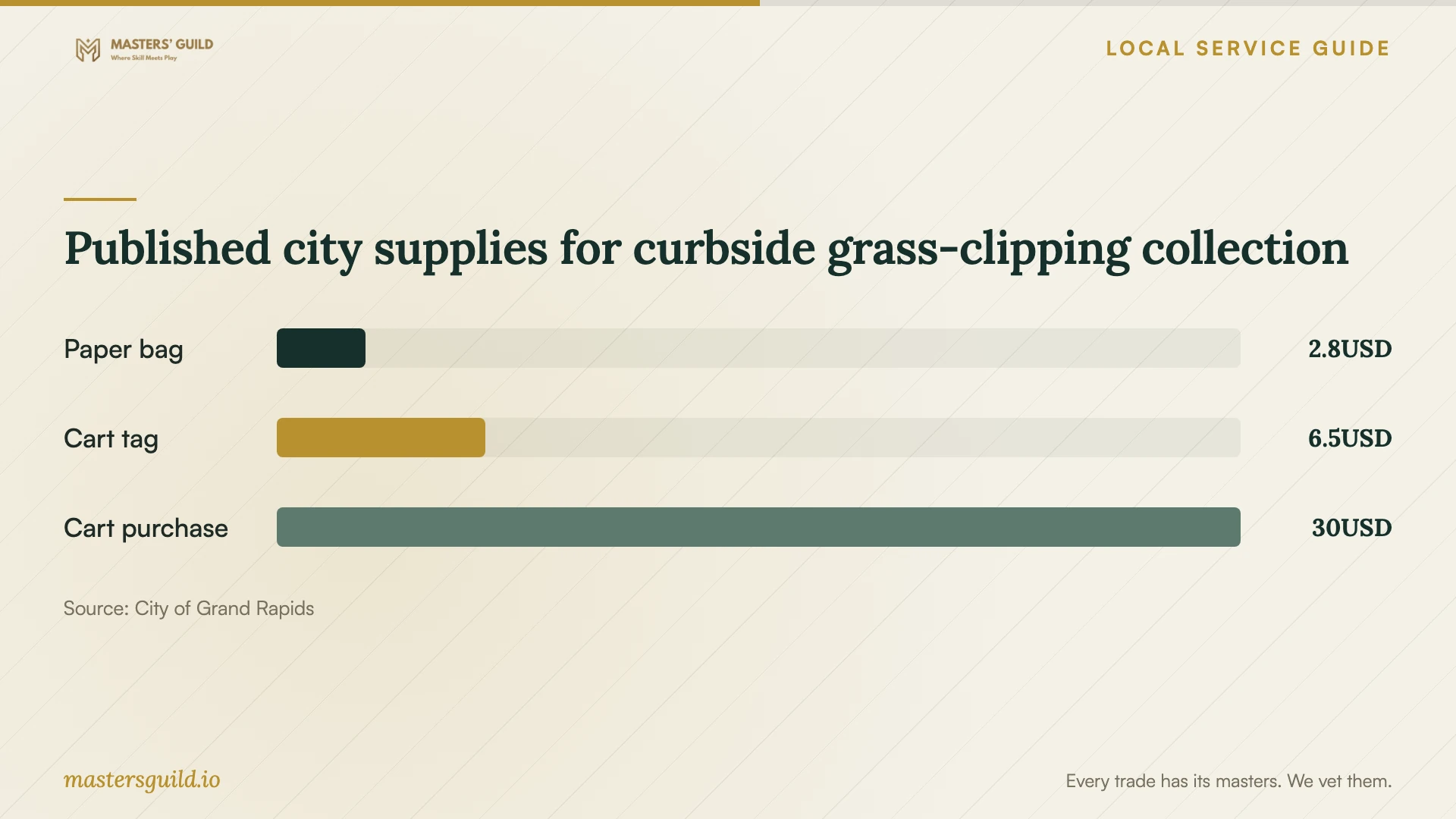
Published city supplies for curbside grass-clipping collection
Local details that affect your job
An overdue lawn may need a deadline
The City of Grand Rapids lists grass or weeds taller than 12 inches as grounds for a complaint. After accepting an enforceable complaint, the city sends the owner a letter and gives seven days to correct the violation before a follow-up inspection. If you receive a notice, give the provider its deadline and confirm a completion date. Contact Code Compliance at 616-456-3053 about the case rather than assuming a booking resolves it. [1]
Curbside disposal needs its own arrangement
City yard-waste service runs from the first full week in April through the second Friday in December, with weather-dependent dates. The city lists paper yard-waste bags at $2.75 each and limits their contents to 30 pounds. Ask who supplies the bags and handles storage and set-out. Check current service updates before arranging late-season bagging. [2]
Resident drop-off differs from contractor hauling
Grand Rapids residents can take residential yard waste to 2001 Butterworth Street SW without an out-of-pocket charge and must bring identification proving residency. The city accepts loose material or paper bags and prohibits plastic bags. Contractors must work with We Care Denali, weigh their loads, and pay the tipping fee. Ask a hauling provider to include disposal in the quote. [2]
Choose the service arrangement
| Your situation | Arrangement to discuss | Confirm before booking |
|---|---|---|
| Grass grows past the agreed trigger between visits | Shorten the interval using MSU's one-third rule | Approval and price for additional cuts |
| You want clippings returned | Mowing with clippings distributed across the lawn | How the crew handles excessive accumulation that could smother turf |
| You want bagged clippings | Bagging for city collection or contractor hauling | Who supplies bags and tags, stores material, and pays disposal costs |
| You received a tall-grass notice | A first cleanup with a confirmed completion date | The notice deadline and the provider's ability to meet it |
Your hiring checklist
- Send matching photos and a scope description to each provider.
- Confirm the initial-cut price and recurring-visit price.
- Agree on cutting height, trimming, edging, and pavement cleanup.
- Choose clipping return, bagging for collection, or hauling.
- Write down rain delays, missed visits, and extra-cut charges.
- Confirm insurance, access instructions, and gate closure.
- Review the first visit before committing to the remaining schedule.
Frequently Asked Questions
Should I choose weekly or biweekly mowing?
Choose an interval that keeps cuts within MSU Extension's one-third rule. Its guide says to mow grass maintained at 3 inches when it reaches 4.5 inches. Ask for schedule changes when growth would make the agreed interval unsuitable. [3]
Do I need the crew to bag clippings?
MSU Extension recommends returning clippings where possible. It advises removing excessive accumulations that could smother the lawn. Ask the provider to quote routine clipping return and any bagging you request as distinct work. [3]
Can my mowing contractor use the city's free drop-off?
The resident no-cost arrangement does not apply to commercial contractors. The city requires contractors to work with its composting vendor, weigh material, and pay a tipping fee. Confirm hauling and disposal charges before booking. [2]
Sources and scope
This guide combines the sources below with practical planning guidance. Figures apply to the stated geography and period; request a written quote for your property.