
Local service guide
Duct and Vent Cleaning in Grand Rapids, MI
Arrange Duct and Vent Cleaning in Grand Rapids after an inspection identifies a reason to clean, then compare written estimates covering system components, dust collection, access repairs and total cost. EPA recommends cleaning as needed for substantial contamination, pests or excessive debris. Correct underlying causes before cleaning or replacing affected ducts. If the proposal includes mechanical alterations, ask the city which permit requirements apply before approving that added work. [1] [2]
Decide whether your ducts need cleaning
Start with evidence inside the system. EPA identifies substantial visible mold on hard surfaces, pest infestation, and excessive dust or debris as reasons to consider cleaning. Ask the inspector to show you affected areas and distinguish the material inside the duct from ordinary dust on the register. [2]
Correct the underlying cause before cleaning or replacing affected ducts. EPA warns that contamination can recur if you leave the underlying problem unresolved. Wet or moldy duct insulation requires replacement because cleaning cannot restore it. A contractor's photograph can document a suspect patch, but an expert may need laboratory analysis to confirm mold. [2]
Keep expectations realistic. EPA says duct cleaning has not been shown to prevent health problems, and evidence that cleaning ducts alone improves equipment efficiency remains limited. Discuss unexplained health symptoms with your doctor rather than relying on a cleaning sales pitch. [2]
Compare scope before comparing prices
EPA recommends written estimates from at least three providers. Ask each bidder to identify the supply and return ducts, registers, air handler, blower, coils and drain pans included in the work. Request an explanation of exclusions and identify who will handle any contaminated equipment outside the cleaner's scope. [2]
Have each contractor explain how they will reach the system, dislodge debris and collect it. EPA recommends equipment that exhausts outdoors or HEPA vacuum equipment when it exhausts indoors. The contractor should protect furnishings and seal and reinsulate access openings after cleaning. [2]
Request a total price tied to the inspected scope, plus written approval requirements for additions. Ask whether the quote covers dryer vent cleaning if you want that task included; name it as a separate line item. Request an expected work duration and identify any planned interruptions before choosing an appointment.
Resolve material and treatment questions before work
Ask the contractor to identify sheet metal, flexible duct and fiberglass sections before selecting cleaning tools. EPA calls for soft-bristled brushes on fiberglass materials and warns contractors to inspect for asbestos-containing materials before cleaning. Suspected asbestos requires specially trained and equipped contractors. [2]
Require a separate explanation for any proposed biocide or interior coating. EPA advises against routine use of sealants to encapsulate contaminants and reports no registered biocides for fiberglass duct board or fiberglass-lined ducts. Ask to see the product label and its permitted uses before authorizing treatment. [2]
Prepare access and inspect the finished work
Before the visit, clear a route to the air handler and the registers you can reach. Tell the contractor about inaccessible rooms, stored belongings and pets. Agree on furniture protection, equipment placement and permission for any new access openings.
Ask for a walkthrough before accepting completion. EPA recommends a visual inspection of the system and describes photography as a way to document conditions inside ducts. Review supply and return sections, registers and included equipment. Ask the contractor to correct visible debris, loose registers or poorly sealed access openings and demonstrate system operation. [2]
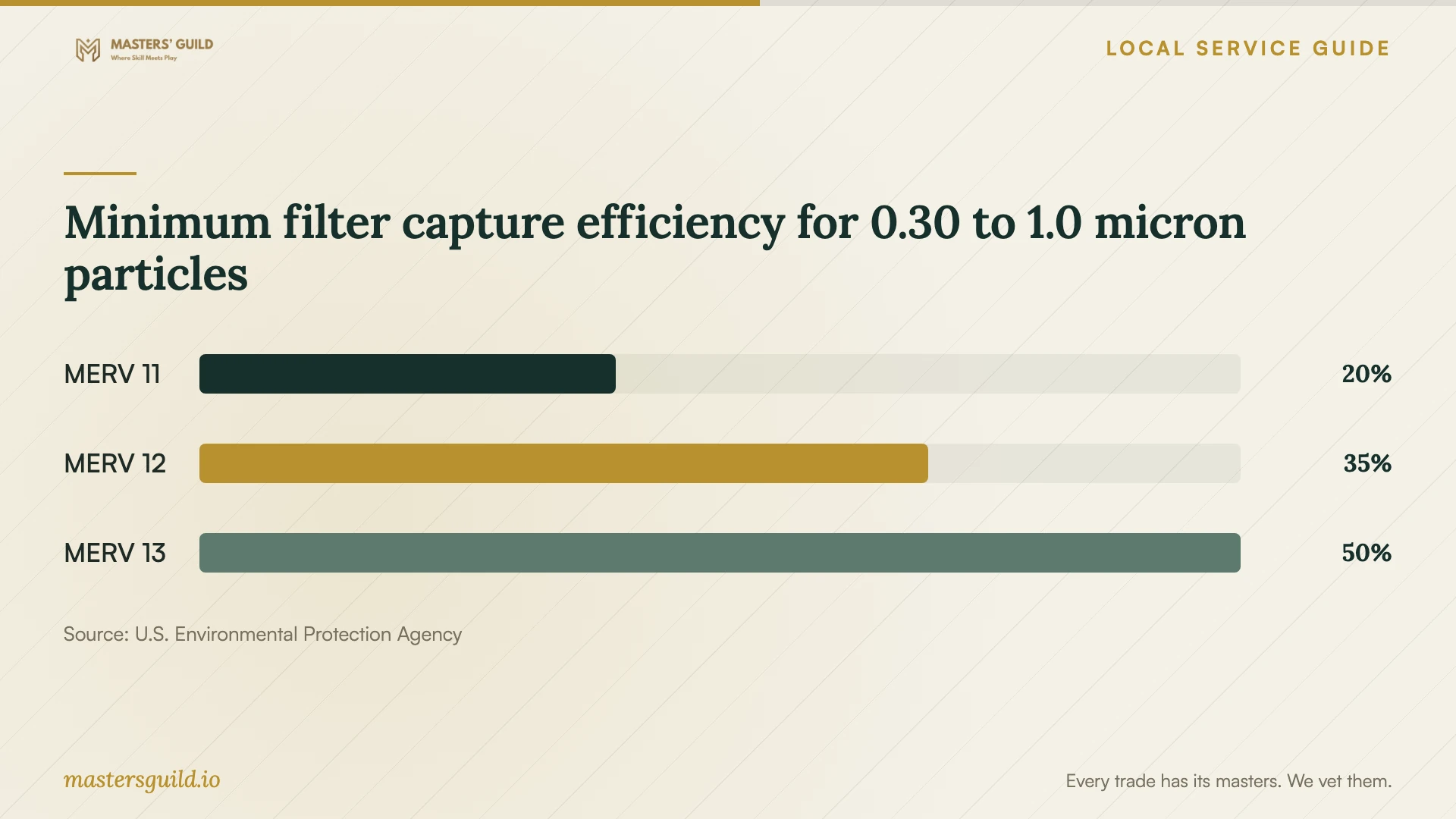
After cleaning, follow the equipment manufacturer's filter maintenance instructions and keep the system dry. EPA recommends preventing water and dirt from entering the system. For a filter upgrade, its MERV guidance recommends MERV 13 or the highest rating compatible with the fan and filter slot; consult an HVAC technician if compatibility is unclear. [2] [3]
Minimum filter capture efficiency for 0.30 to 1.0 micron particles
Local details that affect your job
Separate cleaning from permit-required mechanical work
Grand Rapids requires a mechanical permit for work covered by the Michigan Mechanical Code or Michigan Residential Code. Its permit page does not establish a permit requirement for routine duct cleaning. If a cleaner proposes equipment installation or other mechanical alterations, confirm the scope with the Development Center at 616-456-4100. For permit-required work at properties with two or more units, the city requires a licensed contractor. [1]
Plan the application route before scheduling added work
A single-family homeowner applying for a mechanical permit for their primary residence must apply in person unless they are also a licensed mechanical contractor. The Development Center is at 1120 Monroe Ave. NW, third floor. Contractors can apply through Citizen Access; first-time users need license activation. The city says to expect a response within one to two business days, with revisions possible. Allow for that review rather than treating submission as approval. [1]
Choose the next step from the condition you find
| Condition | Next step | Question to ask |
|---|---|---|
| Dust on a return grille alone | Clean the grille and assess inside the system before booking duct cleaning. | Can you show substantial contamination inside? |
| Excessive debris or particles leaving supply registers | Request an inspection, correct the underlying cause, then arrange cleaning. | Which components need cleaning, and what caused the contamination? |
| Wet or moldy duct insulation | Correct the moisture source before replacing affected insulation. | Who will correct the moisture source before replacement? |
| Proposed permit-required work in a two-unit property | Use a licensed contractor and confirm the city permit process. | Who will obtain the permit? |
Your hiring checklist
- Describe the concern and ask bidders to document the affected system areas.
- Request matching written scopes and total prices before comparing offers.
- List dryer vent work and other requested additions as separate items.
- Ask how the crew will protect furnishings and collect loosened debris.
- Agree on access openings, closure methods and approval for extra work.
- Confirm the city application route if the scope includes permit-required mechanical work.
- Arrange a completion walkthrough with photographs of inaccessible areas.
Frequently Asked Questions
Should I book duct cleaning every year?
EPA recommends cleaning as needed rather than on a yearly schedule. Keep filter changes and heating equipment inspections in your maintenance plan, and ask for evidence before adding duct cleaning. [2]
Can a cleaner claim EPA certification?
EPA does not certify, endorse or approve duct cleaning companies. Ask about experience with your duct materials, references, insurance and applicable credentials instead. [2]
Does duct cleaning replace furnace servicing?
Keep the appointments distinct. EPA recommends inspection and servicing of fuel-burning furnaces before each heating season to protect against carbon monoxide poisoning. Duct cleaning does not establish that the furnace operates safely. [2]
Sources and scope
This guide combines the sources below with practical planning guidance. Figures apply to the stated geography and period; request a written quote for your property.