
Local service guide
Carpet cleaning in Grand Rapids: Plan Your Visit
Arrange carpet cleaning in Grand Rapids by comparing written quotes for the same rooms, stairs, furniture handling and stain treatments. Agree on equipment access, wastewater disposal and indoor drying before booking. Disclose leaks or sewer backups at the first conversation so the provider can assess whether you need water-damage restoration; EPA distinguishes clean-water cleanup from contaminated-water remediation. [3]
Get a quote for the work you need
Give each cleaner a room list with approximate dimensions, stairs and landings. Send photos of problem areas and describe pet accidents, previous spot treatments and any known damage. Identify furniture you want moved and pieces you want the technician to work around.
Request a total that identifies the cleaning method, included areas and optional treatments. Ask how the cleaner defines a room, prices stairs and applies any minimum visit charge. Require your approval before the technician adds work or products after inspecting the carpet.
For stains or odors, ask what the provider proposes to treat and what result they expect. Share the manufacturer’s care instructions if you have them. Avoid making your decision on a promise of complete removal without an assessment of the affected area.
Choose someone who can explain the method
Ask why the proposed method suits your carpet and how the technician will assess unfamiliar fibers or existing damage. Request proof of liability insurance, identify who will perform the work and ask how to verify any training credential the company mentions.
Discuss how the company handles concerns after the visit. Ask whom to contact if a stain returns, an odor remains or you notice damage. Keep any promises about follow-up service with the written agreement so you can refer to the terms you accepted.
Arrange access and indoor drying
Describe the route from parking to the carpet, including upper floors, narrow stairs and shared entrances. Confirm equipment placement and hose routes. In a shared building, coordinate entry with the owner or manager and discuss how the cleaner will keep common routes usable.
Request separate estimates for working time and drying time. Tell the cleaner when you need bedrooms or stairs, then agree on ventilation, heating and furniture replacement instructions. Ask what to do if the carpet remains damp beyond the provider’s estimate.
Before the appointment, settle who will vacuum and move small objects. Plan a place for children and pets during the work. Keep a usable route to essential rooms, and ask the technician to explain any restrictions before cleaning begins.
Treat water damage as a separate assessment
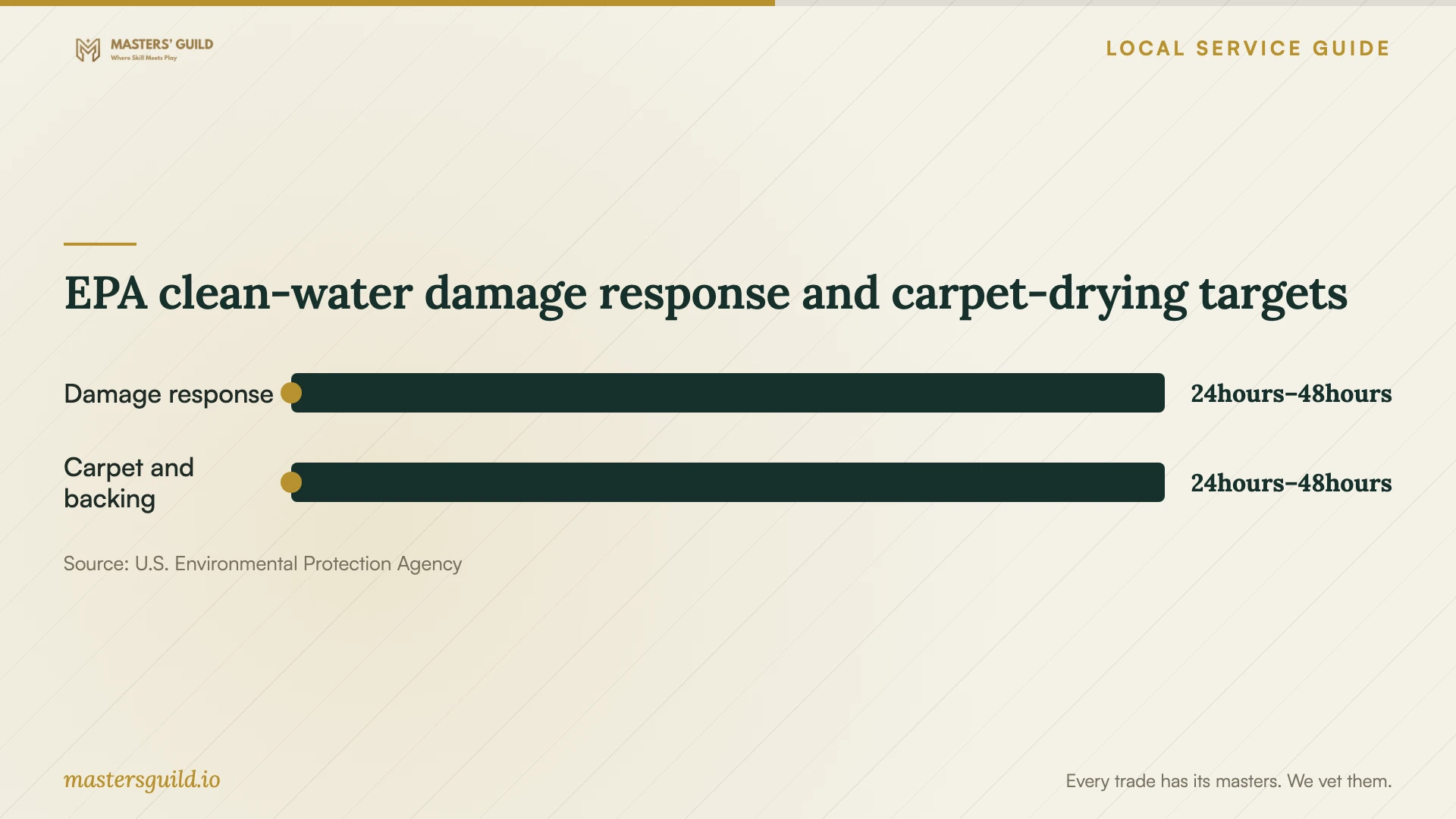
Tell the provider where the water came from and when you discovered it. In its schools and commercial buildings guidance, EPA recommends responding to water damage within 24 to 48 hours and drying clean-water-damaged carpet and backing within that window. EPA also calls for cleaning and drying the subfloor. These are institutional water-damage guidelines, not routine residential carpet-cleaning drying estimates or a guarantee against mold. [3]
EPA advises consulting an experienced professional when those doing contaminated-water remediation lack the necessary expertise. It also warns against using fans before determining that the water is clean or sanitary. Disclose suspected sewage contamination before anyone selects equipment or starts work. [3]
Ask the restoration provider what they will inspect beneath the carpet, which materials they propose to retain or remove, and how they will assess drying. For insurance discussions, ask what assessment and completion records they will provide.
EPA clean-water damage response and carpet-drying targets
Local details that affect your job
Resolve extraction-water disposal before the visit
Grand Rapids tells residents to report dumping into storm drains, roadside curbs or the ground and states that no one should discharge into a manhole. Ask the cleaner to identify the collection and disposal destination for extracted water before accepting the work. The City’s environmental tips do not establish an approved carpet-cleaning disposal method. Seek clarification from Environmental Services if the proposed destination remains unclear; the City lists 311 for reporting environmental concerns. [1]
Check the limits of a potential City backup claim
If you believe City infrastructure or staff caused a sewer backup, review the City’s property-damage claim process while arranging cleanup. The City requires sewer-backup claims within 45 days of the backup or its discovery. It states that it does not cover and is not liable for storm-related damage, and filing does not guarantee reimbursement. Preserve damage photos and applicable receipts or paid invoices, or two repair estimates, as the City requests. Keep your homeowner’s policy and records of damaged belongings for the home-damage claim. [2]
Match the appointment to the carpet’s condition
| Situation | What to arrange | Point to resolve |
|---|---|---|
| Routine soil or isolated stains | A carpet-cleaning assessment and written quote | Agree on included areas, treatments and furniture handling. |
| Carpet wet from known clean water | A prompt water-damage assessment | Discuss carpet, backing and subfloor drying; EPA’s institutional guidance targets 24 to 48 hours. |
| Suspected sewage or other contamination | An assessment by someone experienced in contaminated-water remediation | Determine whether the water is clean or sanitary before using fans, as EPA advises. |
| Backup you believe City infrastructure or staff caused | Cleanup and review of the separate City claim process | Check the 45-day filing deadline and the City’s storm-related damage exclusion; reimbursement is not guaranteed. |
Your hiring checklist
- Prepare one room-and-stair list for all quote requests.
- Identify stain locations, pet accidents and previous treatments.
- Mark optional treatments and require approval for additions.
- Confirm the technician’s identity and request insurance documentation.
- Arrange parking, entry and equipment routes.
- Clear the agreed work areas and plan household access.
- Confirm indoor drying instructions and the follow-up contact.
Frequently Asked Questions
How much should I budget for the visit?
Request a total for your actual rooms, stairs and treatment needs. Ask the cleaner to explain any minimum charge and identify optional products. Use that total to set your budget; do not assume a room-price advertisement covers your full job.
Can I schedule cleaning before guests arrive?
Tell the provider when guests need to use the rooms. Ask for a drying estimate and a contingency plan if the carpet remains damp. Choose the appointment after you understand the expected restrictions on walking and replacing furniture.
What should I check before the technician leaves?
Walk through the cleaned areas together. Review remaining stains and any work you declined, then confirm aftercare and follow-up arrangements. Ask the technician to explain any difference between the agreed scope and the invoice.
Sources and scope
This guide combines the sources below with practical planning guidance. Figures apply to the stated geography and period; request a written quote for your property.