
Local service guide
Masonry repair in Grand Rapids: hiring and permits
Masonry repair in Grand Rapids starts with a site visit and a written scope: ask the contractor to identify which joints or bricks need work, explain the proposed mortar, and separate repair from rebuilding. Before agreeing to a start date, check the city's permit requirements for structural changes and its approval process for exterior repairs on designated historic properties. Compare proposals that cover the same repair area, access arrangements and cleanup. [1] [2]
Define the repair before comparing contractors
Photograph the whole wall or chimney from a safe position, then take close views of the areas that concern you. Mark the locations of missing mortar, damaged bricks and any interior damp patches. Tell the contractor when you first noticed each problem and whether anyone has repaired that area before. Avoid climbing to inspect an upper wall or chimney.
Ask each contractor to explain what they propose to retain, remove and replace. Request a marked photograph or sketch showing the repair boundary. For a new wall or a rebuild, ask for dimensions, the proposed brick or stone, and a drawing of the intended result. If you see leaning masonry, loose overhead pieces or changing cracks, request an assessment before accepting a surface-repair proposal.
Compare like scopes. Ask whether the price includes mortar removal, replacement bricks, access equipment, protection of nearby surfaces, debris removal and a sample area. Have the contractor explain how they will authorize extra work if they uncover damage. Keep the agreed scope and that approval procedure in the contract.
Choose a mortar proposal suited to the existing masonry
For historic masonry, choose a contractor who can explain compatibility as well as appearance. The National Park Service describes historic mortar as a sacrificial material that helps moisture move through the joints. It warns that repointing with harder, less permeable modern materials can force moisture into historic brick or stone and cause damage. [3]
Ask how the contractor will identify the existing mortar and decide on a replacement. The National Park Service describes sampling and analysis as a way to determine a compatible recipe; it also explains that the binder affects hardness and breathability, while the aggregate contributes texture and color. Ask whether your project warrants analysis, and request the proposed mix in writing. [3]
Request a small sample area for your approval before the contractor proceeds across the wall. Discuss joint shape, color and replacement-brick appearance. Ask for photographs of comparable repairs and an explanation of the materials used. Treat a color match as one part of your decision alongside the contractor's explanation of compatibility.
Settle approvals and inspections before the start date
Grand Rapids requires a building permit for projects that change a home's structure and for most new structures on the property. Its general renovation guide does not give a masonry-specific exemption for repointing. Send the Development Center your address, photographs and proposed scope, and ask which approvals apply to that work. [2]
The city says the permit applicant takes responsibility for the work and that a hired contractor should apply. Ask your contractor to identify the applicant, include permit responsibilities in the contract and explain the inspection sequence. The city advises contacting the Development Center before covering uninspected work and requires a final inspection after permitted work finishes. [2]
For designated historic properties, allow time for a separate preservation decision. The city routes proposals through staff approval or a Historic Preservation Commission hearing. Hearing applications must meet the filing date for the requested meeting. Ask Planning which route applies before you commit to materials or a construction date. [1]
Agree on weather protection and completion records
Ask the mason to specify acceptable installation conditions for the proposed mortar, protection during the work and the circumstances that would postpone it. Include responsibility for temporary protection and rescheduling in the agreement. Use the current forecast when planning the job rather than treating a monthly climate average as permission to proceed.
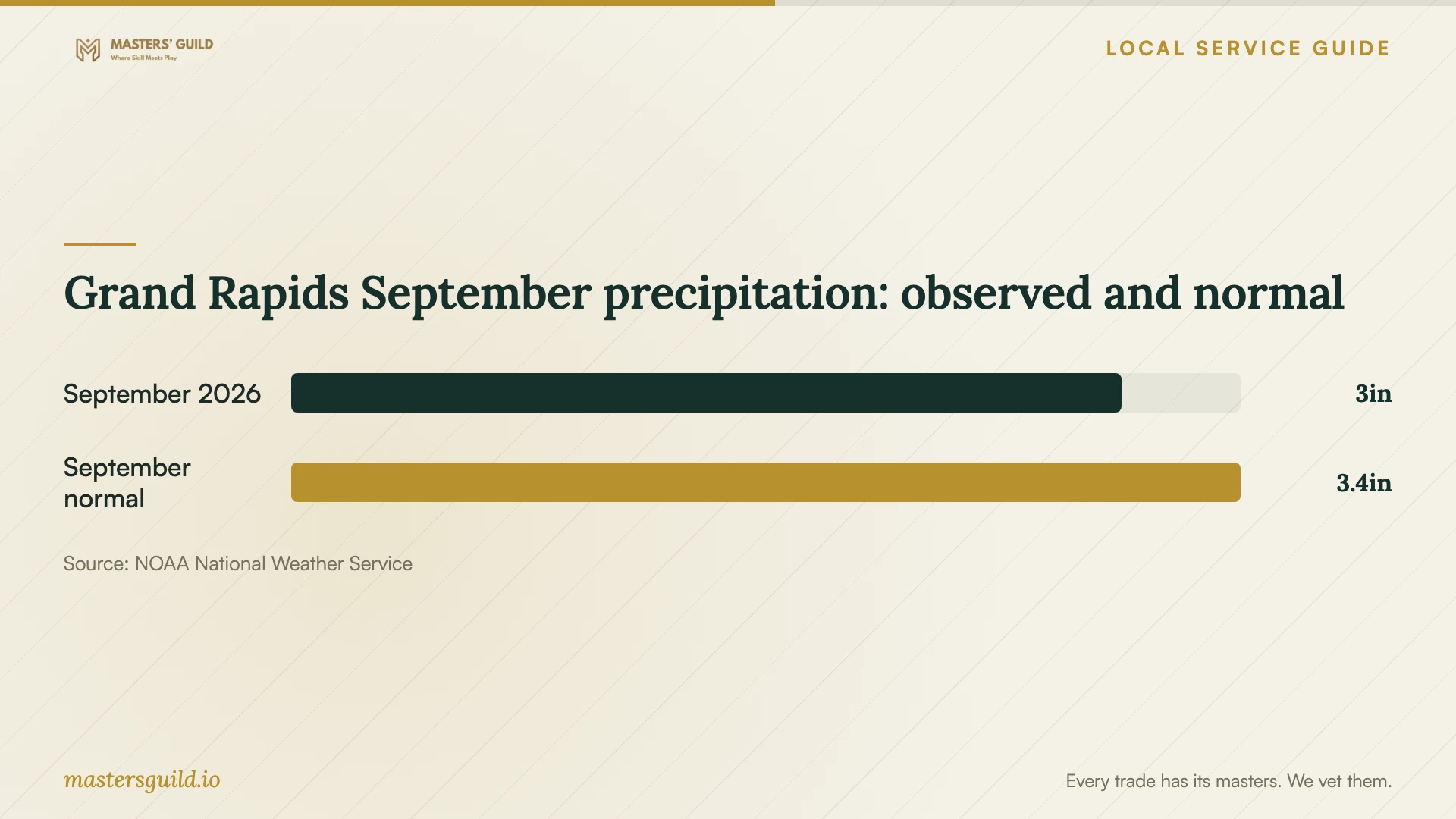
The National Weather Service reported 3.00 inches of precipitation in Grand Rapids during September 2026, compared with the September normal of 3.43 inches for 1991–2020. The comparison below gives recent local rain context for your scheduling discussion. It does not establish suitable conditions for a particular mortar or predict October weather. [4]
Before final payment, walk through the agreed repair area with the contractor. Compare the finished work with the approved sample and scope. Request completion photographs, the mortar specification, care instructions and written warranty terms. For permitted work, ask for the city's final inspection outcome. [2]
Grand Rapids September precipitation: observed and normal
Local details that affect your job
Historic-property approval needs a materials package
Grand Rapids' Certificate of Appropriateness process covers exterior alterations, improvements and repairs on properties in a Historic District or on a Historic Landmark. Call Planning at 616-456-4100 to establish whether staff or the commission must review your proposal. The city lists current whole-building and close-up photographs, material lists and physical samples among supporting documents. Ask the mason to help prepare these before you approve the final repair specification, and obtain the certificate and proper permits before work begins. [1]
Rental-property owners should establish the permit applicant early
The city's home-renovation guide says landlords need a licensed and registered contractor to obtain permits for rental properties in most cases. If the house is a rental, disclose that when requesting the quote and ask the contractor to confirm eligibility to apply. Contact the Development Center at 616-456-4100 with the proposed scope if you need clarification. Avoid arranging the job around owner-occupied homeowner application rules. [2]
Choose the next step for your masonry project
| Your situation | Next step | What to request |
|---|---|---|
| Exterior repair on a designated historic property | Ask Planning whether staff or commission approval applies. | Photographs, material details and samples for the approval package. |
| Work that changes the home's structure | Confirm the building-permit process with the Development Center. | Plans, a named permit applicant and an inspection schedule. |
| Permitted work on a rental house | Confirm the contractor meets the city's applicant requirements. | Evidence of licensing and registration for the proposed work. |
| Repointing historic brick or stone | Ask the contractor to explain mortar compatibility. | A proposed mix and an explanation of whether sampling or analysis is appropriate. |
Your hiring checklist
- Photograph the entire repair area and close views from a safe position.
- Give each contractor the same marked repair boundary and description of your concerns.
- Ask for the proposed mortar mix, replacement materials and a sample-area approval step.
- Confirm the applicable city approvals and name the permit applicant in the contract.
- Request written prices for repair work, access equipment, cleanup and possible additions.
- Agree on weather protection, postponement conditions and site access.
- Collect completion photographs, care instructions, warranty terms and applicable inspection records.
Frequently Asked Questions
Do I need a permit for repointing?
The city's general guide requires permits for structural changes but does not identify a repointing-specific exemption. Ask the Development Center about your exact scope. Exterior repairs on designated historic properties also fall within the city's Certificate of Appropriateness process. [1] [2]
Can I choose mortar by color alone?
Include compatibility in the decision. The National Park Service explains that mortar binders affect hardness and breathability, while aggregate contributes texture and color. Ask the contractor how the proposed replacement suits your existing brick or stone. [3]
Should I apply for the permit or ask the contractor?
Grand Rapids says a hired contractor should apply because the applicant takes responsibility for the work. For rental properties, the city requires a licensed and registered contractor to apply for most types of permits. [2]
How should I compare quotes without a reliable local price range?
Give contractors the same scope and request itemized proposals. Compare the repair boundary, materials, access equipment, protection, cleanup and handling of additional work. Ask each contractor to explain any exclusions before you select an offer.
Sources and scope
This guide combines the sources below with practical planning guidance. Figures apply to the stated geography and period; request a written quote for your property.