
Local service guide
Bathroom Remodeling in Grand Rapids, MI
For Bathroom Remodeling in Grand Rapids, choose a contractor who will price a defined scope, apply for the required permits, and coordinate inspections before closing walls. The City says a typical bathroom remodel requires building, electrical, and plumbing permits. Start by deciding whether you want fixture replacements or changes to piping, wiring, walls, and ventilation, then ask each bidder to price the same work. [1]
Define the bathroom you need before requesting bids
Write a short brief that separates problems from preferences. List leaks, an awkward entrance, difficult tub access, insufficient storage, or a fan you want assessed. Then identify the fixtures you want to keep and whether you want to preserve their locations. Give each contractor the same brief, room measurements, and photographs.
Ask for separate prices for your preferred plan and any optional layout changes. Have the contractor identify demolition, disposal, plumbing, electrical work, ventilation, wall repair, waterproofing, tile, fixtures, and painting. Request model numbers for selected products and dollar allowances for anything you have not chosen.
Choose a contractor after reviewing the written scope and asking who will perform each trade. Request license information, proof of insurance, and references for comparable bathroom work. Ask each reference how the contractor handled changes, protected the home, and resolved unfinished items.
Set permit responsibility before demolition
Grand Rapids distinguishes cosmetic work from changes to building systems. Its renovation guide says painting and adding a tile backsplash do not require a building permit. Changes involving walls or drywall can require one. Altering or adding electrical wiring requires an electrical permit, while swapping an electrical fixture does not under the City's guide. [1]
Ask the contractor to confirm the permit combination for your exact scope with the Development Center. The City says the contractor should apply when you hire one, and it holds the applicant responsible for the work. Put permit fees, application responsibility, and inspection scheduling in the agreement. [1]
Discuss inspection stages before agreeing to a completion date. The City requires inspection before a remodeler covers insulation, wiring, or piping with drywall, followed by a final inspection after completion. Ask your contractor to include these stages in the schedule and explain when you can use the bathroom again. [1]
Make the quote useful for budget and scheduling decisions
Request a site-specific written quote rather than choosing a budget from an advertised starting price. Ask each bidder to distinguish fixed prices, allowances, exclusions, and work they cannot assess until demolition. Agree on how the contractor will document concealed damage and price a repair before you authorize it.
Have the contractor describe the shower or tub waterproofing system, preparation beneath the tile, and responsibility for connections around drains and fixtures. Ask who will check the work before tile installation and what documentation you will receive. Keep these details in the contract alongside finish selections.
Arrange a household plan for the construction period. Ask for expected water shutoffs, days without a working toilet or shower, work hours, dust protection, and debris removal. If this is your only bathroom, agree on usable facilities before work begins. Confirm delivery arrangements for the tub, vanity, and other selected items before setting the demolition date.
Choose fixtures using product specifications
Compare toilet dimensions, seat height, faucet reach, storage access, and shower controls against how you use the room. Ask the contractor to check fit and installation requirements before you order. Discuss future access needs, including entry clearance and possible grab-bar locations, while deciding the layout.
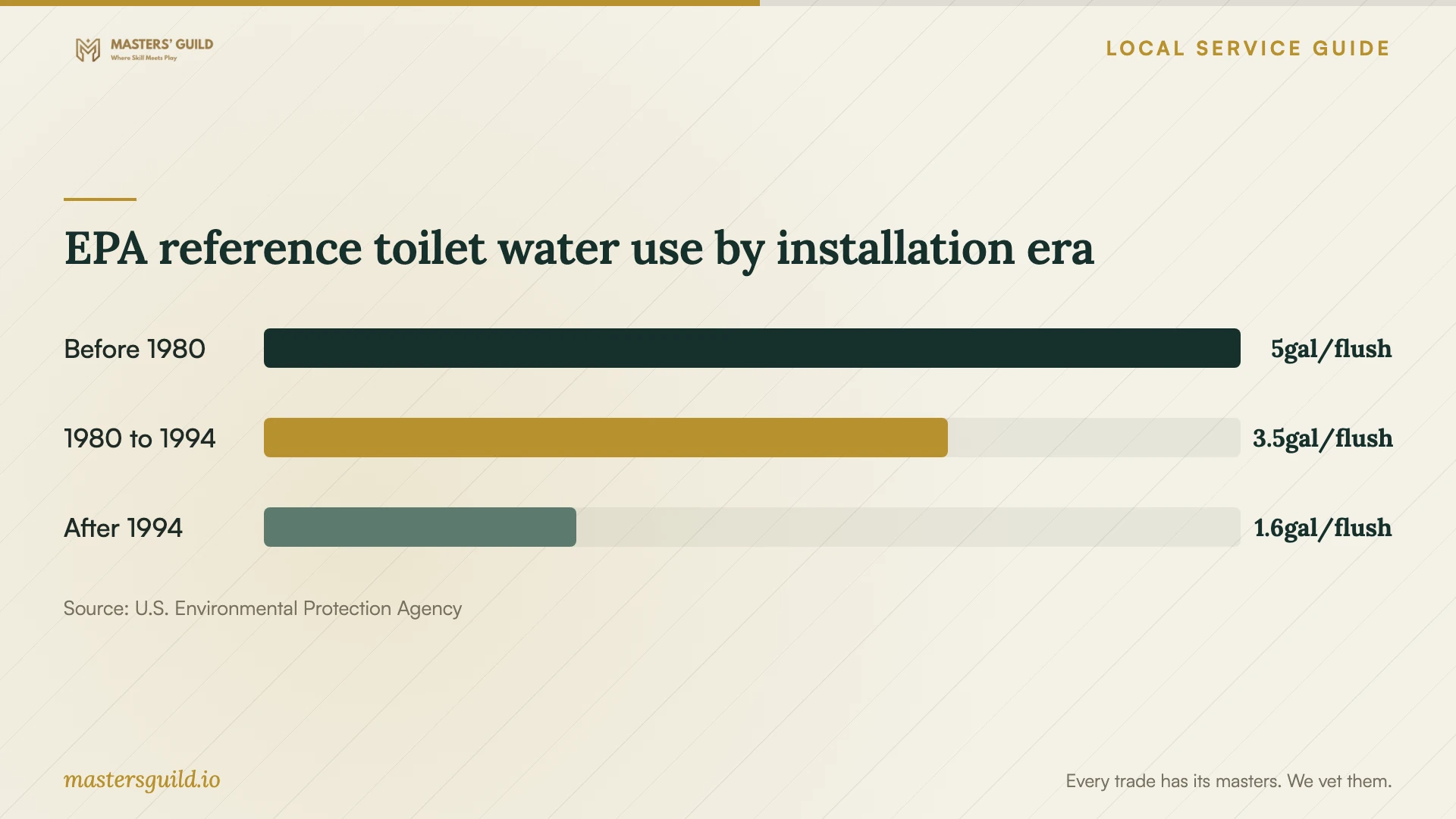
EPA says only products independently tested to meet its water-efficiency and performance criteria carry the WaterSense label. Its calculator uses the existing toilet's installation era to estimate water use and identifies WaterSense toilets as using 1.28 gallons per flush or less. Use that information alongside fit and usability when comparing replacements. [4]
Treat the chart as a national fixture reference. EPA uses assumed consumption by installation era rather than measurements from your bathroom. Its calculator also uses national average utility costs and warns that actual savings may vary. Do not treat its dollar estimates as a forecast for your household. [4]
EPA reference toilet water use by installation era
Local details that affect your job
Homeowner plumbing applications depend on property type
The City allows a homeowner of a single-family home to apply at the Development Center for plumbing work at their primary residence. Its plumbing page requires a licensed contractor for properties with two or more units. Homeowners who are also licensed plumbing contractors may apply online. Confirm your eligibility before planning to pull your own plumbing permit. [2]
Resolve painted-surface work in an older rental before demolition
For a pre-1978 rental bathroom, ask who will handle disturbance of painted surfaces and what lead-safe qualifications they hold. The City's lead page says rental owners doing their own work must have RRP certification. It also says its Chapter 12 screening and related repair requirements are postponed until further notice. The City offers free RRP training to eligible local owners and contractors, with advance registration required. [3]
Use the Development Center to resolve scope questions
The Development Center lists its office at 1120 Monroe Ave. NW, third floor, and its phone number as 616-456-4100. Bring a written scope when asking about permits. For permitted work, the City allows building and trade inspection scheduling through Citizen Access or by calling 311. [1]
Match your proposed work to the next planning step
| Proposed work | City guidance | Next step |
|---|---|---|
| Replace a faucet, sink, or toilet | Replacement alone does not require a plumbing permit. | Ask whether the quote includes piping changes beyond replacement. |
| Move fixtures or add piping | Plumbing work beyond fixture replacement requires a permit. | Have the contractor confirm the plumbing scope and permit. |
| Change or update an exhaust fan | The City lists this work under mechanical permits. | Include fan work in the permit discussion and written bid. |
| Open walls and change wiring or piping | The City requires inspection before drywall covers the work. | Include the inspection stage before wall closure in the schedule. |
| Do plumbing work in a property with two or more units | The City requires a licensed contractor. | Arrange contractor-led plumbing work and permitting. |
Your hiring checklist
- Give each bidder the same room measurements, photographs, and desired scope.
- Separate essential repairs from optional finishes and layout changes.
- Request product names, model numbers, allowances, and exclusions in writing.
- Assign responsibility for permit applications and inspection scheduling.
- Agree on a written approval process for concealed damage and extra work.
- Plan toilet access, shower access, water shutoffs, and household dust protection.
- Request warranty terms, care instructions, and project closeout documents.
Frequently Asked Questions
Does every bathroom update need the same permits?
No. The City says a typical bathroom remodel requires building, electrical, and plumbing permits, but it exempts some limited work, including replacement plumbing fixtures. Exhaust-fan changes can require a mechanical permit. Ask the Development Center to confirm requirements for your complete scope. [1]
Can I apply for a plumbing permit myself?
The City's plumbing page allows homeowner applications at the Development Center for a single-family primary residence. Properties with two or more units require a licensed contractor. Confirm which application route applies before committing to homeowner work. [2]
How should I compare bathroom remodeling quotes?
Compare the same layout, product selections, waterproofing scope, allowances, and exclusions. Ask each contractor to identify who handles permits and inspections, how they price hidden damage, and how they will document your approval of additional work.
Can I close the walls once the plumbing and wiring are finished?
Arrange the required inspection first. Grand Rapids says remodel work must receive inspection before drywall covers insulation, wiring, or piping. Ask the contractor to confirm approval before proceeding with wall closure. [1]
Sources and scope
This guide combines the sources below with practical planning guidance. Figures apply to the stated geography and period; request a written quote for your property.