
Local service guide
Plan yard cleanup in Glendale, AZ
For yard cleanup in Glendale, choose a crew that will put the work areas, weed-removal method, debris destination, and total charge in writing. Before booking ground clearance, ask how workers will control dust. Maricopa County requires activities capable of generating fugitive dust, including weed removal, to comply with Rule 310 regardless of site size. [2]
Describe the result before requesting quotes
Photograph the front yard, side passages, backyard, and access route. Identify loose leaves, standing weeds, fallen branches, and unrelated household items as separate tasks. Tell bidders which areas to include and which plants to leave. Ask them to flag anything they cannot price from the photos.
Choose a completion standard you can inspect: agreed weeds removed or cut, loose vegetation collected, paths cleared, and waste taken to the agreed destination. Ask bidders to itemize pruning, plant removal, chemical treatment, irrigation repairs, and unrelated junk removal. Approve those additions before workers begin.
Agree on methods for the ground you have
Show the bidder bare-earth patches, gravel beds, lawn, and paving. Ask which tools workers intend to use in each area and how they will protect irrigation tubing and retained plants. For loose material, consider hand collection, raking, or sweeping. Maricopa County recommends a rake or broom as an alternative to a dust-producing blower. [3]
For weed clearance, ask the bidder to describe the actual ground disturbance and dust controls. County guidance covers activities capable of generating fugitive dust regardless of site size. A small job therefore still needs a dust-control discussion; the separate permit question depends on the activities involved. [2]
Resolve the county coverage and permit questions below before accepting a blower-based or broad ground-clearance plan. If a bidder proposes to leave waste for another collection service, confirm that service's acceptance and preparation requirements before agreeing to a pile location.
Compare the complete charge
Request a written total for the defined scope. For an hourly offer, ask how many workers the rate covers, how they record time, and whether you can set a spending limit. Require your approval for extra work or charges. Compare optional items separately so you can choose what to include.
Ask whether the price covers bagging, loading, transport, and disposal. Share gate dimensions, steps, and the route between the yard and the loading point. Request proof of insurance and ask who will supervise the work. Use a site visit if the bidder cannot commit to the scope after reviewing your photos.
Prepare access and inspect the work
Secure pets, unlock the agreed entrance, and move furniture or vehicles from the work route. Mark plants and fixtures you want protected. Give the crew lead your retention instructions before clearing starts, then arrange a walkthrough before the crew leaves.
Agree on an alternative method or appointment if air quality affects the plan. During High Pollution Advisories, the county encourages residents to avoid leaf blowing and prohibits employees and contractors of government entities from operating blowers. That government restriction differs from the county's advice for residents. [3]
At handover, compare each work area with the written scope. Inspect retained plants, visible irrigation components, paths, and the loading area. Record unfinished items with the crew lead and agree on how to resolve them before approving completion.
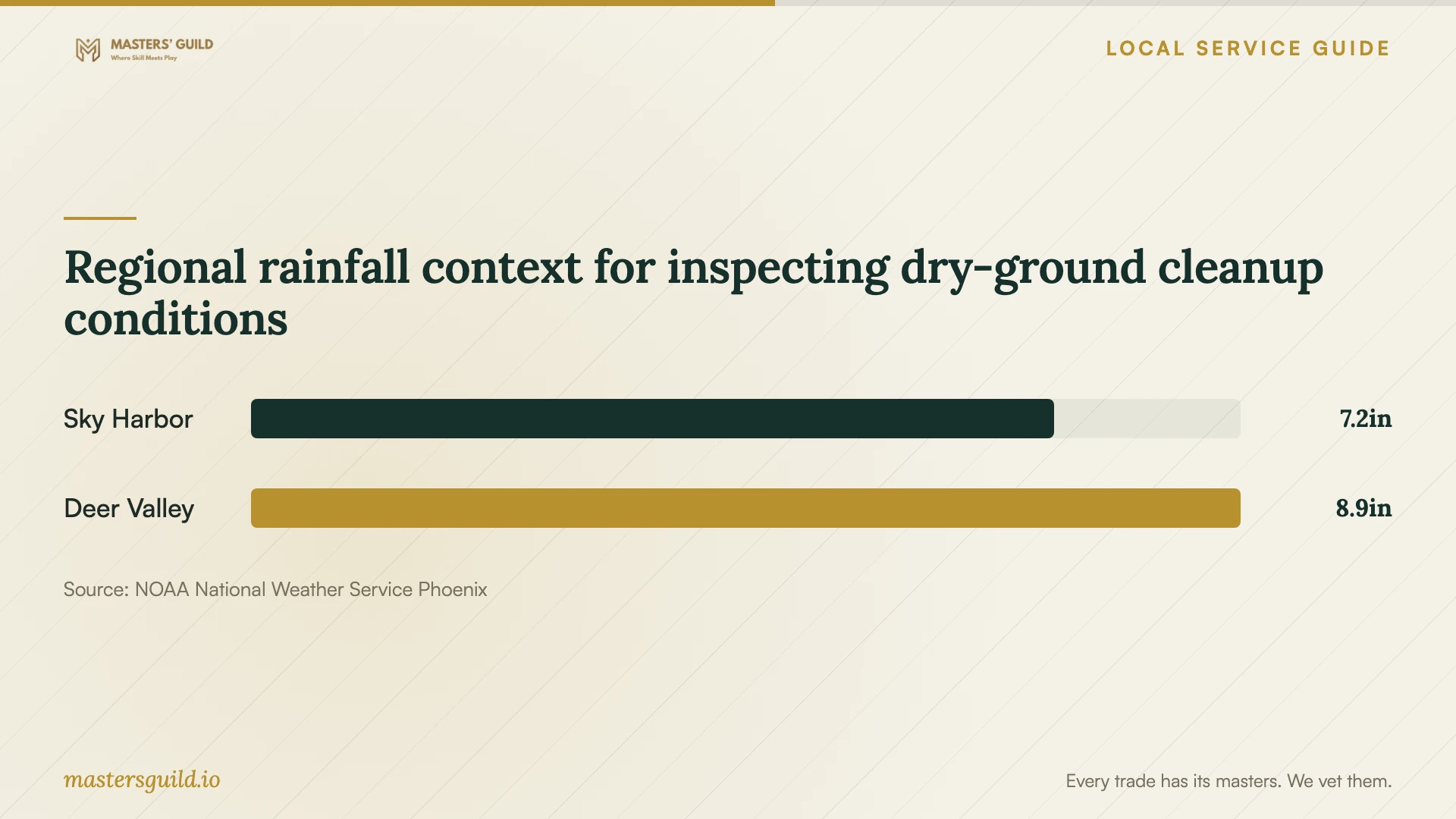
Regional rainfall context for inspecting dry-ground cleanup conditions
Local details that affect your job
Confirm P-25 coverage and the permitted-site exemption
Ask Maricopa County to confirm whether your address falls within its portions of Area A; the supplied ordinance defines coverage through townships and ranges rather than a Glendale address list. For covered sites without a county fugitive-dust-control permit, P-25 limits blower use to stabilized surfaces and prohibits blowing landscape debris into public roadways, including those in gated communities. Its stabilized-surface definition includes gravel, decomposed granite, hardscape, and continuous vegetation. Section 4 exempts sites holding the specified county dust-control permit from all of P-25. That exemption does not remove the separate Rule 310 obligations described in county dust guidance. Ask the bidder and county to resolve both rules for the proposed work. [1] [2]
Review ground disturbance before broad clearance
Maricopa County lists disturbance of at least 0.10 acre, or 4,356 square feet, as a dust-control permit trigger. It also lists bulk material handling. Ask the bidder to identify the area workers will disturb and any handling activities, then resolve permit applicability with the county before work begins. Use the disturbance area for that discussion rather than assuming the whole lot size determines the answer. [2]
Choose what to include in the work plan
| Your situation | Request before booking | Inspect at completion |
|---|---|---|
| Loose leaves and fallen twigs | Collection from named areas and an agreed waste destination | Remaining piles and clear paths |
| Weeds on exposed ground | Removal method and dust controls; Rule 310 covers dust-generating weed removal regardless of site size | Agreed weed-removal result and retained plants |
| Broad ground clearance | Permit review; county guidance lists disturbance of at least 4,356 square feet and bulk material handling as triggers | Cleared area against the agreed boundary |
| Cleanup plus repairs or pruning | Separate prices and approval before added work | Each additional item against its written scope |
Your hiring checklist
- Send photos of the work areas, waste, and access route.
- Mark plants to retain and fixtures to protect.
- Agree on weed removal, cutting, or other proposed treatment.
- Resolve applicable county coverage, dust controls, and permit questions.
- Get the total charge, exclusions, and extra-work approval terms in writing.
- Confirm waste removal, gate access, and the completion walkthrough.
Frequently Asked Questions
How should I budget for cleanup?
Request quotes for the same areas, removal method, and hauling arrangement. Ask each bidder to separate optional work and explain extra charges. If a bidder needs to inspect overgrowth or access before committing to a price, arrange that visit before accepting the offer.
Can a crew use a blower on gravel?
P-25 includes gravel among stabilized surfaces. First confirm with the county that your property lies within its Area A coverage and whether the permitted-site exemption applies. At covered, nonexempt sites, operators must use blowers only on stabilized surfaces and keep blown debris out of public roadways. Sites with the specified county dust-control permit are exempt from P-25, while separate Rule 310 obligations remain relevant. [1] [2]
Does a small weed-removal job need a dust-control permit?
Do not confuse dust-control duties with permit requirements. County guidance says dust-generating activities, including weed removal, must comply with Rule 310 regardless of site size. It lists disturbance of at least 0.10 acre and bulk material handling among permit triggers. Confirm applicability for the proposed work with the county. [2]
Sources and scope
This guide combines the sources below with practical planning guidance. Figures apply to the stated geography and period; request a written quote for your property.