
Local service guide
Mold Removal in Glendale, AZ: Hiring and Planning
Arrange Mold Removal in Glendale by asking an experienced contractor to assess the affected materials and address the water problem alongside cleanup. EPA says homeowners can handle most patches smaller than about 10 square feet themselves; extensive water damage, suspected HVAC contamination, or sewage damage calls for additional guidance or professional help. Before approving demolition, ask whether Maricopa County asbestos requirements apply to your property and proposed work. [1] [2]
Choose the right level of cleanup
For a small patch on a hard surface, EPA recommends detergent and water followed by complete drying. Fix the plumbing leak or other water problem as part of the work. Moldy porous materials, including carpet and ceiling tiles, may need disposal because cleaning may not remove growth within them. [2]
For growth covering more than about 10 square feet or extensive water damage, EPA directs readers to its broader remediation guidance. If sewage or other contaminated water caused the damage, hire someone experienced with that type of cleanup. Consult a health professional before starting if you have health concerns. [2]
Describe what you can see without opening walls: affected rooms, approximate patch dimensions, stained materials, and the known leak history. Ask the contractor how they will investigate suspected hidden damage and obtain your approval before expanding the job.
Compare written scopes before comparing totals
Ask each contractor for mold-cleanup references and check them. EPA recommends hiring someone with mold cleanup experience and asking them to follow guidance from EPA, IICRC, ACGIH, or another professional or government organization. [2]
Request a room-by-room scope that identifies what the crew will clean, remove, dry, and rebuild. Ask who will repair the water source, how the crew will protect adjacent rooms, and what evidence the contractor will provide before you accept completion. Put exclusions and the approval process for hidden damage in writing.
Ask for separate prices for investigation, remediation, disposal, moisture-source repair, and reconstruction. Compare those same categories across offers. If a contractor proposes testing, ask what question it will answer and how the result would change the work.
Resolve demolition questions before setting a start date
Maricopa County’s asbestos rules distinguish regulated properties and projects. Its residential applicability list includes buildings with five or more dwelling units, apartment or condominium complexes with more than one building, grouped projects involving two or more residential buildings, and single-family homes with current or past commercial, institutional, or industrial use. [1]
For properties and work covered by NESHAP, the county requires demolition notification for removing a full structure, a facility component, or a load-bearing structural element, regardless of whether asbestos is present. Renovation notification depends on disturbance of regulated asbestos-containing material and the county’s published quantity thresholds. Ask the contractor to explain which category applies before approving tear-out. [1]
Assign responsibility for checking applicability and submitting any required notification in the contract. Ask the contractor to distinguish county asbestos notification from any other approvals the proposed repairs may need.
Prepare the home and agree on completion
If you know or suspect that mold has contaminated the HVAC system, EPA says to stop running it because it could spread mold through the building. Discuss access and temporary arrangements with the contractor before the crew starts. [2]
Agree on which rooms you can use, where the crew will move debris, and whether you should move belongings before arrival. Photograph the affected areas and keep the initial scope, change approvals, and repair records together.
Before approving paint or caulk, confirm that the crew has cleaned and dried the affected surfaces. EPA advises against covering mold with paint or caulk. Ask the contractor to document the moisture repair and explain what you should check if staining or growth returns. [2]
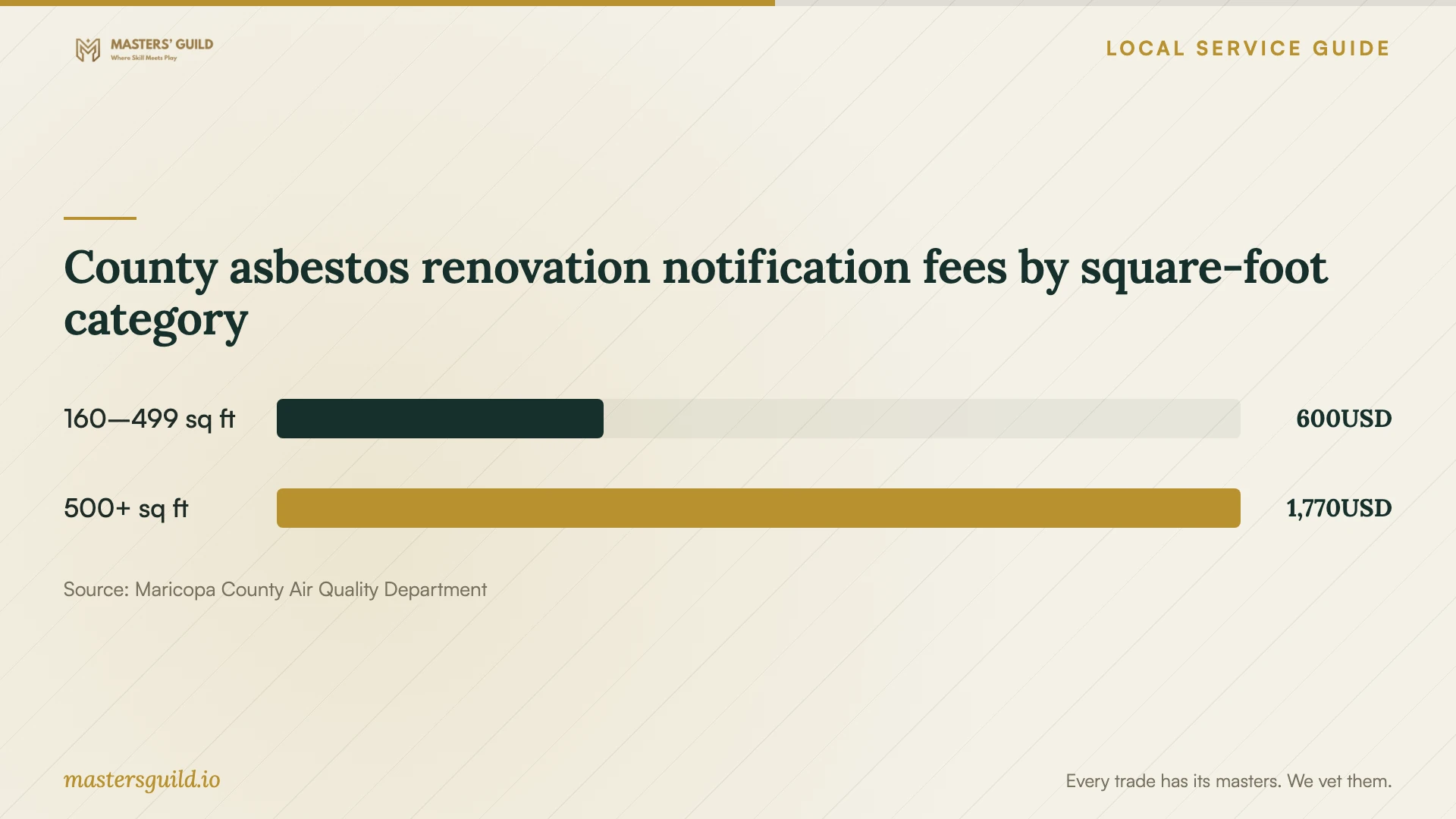
County asbestos renovation notification fees by square-foot category
Local details that affect your job
Property history can change the county review
For a Glendale home that once served a commercial, institutional, or industrial purpose, disclose that history before arranging demolition. Maricopa County includes those single-family residences in its NESHAP applicability list. For a condominium, ask the association about the complex configuration because the county also lists apartment and condominium complexes with more than one building. Do not decide applicability from the size of the mold patch alone. [1]
Required notification affects the start date
For regulated work, Maricopa County requires asbestos NESHAP notification through its AQD Online Portal at least 10 business days before work starts. A first-time filer must arrange an SCS IMPACT account and await approval, which the county says can take several days. Before accepting a demolition date, ask who will file and request the submission record. The county lists its asbestos hotline as 602-506-6708 for applicability questions. [1]
Regional rainfall cannot confirm indoor drying
NWS reports 1991–2020 average annual rainfall of 7.22 inches at Phoenix and 8.90 inches at Phoenix/Deer Valley. These regional station averages describe outdoor climate, not moisture inside your home. For this job, ask the contractor to document drying at the affected materials rather than infer it from outdoor conditions. EPA calls for complete drying after cleanup and water repairs. [3] [2]
Choose your next step
| Situation | Next step | Question to resolve |
|---|---|---|
| Hard-surface patch under about 10 square feet | Consider homeowner cleanup under EPA guidance | Can you fix the water source and dry the surface completely? |
| Larger area or extensive water damage | Consult EPA remediation guidance and discuss professional scope | Which materials need cleaning or removal? |
| Sewage or contaminated-water damage | Hire a professional with relevant cleanup experience | What comparable projects and references can they provide? |
| Suspected HVAC contamination | Stop running the system and seek appropriate guidance | How will the contractor assess system involvement? |
| Demolition at a potentially regulated property | Resolve county asbestos applicability before scheduling | Who will submit any required notification? |
Your hiring checklist
- Record the affected rooms, visible patch dimensions, and leak history.
- Tell the contractor about sewage exposure or suspected HVAC contamination before the visit.
- Check references for comparable mold-cleanup work.
- Request separate cleanup, moisture-repair, disposal, and reconstruction prices.
- Disclose prior commercial use and any multiunit or association ownership.
- Assign responsibility for checking asbestos applicability and required filings.
- Agree on access, change approvals, and completion documentation before work starts.
Frequently Asked Questions
What should a mold-removal quote include?
Request the affected areas, proposed cleaning and removal, drying, disposal, moisture repairs, and reconstruction. Ask for exclusions and a written approval process for additional work. Require the contractor to explain how they will document completion.
Can I paint over the affected area?
EPA advises cleaning mold and drying surfaces before painting or caulking. Paint over moldy surfaces is likely to peel. Resolve the water problem as part of the cleanup. [2]
Does every home cleanup require county asbestos notification?
The county bases notification on property and project applicability, along with the work involved. Its residential list includes specified multiunit properties, grouped residential projects, and single-family homes with commercial, institutional, or industrial use history. Ask the county to resolve uncertainty before demolition. [1]
Are the county fees a mold-removal price guide?
No. The chart shows county filing fees for qualifying asbestos renovation notifications. It does not price mold cleanup, asbestos removal, testing, reconstruction, or other approvals. Ask the contractor to identify any applicable filing fee separately. [1]
Sources and scope
This guide combines the sources below with practical planning guidance. Figures apply to the stated geography and period; request a written quote for your property.