
Local service guide
Lawn mowing in Glendale, AZ: Plan seasonal service
Arrange lawn mowing in Glendale, AZ by asking the provider to identify your grass, specify its cutting height and explain how visits will change with seasonal growth. Decide whether you want winter ryegrass before signing a year-round agreement. University of Arizona guidance for the Phoenix-area low desert describes vigorous summer bermudagrass growth, winter dormancy and a separate care plan for overseeded lawns. Ask for a written quote that separates routine mowing from overseeding preparation, edging, clipping removal and irrigation work. [3]
Choose a schedule for your grass
Ask the provider to name your grass variety and proposed mowing height before choosing weekly or biweekly service. University of Arizona Extension connects mowing frequency to grass type and cutting height. Its desert mowing guidance explains that grasses maintained at shorter heights within their tolerance range need another cut sooner than those maintained taller. [1]
For actively growing bermudagrass, use weekly service as a starting point for the discussion. Extension’s low-desert maintenance guide recommends mowing at least once per week in its non-overseeded bermudagrass schedule. Ask the provider how they will adjust visits as growth slows, and put the agreed review points in the contract. [3]
Have the provider explain their mower choice. Ask how they will maintain the agreed height around slopes, tree roots and narrow strips. For an overgrown lawn, request a first-visit plan and a separate price before approving recurring service. Send photos that show the grass height and access.
Plan fall overseeding as a separate job
Decide whether you want a green winter lawn or will allow bermudagrass to become dormant. Extension describes perennial ryegrass as a winter overseeding option that stays green from October through May. Its guidance generally excludes St. Augustinegrass and zoysiagrass from overseeding suitability, so ask the provider to confirm the existing grass before selling you a seed package. [2]
Request a staged preparation plan rather than approving an unspecified low cut. Extension’s overseeding instructions call for raising mowing height before later reductions. Its low-desert maintenance guide warns that aggressive dethatching and aeration immediately before overseeding can damage crowns and underground rhizomes needed for spring recovery. [2] [3]
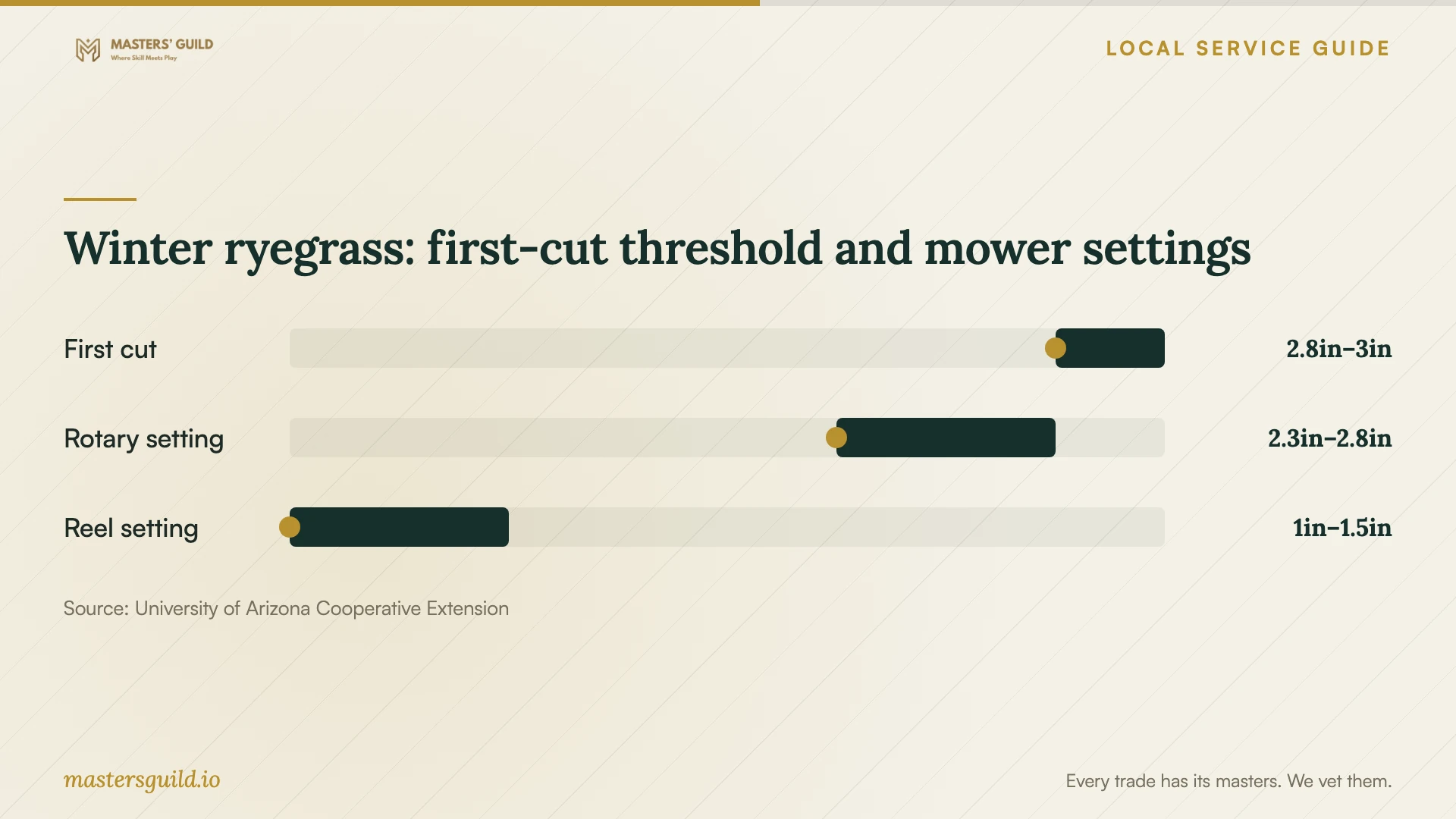
Agree who will manage watering during establishment and who will authorize the first mow. Extension recommends the first ryegrass cut when it reaches 2¾ to 3 inches, with dry grass and sharpened mower blades. Ask the provider to inspect the seedlings before returning to the normal route schedule. [2]
Define mowing, cleanup and irrigation responsibilities
Write down which areas the provider will mow and edge, including any grass outside the backyard gate. Specify whether the provider will clear clippings from paths, leave them on the lawn or remove them. For overseeding preparation, discuss clipping handling before the crew begins: Extension’s procedure calls for leaving clippings as mulch after the final height reduction. [2]
Treat irrigation inspection and timer changes as named services. AMWUA recommends adjusting irrigation frequency at least four times a year. Its October advice calls for reducing watering frequency as temperatures cool, while its guidance distinguishes established plants from those that need extra water during establishment. Coordinate any fall timer change with the overseeding plan. [4]
Ask the provider to run the irrigation system with you before the first visit and record damaged or poorly positioned heads. AMWUA recommends turning the system on and walking the yard to spot leaks. Agree whether the mowing crew will report problems, make adjustments or arrange a separately approved repair. [4]
Compare quotes and prepare the first visit
Request quotes using the same lawn areas, visit frequency and cleanup instructions. Ask each provider to list the recurring visit charge, initial overgrowth work, clipping disposal and optional seasonal services. The sources supplied here do not establish a Glendale mowing price range, so use property-specific written offers to set your budget.
Before choosing a provider, request proof of insurance and ask who handles damage reports. Agree on gate access, pet arrangements, arrival notices and rescheduling after wet conditions. Have the provider explain what happens to billing when you pause visits or change the winter schedule.
Before the crew arrives, remove toys, pet waste and loose items from the lawn. Mark irrigation heads or obstacles that the crew could miss. After the first visit, walk the property together and confirm the mowing height, edging boundaries and cleanup before approving the recurring plan.
Winter ryegrass: first-cut threshold and mower settings
Local details that affect your job
Use the Phoenix-area overseeding window
For a Glendale fall booking, use Extension’s Phoenix-area guidance as a regional planning reference: winter-grass seeding runs from October 10 through November 10. Its overseeding handout identifies daytime temperatures of 80–85°F and nights around 55°F as suitable conditions. Ask the provider to check conditions before selecting the date and to quote preparation separately. These references describe seasonal timing, not a forecast for your yard. [2] [3]
Separate dormant Bermuda from winter ryegrass care
For this Phoenix-area low-desert property, choose the winter plan before renewing recurring service. Extension says dormant, non-overseeded bermudagrass generally needs no supplemental winter irrigation, with a possible monthly watering during December through February if winter rain is lacking. Overseeded winter turf needs water based on soil, weather and rainfall. Ask for a growth-based mowing review and a separate irrigation plan rather than carrying summer settings into winter. [3]
Schedule cultivation for active summer turf
If a quote includes aeration or dethatching, ask for its timing and purpose. Extension identifies June, July and August as the ideal cultivation period for low-desert bermudagrass. It recommends only light dethatching before overseeding if needed. Use that distinction when comparing a fall seed-preparation package with a summer lawn-care package. [3]
Choose the scope before requesting quotes
| Your lawn or goal | Service to discuss | Reason and next step |
|---|---|---|
| Actively growing bermudagrass | Recurring mowing with a stated cutting height | Extension recommends at least weekly mowing in its non-overseeded low-desert schedule. Ask how the provider will review growth. |
| Bermudagrass without winter overseeding | Seasonal mowing review | Extension describes winter dormancy. Agree when to reduce or pause mowing and review irrigation separately. |
| Green winter lawn over bermudagrass | Overseeding preparation and ryegrass care | Use the Phoenix-area October 10 through November 10 seeding window as a planning reference and confirm conditions. |
| New ryegrass seedlings | Inspection before the first cut | Extension sets the first-mow threshold at 2¾ to 3 inches. Ask the provider to check height and mow dry grass. |
| Aeration or dethatching proposal | Separate cultivation scope | Extension favors summer cultivation and warns against aggressive work immediately before overseeding. Ask the provider to explain the timing. |
Your hiring checklist
- Send photos and identify the lawn areas, grass type, current height and access restrictions.
- Ask for the proposed cutting height, mower type and seasonal visit-review plan.
- Choose whether to overseed and request a separate preparation and establishment quote.
- Specify edging boundaries, clipping handling and path cleanup.
- Assign responsibility for irrigation inspections, timer changes and repair approvals.
- Confirm insurance, damage reporting, cancellation terms and rescheduling arrangements.
- Clear loose items, arrange pet access and review the first completed visit with the provider.
Frequently Asked Questions
Should I book weekly or biweekly mowing?
Ask the provider to base the schedule on grass variety, cutting height and growth. Extension recommends at least weekly mowing in its non-overseeded low-desert bermudagrass schedule and explains that shorter mowing heights require more frequent cuts. Agree on a review as growth slows. [1] [3]
Do I need mowing throughout winter?
Choose the winter plan around your grass. Extension describes winter dormancy for bermudagrass and green winter growth from overseeded ryegrass. Ask the provider to assess growth before committing to the same visit frequency throughout the year. [2] [3]
When should the provider first mow new ryegrass?
Extension recommends the first cut when ryegrass reaches 2¾ to 3 inches. It advises mowing dry grass with sharpened blades. Confirm that the crew will inspect the lawn before cutting instead of returning solely because a scheduled visit is due. [2]
What should I include in a quote request?
Provide lawn photos, access details and the areas you want maintained. Request separate prices for recurring mowing, edging, clipping removal, initial overgrowth and overseeding. Ask who handles irrigation changes and how the provider bills skipped visits.
Sources and scope
This guide combines the sources below with practical planning guidance. Figures apply to the stated geography and period; request a written quote for your property.