
Local service guide
Gardening in Glendale, AZ: Hiring and Planning
Arrange Gardening in Glendale, AZ by asking for a written scope that separates cleanup, ongoing plant care, planting and irrigation checks. For the first visit, identify the beds and plants you want kept, specify debris removal, and ask the gardener to explain any watering changes. Compare quotes against that same scope, then agree on follow-up care before approving new plants.
Define the first visit before comparing quotes
Write down the result you want: cleared vegetable beds, maintained shrubs, replanted pots or a manageable routine for the whole yard. Mark plants you want preserved and photograph each work area. Ask the gardener to distinguish hand weeding, pruning, planting and irrigation inspection in the quote. Agree on where they will place debris and whether they will haul it away.
Request an initial cleanup price and a separate maintenance proposal. For an hourly quote, ask how many workers will attend, how the gardener counts their time and what spending limit requires your approval. For a fixed price, list the beds, containers and tasks included. Ask for plant purchases, growing medium, delivery and disposal as separate items so you can compare offers without guessing.
Use the gardener’s explanation to assess fit. Ask which plants they would prune during this visit, which they would leave alone and how they would check watering before recommending replacements. Request examples of comparable garden work and proof of liability insurance. If you want chemical weed or pest treatment, ask for a separate proposal identifying the treatment and who will apply it.
Make irrigation checks part of plant care
Ask the gardener to run the irrigation system and walk the yard with you. AMWUA recommends this check to spot leaks and confirm that the system works. Include a written record of controller settings and any proposed repairs, then agree on who will approve and pay for those repairs. [1]
For an October visit, ask the gardener to review the fall watering schedule. AMWUA’s October guidance recommends reducing watering frequency as temperatures cool while continuing deep watering. Its regional schedules distinguish desert plants, higher-water-use plants, grass and seasonal flowers. Ask the gardener to identify those groups before changing a shared irrigation zone. [1]
Treat a published schedule as a starting point for discussion. AMWUA says new plants need more water until establishment and advises watching for plant stress, particularly during summer. Before planting, agree on who will check new plants between visits and when the gardener will review their watering needs. [1]
Choose planting work around the county calendar
Ask a vegetable gardener to propose crops, varieties and planting dates using the University of Arizona’s Maricopa County calendar. Extension identifies spring and fall as the two optimal growing and planting seasons. It also recommends varieties that mature within the available season. Request a plant list before the gardener buys seeds or transplants. [2]
Discuss conditions at the bed rather than approving plants from a shopping list alone. Extension describes stress from prolonged high temperatures, low humidity and intense sunlight, along with possible damage from hard winter frost. Ask the gardener to explain the proposed location, any protection needed and who will maintain that protection. [2]
For fall vegetables, ask whether pest conditions justify changing the planting date. Extension recommends delaying fall planting until whitefly populations decline with cooler temperatures. Have the gardener assess the bed before purchasing plants, and agree on a revised date if they recommend waiting. [2]
Specify containers and follow-up care
For patio planting, ask the gardener to quote container size, drainage and planting medium alongside the plants. University of Arizona Extension explains that smaller containers dry out faster and experience greater temperature fluctuations. It recommends containers large enough for mature roots and drainage that allows excess water to escape. [3]
Ask what medium the gardener will use. Extension advises against native desert soil in containers because it often contains clay that drains slowly. It also advises against placing gravel in the bottom, where it reduces rooting space. Have the gardener check existing drainage holes before refilling an old pot. [3]
Finish the visit with a care handoff. Ask the gardener to identify which plants you should check between visits, record watering changes and list unfinished work. For containers, discuss accumulated salts and confirm the water source: Extension advises against softened water because of its high salt content. Agree on responsibility for watering before scheduling the next visit. [3]
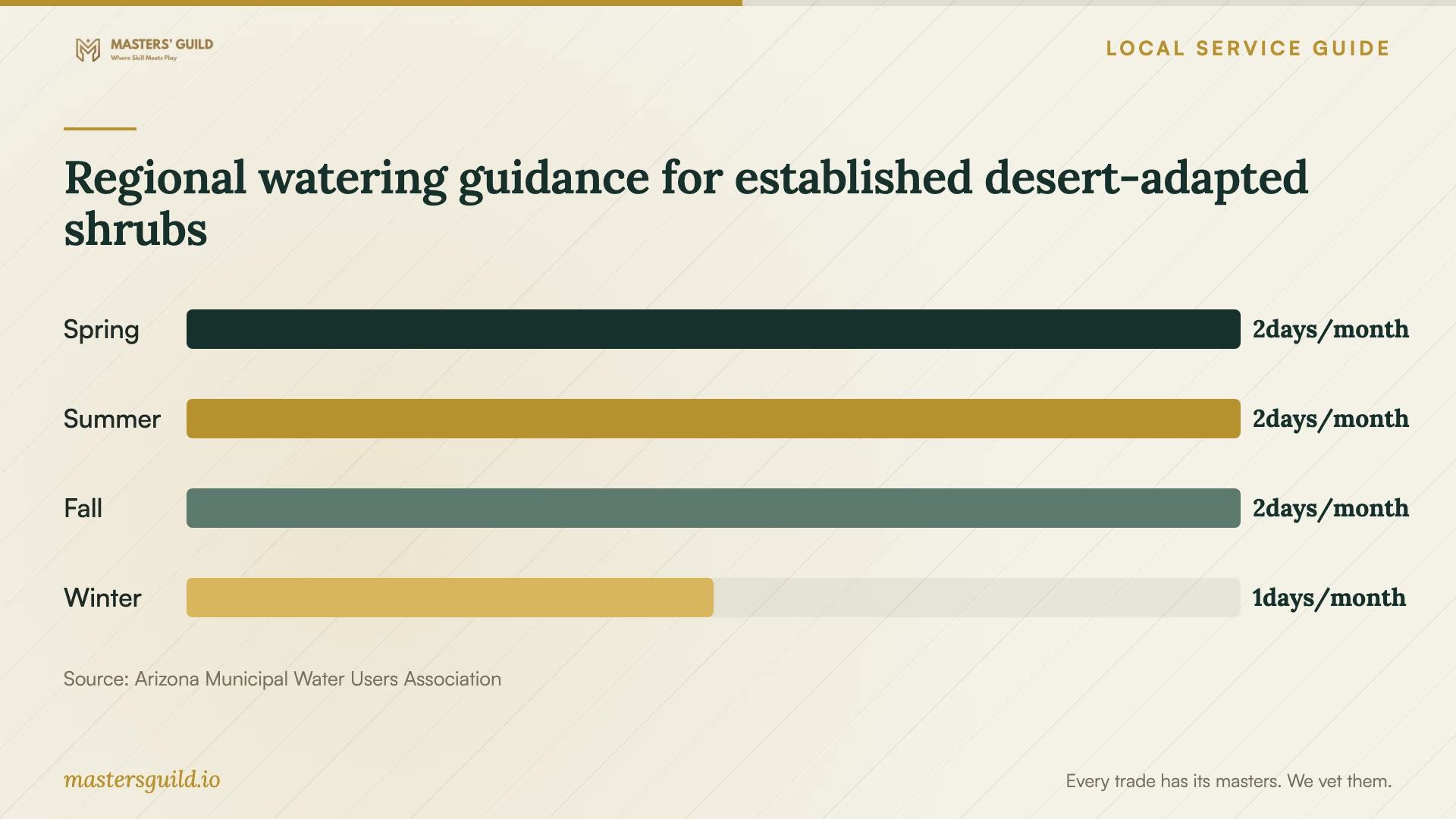
Regional watering guidance for established desert-adapted shrubs
Local details that affect your job
Use the regional fall watering review
For a Glendale maintenance visit in October, include a controller review rather than carrying summer settings forward without checking them. AMWUA’s regional October guidance calls for less frequent watering as temperatures cool and advises adjusting sooner when cooler or rainy weather arrives. Ask the gardener to document the fall settings and explain how they will handle new plants separately. [1]
Check fall planting readiness before buying vegetables
Use the Maricopa County planting calendar to agree on crop-specific timing. Extension identifies fall as an optimal planting season but also advises waiting for whitefly populations to decline with cooler temperatures. Ask a prospective gardener how they will assess pest pressure and choose varieties before authorizing a plant purchase. [2]
Match the gardening scope to your priority
| Your priority | Scope to request | Question before approval |
|---|---|---|
| Reclaim overgrown beds | Initial cleanup with plant-preservation instructions and debris removal | Which plants will you keep, and what counts as extra work? |
| Review watering | System walkthrough, seasonal settings review and separate repair proposal | How will you distinguish established plants from new planting needs? |
| Start a vegetable bed | Crop list and planting dates based on the Maricopa County calendar | Do current pest conditions justify changing the planting date? |
| Refresh patio pots | Container, drainage, growing medium and follow-up care | Will the container accommodate mature roots, and who waters between visits? |
Your hiring checklist
- Photograph the work areas and mark plants you want preserved.
- List cleanup, pruning, planting and irrigation checks as separate tasks.
- Request separate initial-visit and recurring-maintenance prices.
- Confirm who supplies plants and materials and approves substitutions.
- Agree on debris removal, access and a spending limit for extra work.
- Ask for a written planting and watering handoff.
- Assign responsibility for care between visits.
Frequently Asked Questions
How should I compare gardening quotes?
Give each gardener the same photographs and task list. Compare the initial cleanup, recurring work, materials and hauling separately. Confirm whether the quote covers a completed scope or a set amount of labor, and require approval before extra work.
Should the gardener use one watering schedule for the whole yard?
Ask them to assess plant groups and establishment needs first. AMWUA publishes different schedules for desert plants, higher-water-use plants, grass and seasonal flowers, and says new plants need more water until established. [1]
Is fall a suitable time to arrange vegetable planting?
University of Arizona Extension identifies fall as one of Maricopa County’s two optimal planting seasons. Choose dates for the specific crop and discuss pest conditions before purchasing plants. Extension advises delaying fall planting until whitefly populations decline with cooler temperatures. [2]
Can a gardener use soil from my yard in patio pots?
Ask for a suitable container growing medium. Extension advises avoiding native desert soil in containers because its often-high clay content can slow drainage. Include drainage-hole checks and the proposed medium in the planting quote. [3]
Sources and scope
This guide combines the sources below with practical planning guidance. Figures apply to the stated geography and period; request a written quote for your property.