
Local service guide
Duct cleaning in Glendale, AZ: Hiring and Planning
Duct cleaning in Glendale should start with an inspection and a written scope. Ask the cleaner to show you substantial contamination before authorizing work. EPA recommends cleaning as needed for substantial visible mold, pest infestation, or excessive debris, including particles entering rooms through supply registers. Dust on a return grille alone does not establish a need for whole-system cleaning. [1]
Decide whether cleaning addresses your problem
Start by describing what you can observe: debris blowing from a supply register, suspected growth inside the system, or evidence of pests. Ask the contractor to show you the affected area and explain how they will address the underlying cause. EPA warns that contamination can return if the homeowner and contractor leave that cause unresolved. [1]
For dusty return grilles, begin with accessible surface cleaning and a filter check. EPA explains that return registers collect dust as air passes through them. It does not recommend routine duct cleaning or promise that cleaning prevents health problems. Discuss unexplained symptoms with your doctor rather than accepting a cleaner's diagnosis. [1]
Compare the scope before comparing the price
Get written estimates from at least three providers, as EPA recommends. Ask each to identify the supply and return ducts, registers, air handler, blower, coils, and drain pans included in the work. EPA warns that leaving a contaminated component uncleaned can contaminate the system again. [1]
Give each bidder the same description of your home and the same access information. Ask them to state the number of systems covered, exclusions, expected working time, and total price. Require your approval before they add work. Have them distinguish HVAC duct cleaning from any separate dryer-vent service in the estimate.
EPA's guidance publishes a broad reference of $450 to $1,000 per heating and cooling system, depending on scope, size, access, region, and contamination. The document originated in 1997; treat this as background, not a current Glendale price survey or a promised quote. Use site-specific written estimates to set your budget. [1]
Match the method to your duct material
Ask the cleaner to identify sheet metal, flexible duct, fiberglass board, and internal fiberglass lining before selecting tools. EPA calls for soft-bristled brushes on fiberglass materials and protection against duct damage. It recommends replacing wet or moldy fiberglass duct material because cleaning cannot resolve that condition. [1]
Have the provider explain dust collection and how they will close access openings. EPA recommends equipment that exhausts particles outdoors, or HEPA vacuum equipment when exhaust stays indoors. The contractor should seal and reinsulate openings used for cleaning. [1]
Treat proposed chemical treatments as a separate decision. Ask for the product label, the intended application, and the reason physical cleaning and moisture correction would not suffice. EPA cautions against routine use of internal encapsulating sealants and reports no registered biocides for fiberglass board or fiberglass-lined ducts in its guidance. [1]
Prepare for access and verify the result
Before the visit, agree on furniture protection, equipment access, pet arrangements, and the period when the contractor needs the HVAC system off. Clear a route to registers and the air handler. Ask whether anyone needs to leave during a proposed treatment, and settle that question before work starts.
Before accepting the job, ask the cleaner to show you the cleaned components, using photographs for inaccessible areas. EPA recommends a visual inspection to verify cleanliness. Check that workers reattach registers, close access openings, and demonstrate system operation after cleaning. [1]
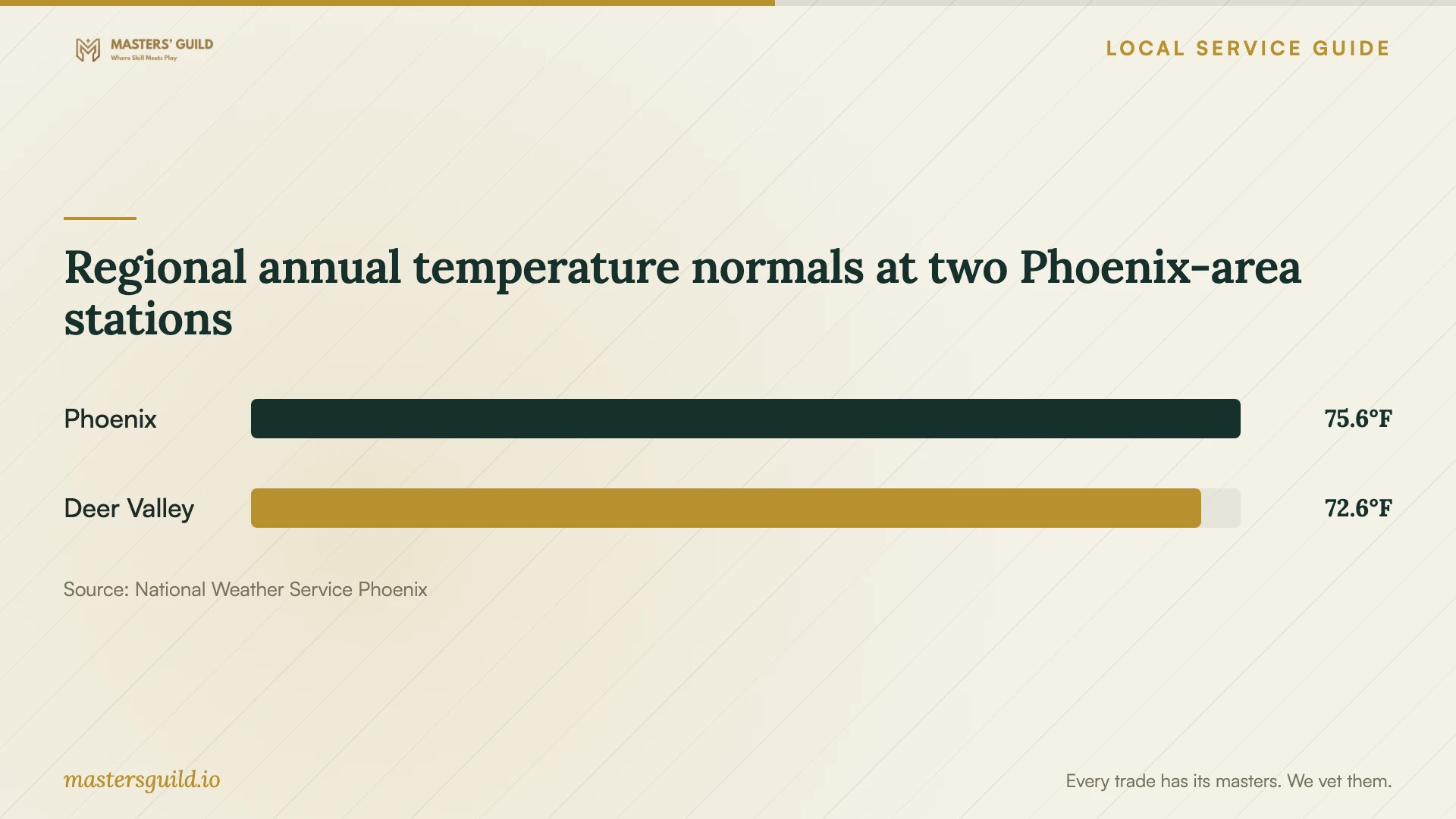
Regional annual temperature normals at two Phoenix-area stations
Local details that affect your job
Use a dust-storm plan before ordering cleaning
Maricopa County advises residents to close doors and windows and consider turning off heating or air conditioning until a dust storm passes. Apply that regional guidance at your Glendale home while accounting for indoor heat. Afterward, inspect the filter and accessible registers; EPA recommends changing clogged filters more often. Ask for an inspection if supply registers release particles or you find substantial deposits. A storm alone does not establish EPA's reasons for cleaning. [1] [2]
Separate cooling trouble from cleaning needs
Maricopa County's extreme-heat preparation guidance tells residents to check air-conditioning duct insulation. If your concern is poor cooling, ask the HVAC provider to inspect insulation and equipment condition before authorizing cleaning. EPA finds little evidence that duct-only cleaning improves efficiency. Also agree on cooling downtime before the visit; the county advises using a designated public shelter if a home loses power during extreme heat. [1] [2]
Choose the next step from the condition you observe
| Observed condition | Next step |
|---|---|
| Dust on a return grille | Clean the accessible grille and check the filter; EPA says grille dust alone does not show heavy duct contamination. |
| Excessive debris or particles from supply registers | Request an inspection and a written cleaning scope. |
| Suspected mold inside the system | Ask to see it, consider expert confirmation, and correct the moisture cause. |
| Wet or moldy fiberglass duct material | Discuss replacement with a qualified HVAC contractor. |
| Poor cooling without confirmed contamination | Request equipment and insulation checks before choosing duct cleaning. |
Your hiring checklist
- Record the rooms affected and photograph visible debris before requesting estimates.
- Ask the provider to show you the contamination that justifies cleaning.
- Request matching written scopes from competing bidders.
- Confirm duct materials, collection equipment, and access-opening repairs.
- Separate optional treatments and dryer-vent work in the quote.
- Agree on HVAC downtime, access, and pet arrangements.
- Review completed-work photographs and system operation before accepting the job.
Frequently Asked Questions
Should I arrange annual duct cleaning?
EPA recommends cleaning as needed rather than on a routine schedule. Keep up with filter changes and HVAC maintenance, and investigate substantial contamination when you observe it. [1]
Can a cleaner identify mold from a photograph?
EPA says a substance may resemble mold without being mold. An expert must make a positive identification and may need laboratory analysis. Ask the cleaner to show you the affected material before approving treatment. [1]
Does EPA certify duct-cleaning companies?
No. EPA says it does not certify, endorse, or approve duct-cleaning companies. Ask providers about relevant credentials, references, experience with your duct material, and their proposed methods. [1]
How long should I reserve for the appointment?
Ask each bidder for an estimate based on your system and access conditions. Have the written agreement identify expected working time, interruptions, and how long the HVAC system will be unavailable.
Sources and scope
This guide combines the sources below with practical planning guidance. Figures apply to the stated geography and period; request a written quote for your property.