
Local service guide
Door and window repair in Glendale, AZ
For door and window repair in Glendale, ask a contractor to inspect the affected opening and quote the specific work before you approve replacement. Describe whether you need secure closing, easier operation, less outside air or help with afternoon heat. Request separate prices for the proposed repair, any replacement option and temporary protection while the opening is exposed.
Describe the problem before choosing the repair
Give the contractor a short description of what happens during use. Explain whether the door catches, the lock fails to engage, the window resists movement or you notice moisture. Include a photograph of the whole opening and close views of the affected area. Ask for an inspection before accepting a diagnosis from photographs alone.
Separate your concerns in the request. For example, ask the contractor to address a patio door that is difficult to slide and a room that feels hot in the afternoon as distinct items. Request an explanation of how each proposed task addresses the concern you identified.
For broken glass or an opening you cannot secure, ask about temporary protection and the permanent repair in the same conversation. Keep children and pets away from damaged glass. Explain any access problem before the visit, including an upstairs opening, furniture in the way or a gate the worker must use.
Compare repair and replacement on a written scope
Ask for a written repair option when the contractor proposes replacing the entire door or window. Have them identify the damaged component, describe the condition of the surrounding frame and explain why they recommend their approach. If they decline a repair, ask them to document the reason.
Compare quotes for the same work. Ask each contractor to identify parts, glass specifications where relevant, labor, removal, disposal and finish repairs. Include responsibility for surrounding paint, trim or other surfaces. Request written approval before the contractor expands the scope after opening up the work area.
Agree on the completion check before hiring. For an operation problem, plan to open, close and lock the repaired unit with the contractor present. For a leak complaint, ask how they will evaluate the repair and what follow-up they offer if the symptom returns. Request the warranty terms in writing.
Discuss air leaks and sunny glass separately
APS recommends caulking around doors, windows and sill plates where outside air might enter. If you feel a draft, ask the contractor to identify the entry point and specify the sealing work they propose. Have them distinguish fixed joints from areas that need to move or drain. [1]
APS also recommends shades on sunny windows and keeping drapes or blinds closed during the day. If afternoon heat is your main concern, include existing shading in the assessment and ask whether the proposed repair addresses air entry, sun exposure or both. Request a clear explanation before buying replacement glass or a complete unit. [1]
Plan for an exposed exterior opening
Ask how long the contractor expects to leave the opening exposed, whether they will bring the replacement materials before removal and how they will close the opening if work stops. Confirm who will move furniture, protect floors and secure the property between visits.
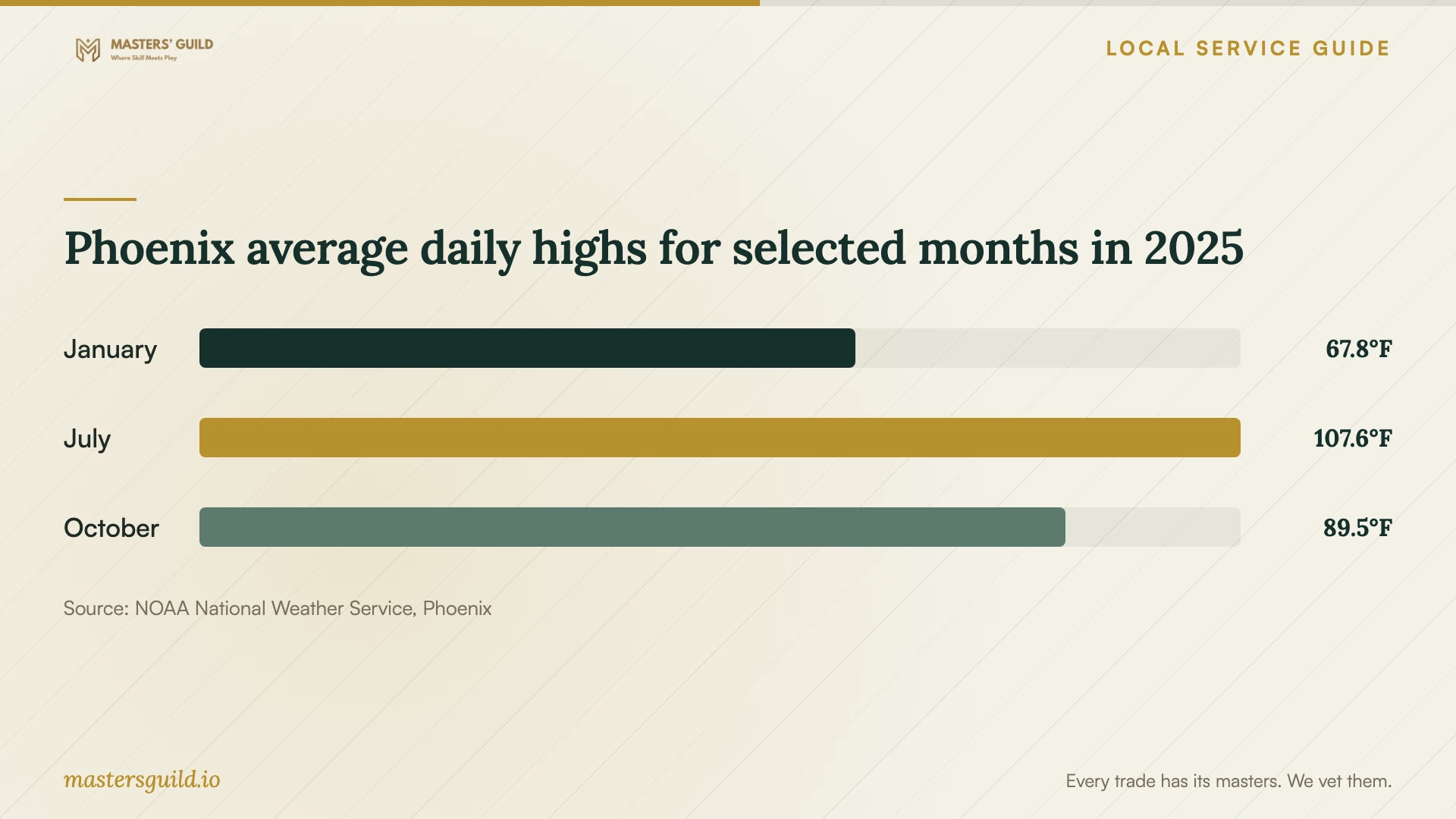
Use regional weather history to prepare questions, then check the forecast for the appointment. In Phoenix, the National Weather Service recorded a July 2025 average daily high of 107.6°F and an October average daily high of 89.5°F. Those observations support discussing heat exposure during the work; they do not establish conditions at your home or predict your repair date. [2]
Discuss the contractor's plan for wind and rain as well as heat. The same regional review describes a large dust storm and flash flooding in late August 2025, followed by severe storms and flooding during autumn. Ask who decides to postpone work and how the contractor will protect an opening if weather interrupts the appointment. [2]
Phoenix average daily highs for selected months in 2025
Local details that affect your job
Use APS guidance to refine a comfort complaint
Arizona utility APS recommends both sealing outside-air entry points and shading sunny windows. For a Glendale room that feels uncomfortable near a door or window, ask for an assessment of both issues and separate proposed work in the quote. This gives you a way to question a replacement proposal that does not explain which concern it addresses. [1]
Make weather protection part of the appointment
The National Weather Service's 2025 Phoenix regional review documents late-summer dust and flooding, plus autumn storms. For work that requires removing a door, sash or glass, agree on temporary closure and postponement arrangements before removal. Treat this as regional planning context, rather than evidence that your Glendale property experienced those events. [2]
Keep regional rainfall figures in perspective
For 1991–2020, NWS lists average annual rainfall of 7.22 inches at Phoenix and 8.90 inches at Phoenix/Deer Valley Airport. Neither figure measures rainfall at your address. For a water-entry complaint, give the contractor photographs and your observations of the event rather than asking them to diagnose it from a regional rainfall average. [3]
Match the complaint to the quote discussion
| Your concern | Ask the contractor | Before approving |
|---|---|---|
| Difficult opening or locking | Which component needs attention? | Agree on an operation and locking check. |
| Outside air around the opening | Where is air entering, and what sealing do you propose? | Include the affected joints in the written scope; APS recommends caulking potential entry points. |
| Heat near sunny glass | How have you considered existing shades or blinds? | Discuss APS shading guidance alongside the proposed repair. |
| Broken glass or an unsecured opening | How will you protect and secure the opening? | Separate temporary protection from the permanent repair. |
| Water after a storm | What inspection will you perform before choosing a repair? | Provide photographs and agree on follow-up if water returns. |
Your hiring checklist
- Photograph the full opening, damaged area and any visible product label.
- Describe the symptom and when you notice it.
- Identify which openings you cannot close or secure.
- Request an itemized scope with parts, labor, disposal and finish work.
- Agree on temporary closure and weather postponement arrangements.
- Ask who will confirm any applicable approvals before work begins.
- Review warranty terms and perform the agreed completion check.
Frequently Asked Questions
Should I accept a full replacement quote first?
Ask the contractor to explain the damaged component and provide a repair option if they consider one suitable. Compare the scope, finish work and warranty before approving either approach.
Can sealing help with outside air?
APS recommends caulking around doors, windows and sill plates where outside air might enter. Ask the contractor to locate the entry point and specify the work for your opening. [1]
How should I choose an appointment date?
Discuss how long the opening will remain exposed, then review the forecast and the contractor's protection plan. The 2025 Phoenix observations illustrate regional heat and storm considerations, but do not predict weather on your appointment date. [2]
What should I ask about the final price?
Request an itemized total and ask how the contractor handles additional damage discovered during work. Agree on written approval for added charges, responsibility for finish repairs and the payment schedule.
Sources and scope
This guide combines the sources below with practical planning guidance. Figures apply to the stated geography and period; request a written quote for your property.