
Local service guide
Carpet cleaning in Glendale, AZ: Hiring and Planning
Arrange carpet cleaning in Glendale by asking for a written scope covering the rooms, stains, furniture moving, total charge, and drying arrangements. Tell the cleaner about access and any recent water intrusion before accepting a quote. For a dust-storm day, ask how the crew will manage entry doors and dry the carpet indoors; Maricopa County advises residents to close doors and windows during dust storms. [1]
Set the scope before comparing prices
Send each cleaner the same room list and describe the work you want. Include stairs, closets, traffic areas, spots, and pet-related concerns. Say whether you want cleaning around furniture or expect the crew to move it. Ask the cleaner to describe how they will measure the area and handle rooms that exceed their quoted allowance.
Request an itemized total that separates the cleaning charge from optional treatments and access charges. Ask about any minimum visit charge, parking requirements, furniture exclusions, and cancellation terms. Have the cleaner confirm the price after inspecting the carpet and obtain your approval before adding work.
For stains or odors, describe the location, approximate size, and anything you have applied. Ask what result the cleaner expects, what they cannot promise, and how they handle a spot that returns after drying. Keep stain treatment and odor treatment distinct in the written scope so you can assess each proposed charge.
Choose a method and a drying arrangement together
Ask the cleaner to identify the carpet material and explain the proposed method. Share any manufacturer care instructions you have. Request a drying estimate for your home, instructions for walking on the carpet, and a contact procedure if it remains damp beyond the cleaner's stated window.
Discuss which rooms you need to reach during drying, where pets will stay, and when furniture can return. Ask who supplies any drying equipment and whether its use costs extra. Agree on how the crew will secure the home while bringing equipment or hoses through an entrance.
For water-damaged carpet, EPA describes extraction, fans, and dehumidification as parts of drying. It also says wet vacuums alone will not dry carpet and that padding needs drying. Those instructions concern water damage; do not use them as a promised completion time for routine cleaning. [3]
Prepare the home and review the work
Before the appointment, remove loose belongings and fragile items from the agreed work area. Ask whether the crew expects you to vacuum first. Point out existing damage, loose edges, previous repairs, and spots you want assessed. Take your own photographs if you want a record of the starting condition.
Walk through the rooms with the cleaner before work begins. Confirm exclusions and the final scope, then review the treated areas together before the crew leaves. Request written care instructions, the expected drying window, and any follow-up terms. Keep the invoice and the agreed description of the work.
Treat water intrusion as a separate job
Tell the provider where the water came from, when you discovered it, and which materials became wet. EPA says that, in most cases, drying wet or damp items within 24 to 48 hours prevents mold growth. This is water-damage guidance, not a safe waiting period or a routine cleaning dry-time guarantee. [3]
If you suspect sewage or other contaminated water, explain that before anyone starts extraction or sets up fans. EPA advises consulting an experienced professional when the people doing the work lack contaminated-water remediation expertise. EPA also says to establish that the water is clean or sanitary before using fans. [3]
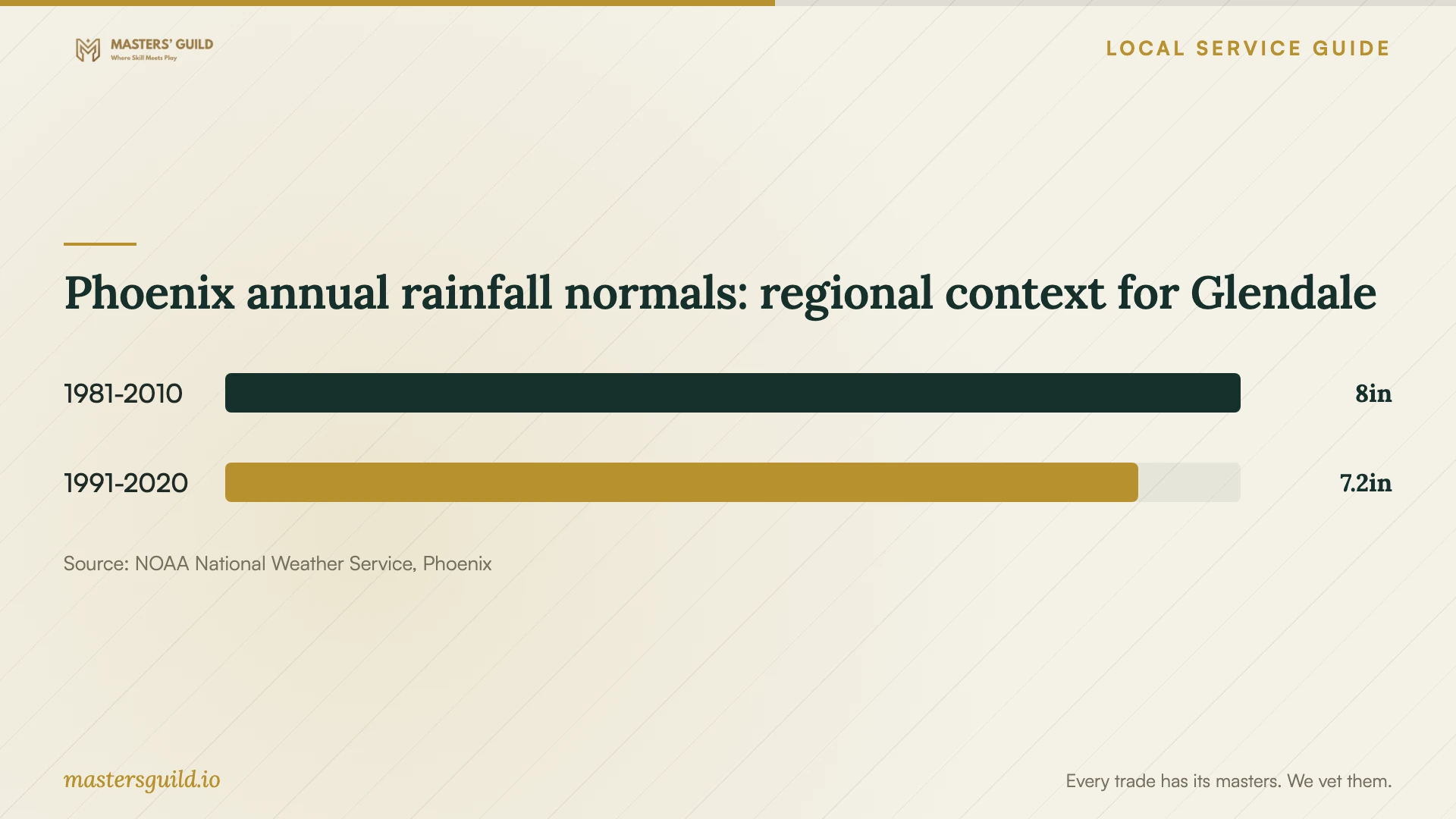
Phoenix annual rainfall normals: regional context for Glendale
Local details that affect your job
Dust storms change the entrance and ventilation plan
Maricopa County describes dust storms as unpredictable and advises residents to close doors and windows. For a Glendale appointment, ask whether the crew needs an entrance open for hoses, how they will manage that opening, and what they propose if a dust storm arrives. Agree on indoor drying arrangements and a weather-related rescheduling procedure before the visit. [1]
Monsoon or winter-rain intrusion changes who you hire
Maricopa County identifies summer monsoons, winter rains, and tropical storm remnants as flooding triggers. If carpet became wet during one of these events, describe the intrusion when requesting service and ask for water-damage assessment. The county recommends documenting property damage and contacting your insurer; EPA's guidance also requires attention to wet backing and padding. [1] [3]
Match the appointment to the carpet's condition
| Your situation | What to arrange | Question to ask |
|---|---|---|
| Routine cleaning with no known water intrusion | A written cleaning scope and drying plan | Which areas and treatments does the total include? |
| Dust storm threatens the appointment | An entrance plan consistent with keeping doors and windows closed | Can you complete and dry the work with windows closed, or should we reschedule? |
| Carpet and padding became wet after a leak | Water-damage assessment covering carpet, backing, and padding | How will you assess and dry the materials beneath the carpet? |
| Possible sewage or contaminated water | A provider with appropriate contaminated-water remediation expertise | How will you assess contamination before using fans? |
Your hiring checklist
- Send the same room list, photographs, and stain descriptions to each cleaner.
- Request a written total with optional treatments and furniture moving listed separately.
- Describe parking, stairs, entry access, and any hose-route constraints.
- Ask how the crew will manage doors and drying if a dust storm develops.
- Share carpet care instructions and disclose products you have already applied.
- Report recent leaks or stormwater before confirming routine cleaning.
- Confirm drying instructions, furniture return, and follow-up terms before the crew leaves.
Frequently Asked Questions
What should a carpet-cleaning quote include?
Ask for the rooms or measured area, cleaning method, agreed stain treatments, furniture handling, total charge, and exclusions. Request separate prices for optional work and confirm that the cleaner will obtain your approval before adding it.
Does Glendale's dry climate guarantee fast drying?
Do not plan around that assumption. NOAA's regional rainfall averages describe outdoor climate, not moisture in your carpet. Ask the cleaner for a home-specific drying estimate and instructions, including a plan for keeping windows closed during a dust storm. [1] [2]
Can I book routine cleaning after water enters the house?
Disclose the water source and request assessment before choosing the service. EPA's water-damage guidance calls for drying carpet and padding and warns that wet vacuums alone will not dry carpet. Ask the provider whether the job requires restoration equipment and expertise. [3]
Should I open windows during a dust storm to help carpet dry?
Follow Maricopa County's advice to close doors and windows during dust storms. Ask the cleaner to explain indoor drying arrangements before work begins, and agree on how to handle a storm that interrupts the appointment. [1]
Sources and scope
This guide combines the sources below with practical planning guidance. Figures apply to the stated geography and period; request a written quote for your property.