
Local service guide
Mold Removal in Gatineau: Hiring and Repair Planning
Arrange Mold Removal in Gatineau with a specialist if affected surfaces exceed 1 m², involve several patches, resist cleaning or develop mold again after cleaning. Ask the company to identify the moisture source, locate the affected materials and explain the repair scope before you approve work. Québec recommends this approach and says routine air or surface testing is usually unnecessary when visible mold or other signs establish the problem. [1]
Decide between surface cleaning and an investigation
For a small surface such as a window ledge, Québec recommends a clean cloth, an all-purpose cleaner and thorough drying. It does not recommend bleach for routine mold cleaning. Follow its precautions: wear protective glasses, rubber gloves and a dust mask, keep other people out of the room during cleaning, and ventilate before they return. [1]
Bring in a specialist for large, numerous, recurring or difficult-to-clean patches. Describe musty odours, water stains, peeling finishes and warped materials when you arrange the inspection. Québec identifies these as signs of mold or excessive moisture, including possible problems behind materials. [1]
Ask the inspector to explain what they can establish without opening surfaces and what remains uncertain. Request photographs and a written account of the suspected water source, affected locations and proposed next steps. If someone proposes sampling, ask which decision the result would change.
Compare quotes that cover the complete repair
Start with the moisture correction. Québec advises identifying and correcting water accumulation or infiltration, including broken pipes, flooding and sewer backups. It also recommends discarding porous materials that water has severely damaged, such as drywall, insulation and carpets. [1]
Ask each bidder to separate investigation, protection of occupied rooms, material removal, cleaning, drying, waste removal and rebuilding. Identify who will repair the leak or drainage problem. Have the contractor state which rooms and materials the price covers, which areas remain uninspected and how they will price additional work.
Compare the same scope before comparing totals. Request written allowances for uncertain work and require approval before the contractor exceeds them. Ask about insurance, relevant training, access arrangements, equipment use, room restrictions and the evidence you will receive before rebuilding begins.
Agree on separate milestones for investigation, moisture-source repair, remediation and reconstruction. Ask the contractor to explain how they will decide that materials are ready to cover and what follow-up they recommend if staining, odour or dampness returns.
Prepare the inspection and household arrangements
Send dated photographs, approximate patch dimensions and a short history of leaks or backups before the visit. Note whether the problem appeared after rain, during snowmelt or around bathing and cooking. Include previous repairs and the date you first noticed the odour or stain.
Tell the contractor if children or people with asthma or allergies use the affected room. Québec singles out these groups when advising that other people stay outside the room during mold cleaning. Discuss access and temporary room restrictions before agreeing to the schedule. [1]
For continuing prevention, Québec recommends using bathroom and kitchen fans, checking that the dryer vents outdoors and keeping indoor humidity low enough to avoid condensation, usually between 30% and 55%. Ask the inspector which of these measures applies to your home and which building repairs still need attention. [1]
Use seasonal checks to investigate water entry
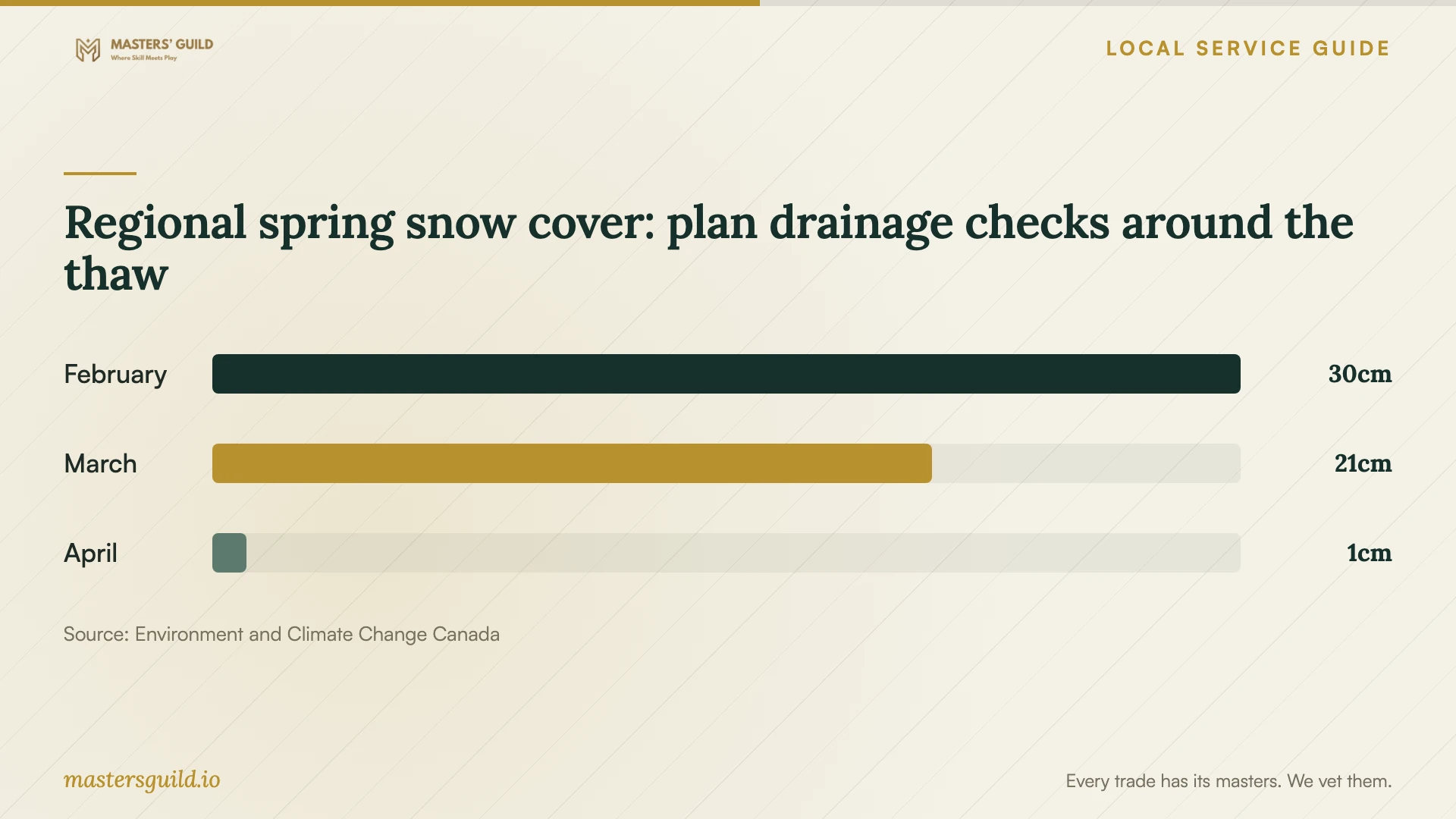
Nearby Ottawa Airport recorded average annual snowfall of 231.9 cm in the 1991–2020 normals. Treat that as regional context when planning roof, gutter and drainage checks around snowmelt. These measurements come from Ottawa Airport, not a Gatineau property, and cannot establish the cause of your mold problem. [5]
Québec recommends inspecting the roof, exterior cladding, attic, gutters, seals and drainage at least once a year. If dampness follows rain or thawing snow, ask the investigator to examine the relevant water-entry path and explain how the proposed repair addresses it. [1]
Regional spring snow cover: plan drainage checks around the thaw
Local details that affect your job
Confirm the wall-removal and rebuilding permit scope
Gatineau exempts some work on existing buildings costing less than $26,000 before taxes, including labour and materials, but lists important exceptions. Work involving foundations, structures or interior walls requires a permit regardless of cost. Before approving removal or reconstruction, describe the complete project through the City's URBAIN tool or submit an information request through 311. URBAIN provides guidance; you must still submit a formal application when a permit is required. [2]
Keep backwater valves accessible after basement repairs
Gatineau requires residential backwater valves regardless of the home's construction year. The City specifies secondary branch pipes rather than the main residential pipe and also requires protection for the foundation drain. Ask the plumbing contractor to assess compliance after a backup. During rebuilding, preserve access panels: the City calls for access at all times and maintenance at least twice a year. Do not open a valve during a backup. [3]
Follow the municipal process for an unresolved rental problem
For a rental property, Gatineau directs residents to seek an agreement with the owner, then provide written notice and a reasonable correction period if an agreement fails. The City recommends registered mail and keeping the letter and receipt. If the period expires without a remedy, contact 311 to register a complaint. Following validation, municipal staff can pursue enforcement, including inspection or requiring an expert assessment. [4]
Choose the next step for your situation
| Situation | Next step | Point to resolve |
|---|---|---|
| Small patch on a window ledge | Follow Québec's surface-cleaning precautions and dry the surface. | Identify and correct the moisture cause. |
| More than 1 m², several patches or recurring mold | Arrange a specialist assessment. | Establish the cause, location and extent. |
| Visible mold and a proposed routine air test | Ask what decision sampling would change. | Québec says testing is usually unnecessary in this situation. |
| Removal or rebuilding involving interior walls | Confirm the permit scope with Gatineau before work. | Interior-wall work requires a permit regardless of cost. |
| Basement remediation after a sewer backup | Include a plumbing assessment in the repair discussion. | Check required valve protection and preserve maintenance access. |
Your hiring checklist
- Photograph affected surfaces and record approximate dimensions.
- Write down the leak, backup, odour and previous-cleaning history.
- Ask who will investigate and correct the moisture source.
- Request separate prices for remediation and reconstruction.
- Confirm permit responsibility before wall or structural work.
- Agree on room access, household precautions and work milestones.
- Keep backwater-valve access in the basement rebuilding plan.
- Request photographs and completion records before final acceptance.
Frequently Asked Questions
Do I need an air test before hiring a remediator?
Usually not. Québec says visible mold or signs of its presence generally call for a careful inspection to find the cause and correct the situation. Ask anyone proposing sampling to explain its purpose and how the result would change the work. [1]
Can a low-cost remediation job still need a permit?
Yes. Gatineau requires permits for work involving interior walls, foundations or structures regardless of cost. Give the City the removal and rebuilding scope rather than relying on the total price alone. [2]
How much should I budget?
Request an inspection-based written quote. Have bidders identify the affected materials, moisture correction, removal, drying and rebuilding they include. Compare exclusions and approval rules for hidden damage before choosing an offer.
Can I wait for a convenient season after water damage?
Québec recommends cleaning and completely drying water damage within 24 to 48 hours because mold can develop beyond that period. Arrange prompt assessment and drying rather than waiting for a preferred booking season. [1]
Sources and scope
This guide combines the sources below with practical planning guidance. Figures apply to the stated geography and period; request a written quote for your property.