
Local service guide
Tree cutting and arborist services in Garland, TX
Tree cutting at a Garland business property should start with an assessment and a written proposal covering the work area, cutting, disposal, and stump treatment. Confirm removal requirements with Planning before approving the crew’s start date. Garland requires a Tree Management Plan for applicable development proposing protected-tree removal and describes a separate permit procedure for sites outside development. [2]
Define the problem before authorizing cutting
Tell the assessor what prompted the job: a damaged limb, branches over parking spaces, clearance around a building, or a planned site change. Identify each tree with a photograph and a label. Request a recommendation for each one, including pruning, further investigation, retention, or removal.
Request the assessor’s credentials and written findings. Ask who will supervise the cutting crew, request proof of liability insurance, and discuss protection for your building and neighboring property. If you lease the premises, get the owner’s authorization before committing to work.
Keep staff and customers away from damaged limbs while you arrange an assessment. Contact the utility about branches involving overhead wires. Take photographs from a safe position without approaching wires or standing beneath damaged branches.
Resolve removal requirements with Planning
Give Planning the property address and a description of the proposed work, including whether you plan development or redevelopment. Ask which provisions apply before scheduling removal. Section 4.56 references applicability rules and residential exceptions elsewhere in the code; do not assume the same process covers every property. [2]
For applicable development proposing protected-tree removal, Garland requires a Tree Management Plan before removal. The Planning Director or designee reviews the plan, and approval results in Tree Removal Authorization. Unless the specified waiver applies, a certified arborist or registered landscape architect must prepare the plan. [2]
For development or redevelopment removing five or fewer protected trees, the Planning Director or designee may grant a separate-plan waiver upon written request when the screening and landscaping plans contain the tree management information. Obtain confirmation that the Director or designee granted the waiver. A submitted request alone does not establish approval. [2]
For sites outside the development process, confirm applicability of Section 4.56(G) with Planning. Where this procedure applies, you must obtain a Tree Removal Permit before removing any tree, including unprotected trees. The procedure requires a tree survey or site plan and a tree replacement plan. The city issues the permit only after submission and approval of the replacement plan. [2]
Specify disposal and stump treatment
Garland limits residential brush pickup to residents who performed the work on their own property. Arrange disposal for your hired business-property crew instead of assuming the crew can leave branches for residential curbside collection. [1]
Tell the bidder whether you want to retain wood or chips. Otherwise, request removal of the agreed branches, trunk sections, and chips, plus cleanup of affected pavement. Identify a staging area that keeps entrances, deliveries, and customer parking accessible.
Describe stump work as its own task. Ask the contractor to state the proposed grinding depth, how they will handle grindings, and what surface they will leave. Discuss your intended use of the area, such as planting or restoring a parking edge, before approving that scope.
Compare estimates and prepare the work area
Request written estimates against the same labeled trees and desired outcome. Ask bidders to identify equipment needs, access assumptions, exclusions, and responsibility for surface damage. Assign responsibility for any required applications, professional plans, and approvals in the agreement.
Walk the equipment route with the contractor. Identify gates, delivery areas, outdoor seating, and access that depends on a neighbor’s permission. Agree on barriers and temporary customer routes, then name the person who can approve extra work or charges.
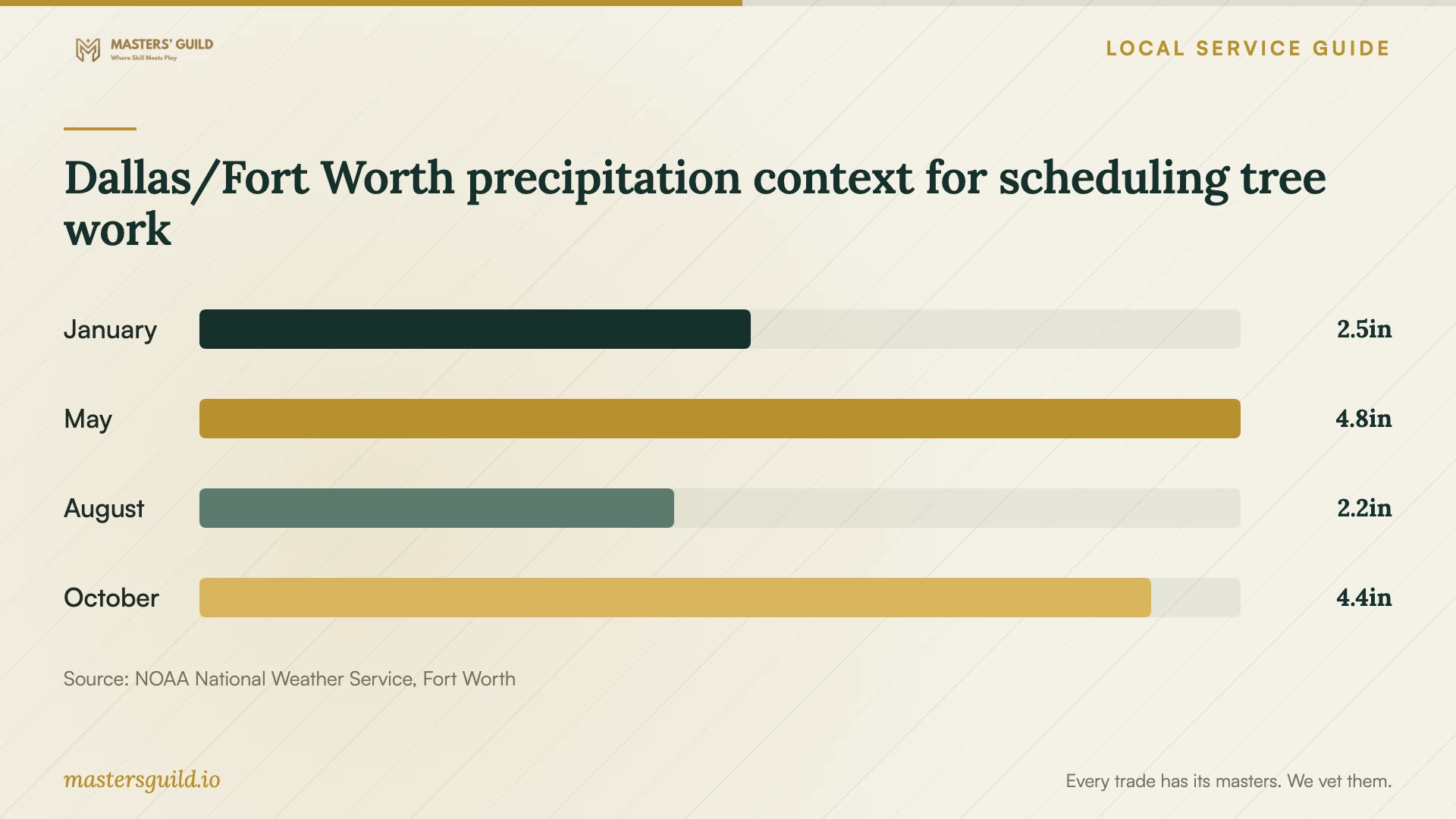
The National Weather Service lists Dallas/Fort Worth normal precipitation of 4.78 inches in May and 4.37 inches in October for 1991–2020. Use the regional chart as context for discussing rain delays and equipment access. Check the actual forecast when confirming the work date. [3]
Before accepting completion, walk the site with the supervisor and your labeled photographs. Check the agreed work, stump treatment, cleanup, and equipment route. Record unfinished items and request care instructions for trees you retained.
Dallas/Fort Worth precipitation context for scheduling tree work
Local details that affect your job
Check an existing inventory before reusing it
For a required Tree Management Plan, Garland requires an inventory completed no more than 730 calendar days before submission and prepared by a certified arborist or registered landscape architect. Check the date and preparer before assuming your project team can reuse an existing inventory. [2]
Resolve the replacement plan before nondevelopment removal
Where Section 4.56(G) applies, the city requires a permit before removal of any tree and issues it only after submission and approval of the replacement plan. Confirm applicability with Planning and assign responsibility for both the survey or site plan and the replacement plan before booking removal. [2]
Include a contractor disposal arrangement
Garland’s residential brush collection covers residents who performed their own tree or brushwork. For a hired crew at business premises, ask the contractor to identify its disposal arrangement and include that work in the agreement. [1]
Match the proposal to the property task
| Situation | Next step | Written deliverable |
|---|---|---|
| You want to retain a tree | Request an assessment before authorizing cuts | Findings and a proposed pruning outcome |
| Applicable development will remove protected trees | Coordinate the Tree Management Plan with the project team | Approved plan and resulting Tree Removal Authorization |
| Development or redevelopment will remove five or fewer protected trees | Ask the Planning Director or designee about a separate-plan waiver | Written request, tree management information on the screening and landscaping plans, and confirmation that the Director or designee granted the waiver |
| Planning confirms Section 4.56(G) applies outside development | Obtain a Tree Removal Permit before removing any tree, including unprotected trees | Required survey or site plan, submitted and approved replacement plan, and issued permit |
| You plan to restore the stump area | Discuss the intended finished use | Grinding depth, grindings handling, and surface treatment |
Your hiring checklist
- Photograph and label the trees, then state your goal for each.
- Obtain the property owner’s authorization if you lease the premises.
- Request written assessment findings, credentials, and insurance information.
- Confirm applicable removal procedures with Planning and assign responsibility for approvals.
- Mark customer routes, equipment access, and material staging areas.
- Agree on debris disposal, stump treatment, and the finished surface.
- Name who can authorize changes and inspect completion.
Frequently Asked Questions
Can an existing tree inventory support a development application?
Check its date and preparer. Garland requires the inventory for a Tree Management Plan to be no more than two years old at submission and prepared by a certified arborist or registered landscape architect. Ask the project team to confirm that it covers the required site information. [2]
Does a small removal qualify for an automatic plan waiver?
No. For development or redevelopment removing five or fewer protected trees, the Planning Director or designee may grant a separate-plan waiver upon written request when the screening and landscaping plans contain the tree management information. Obtain confirmation of the granted waiver before relying on it. [2]
Can I remove an unprotected tree outside a development project?
Confirm the applicable procedure with Planning first. Where Section 4.56(G) applies, you need a Tree Removal Permit before removing any tree, including an unprotected tree. Permit issuance follows submission and approval of the replacement plan. [2]
Does the precipitation chart identify the best pruning month?
No. It presents selected historical monthly precipitation normals for Dallas/Fort Worth. Ask the assessor about timing for your tree and proposed work, then discuss scheduling against the actual forecast. [3]
Sources and scope
This guide combines the sources below with practical planning guidance. Figures apply to the stated geography and period; request a written quote for your property.