
Local service guide
Tile Setting in Garland, TX: Plan the Work
Arrange Tile Setting in Garland by asking each installer to quote the same scope: removal, surface preparation, tile layout, wet-area work, cleanup, and disposal. Before agreeing to a shower remodel involving plumbing, check the permit scope with Building Inspection. Garland lists plumbing systems and repairs among work that often requires permits and asks homeowners to resolve uncertain requirements before starting. [1]
Define the work before comparing bids
Start with the room, the surfaces you want tiled, and what you want removed. Send bidders photographs, approximate measurements, your preferred tile, and a description of any cracks, loose pieces, staining, or leaks. Ask each installer to inspect the existing surface before giving you a final preparation allowance.
Request separate prices for demolition, surface repairs, installation, tile and setting materials, trim, and disposal. Ask the installer to identify exclusions. If demolition exposes damage, agree on a written change process that records the repair, its price, and your approval before the installer continues.
Avoid comparing totals until both bidders have priced the same work. Ask who purchases the tile, who checks the delivery, how the installer handles damaged pieces, and whether you will keep spare tile. Have the installer confirm quantities after reviewing the layout.
Resolve permit scope before demolition
Garland's residential guidance lists plumbing systems and repairs, electrical systems and repairs, and major renovations among projects that often require permits. The city also says other residential projects may need permits. Its guidance does not give a tile-specific exemption, so avoid treating it as confirmation that your entire remodel needs no permit. [1]
Describe the actual work when you contact Building Inspection: replacing a backsplash, removing shower walls, moving a drain, repairing plumbing, or altering the room. You can reach the department at 972-205-2300 or [email protected]. Ask which parts of your proposed scope need permits and inspections. [1]
Put responsibility for applications, fees, inspection scheduling, and required approvals in the agreement. If another contractor will handle plumbing or electrical work, name that contractor and agree on the handoff before setting the tile installation date.
Ask for the installation plan
Ask the installer to explain how they will assess and prepare the surface beneath the tile. For a floor, discuss finished height at doorways and adjoining rooms. For a backsplash, review exposed edges, outlet locations, and the stopping point beneath cabinets. Approve the layout before cutting begins.
For a shower, request a written description of the proposed waterproofing assembly, drain connection, and any testing before the installer covers the work. Ask for the relevant product instructions and photographs of concealed stages. Have the installer distinguish repair of existing damage from installation of the new finish.
Request a schedule that separates demolition, preparation, installation, grouting, and return to use. Ask the installer to base waiting periods on the selected materials and site conditions. Plan access to another bathroom if the work will take your shower or toilet out of service.
Assign debris removal before work starts
Garland accepts construction and remodeling materials from small household projects completed by the resident, with construction waste setouts limited to four per calendar year. The city limits bagged, boxed, or bundled smaller items to 40 pounds. It directs concrete, stone, and brick to the landfill rather than curbside collection. [2]
Do not assume those resident-project provisions cover debris from your hired installer. Ask the installer to include loading, transportation, and disposal in the quote. If you intend to handle disposal yourself, confirm acceptance of your particular tile, mortar, backing material, and other debris with Garland Sanitation at 972-205-3500 before demolition. [2]
Plan outdoor work around actual conditions
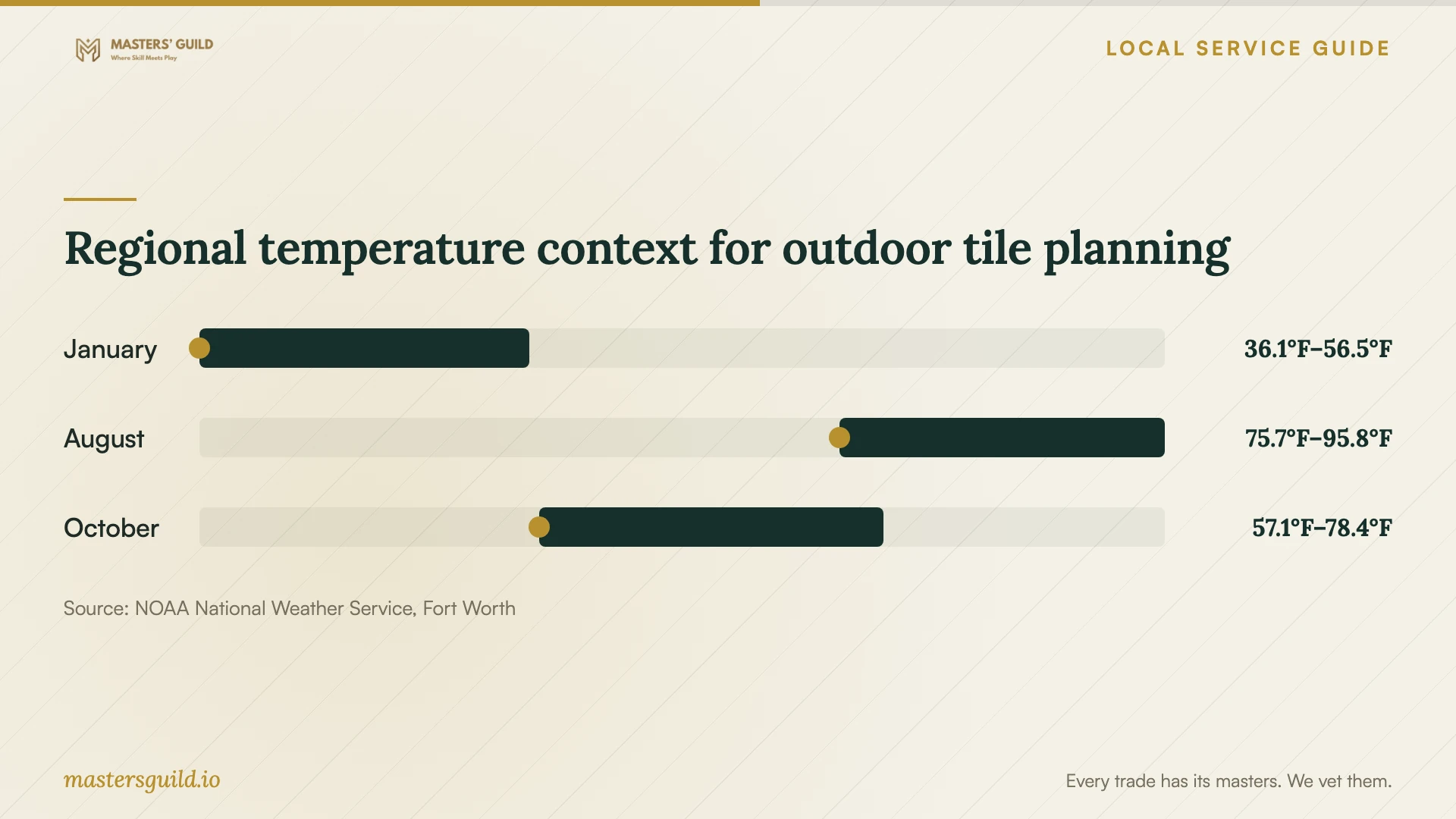
For an outdoor tiled entry or patio, discuss weather exposure before agreeing to a start date. The National Weather Service's Dallas/Fort Worth records show a normal August high of 95.8°F and a normal January low of 36.1°F for 1991–2020. These are regional station averages, not measurements at your home. [3]
Ask the installer to identify the permitted installation temperatures and protection requirements in the chosen materials' instructions. Agree on who checks conditions, protects stored materials and fresh work, and decides whether to postpone. Use the regional chart as a prompt for that discussion, then use the forecast and site conditions to arrange the work.
Regional temperature context for outdoor tile planning
Local details that affect your job
Confirm inspection timing before covering work
Garland sets a before-midnight request cutoff for inspections intended for the next business day, except foundation inspections. The city cautions that unusual circumstances can push inspections to another business day. If your scope needs inspections, have the contractor allow for that uncertainty before promising when they will cover the work. [1]
Separate haul-away from curbside collection
Garland's small remodeling collection provision applies to projects completed by residents, and the city excludes concrete, stone, and brick from curbside pickup. For a hired tile removal job, obtain an explicit haul-away allowance or confirm your own disposal arrangement before accepting the bid. [2]
Questions to settle for your project
| Project scope | Before hiring | Put in the agreement |
|---|---|---|
| Dry-area backsplash | Review edges, outlets, and the proposed layout. | Surface preparation, cuts, trim, and cleanup. |
| Floor replacement | Ask how the installer will assess the existing surface. | Removal, repairs, finished height, and transitions. |
| Shower with plumbing work | Confirm permit requirements with Building Inspection. | Permit responsibility, inspections, and trade coordination. |
| Tile demolition | Confirm disposal instead of assuming curbside acceptance. | Loading, haul-away, disposal charges, and cleanup. |
| Outdoor tile | Review product weather limits and site exposure. | Protection, postponement decisions, and return to use. |
Your hiring checklist
- Photograph the room and identify surfaces to remove and replace.
- Ask bidders to inspect the surface and itemize preparation allowances.
- Confirm permit responsibilities before demolition.
- Approve tile layout, trim, transitions, and grout selection.
- Request the proposed wet-area assembly and product instructions.
- Assign debris loading, transportation, and disposal.
- Record payment stages, change approval, and return-to-use instructions.
Frequently Asked Questions
Does replacing tile require a Garland permit?
The supplied residential guidance does not settle tile-only work. Garland lists plumbing repairs and major renovations among work that often needs permits and directs homeowners to ask about uncertain scopes before starting. Describe the complete project to Building Inspection rather than asking about tile alone. [1]
Can I put demolished tile at the curb?
Confirm your materials and project circumstances with Sanitation first. Garland describes collection for small remodeling projects completed by residents, limits construction waste setouts, and excludes concrete, stone, and brick. Ask a hired installer to price haul-away. [2]
How should I compare tile installation prices?
Give each bidder the same scope and request separate allowances for removal, preparation, installation, materials, and disposal. Ask how they will price concealed damage. Compare exclusions and responsibilities alongside the total.
How long should I allow before using the room?
Ask the installer for written return-to-use instructions based on the chosen products and your site conditions. Have them separate access for walking, fixture installation, and shower use where relevant. Agree on those milestones before arranging other work.
Sources and scope
This guide combines the sources below with practical planning guidance. Figures apply to the stated geography and period; request a written quote for your property.