
Local service guide
Roof Cleaning and Repair in Garland, TX
For Roof Cleaning and Repair in Garland, ask for an inspection and separate written scopes for cleaning and repairs before approving work. Check the roofer’s city registration and insurance, assign permit responsibility, and ask how the cleaner will contain wash water. Garland requires permits for roof repairs valued at $2,000 or more and for roof material changes. If you have a leak or visible damage, arrange a repair assessment before booking cosmetic cleaning. [1] [2]
Choose the scope before comparing quotes
Describe the problem when arranging the visit: staining, debris, a leak, displaced roofing, or damage you noticed after a storm. Share photographs taken from a safe location and note when water appeared indoors. Ask the contractor to photograph the affected areas and explain which proposed tasks address appearance and which address water entry.
For cleaning, request the proposed method, product names, treatment area, and confirmation that the method follows your roofing manufacturer’s instructions. Ask whether the crew expects to remove debris, treat staining, clean gutters, or return for a follow-up. Agree on the expected finish and ask how the contractor will handle marks that remain.
For repairs, ask the roofer to identify the components they will replace and the limits of the quoted work. Request a written process for approving extra work if they uncover damage. Keep cleaning and repair prices separate so you can approve necessary repairs without committing to the entire maintenance package.
Check permit responsibility and roof changes
Garland requires a permit when roof repairs have a value of $2,000 or more. The city also requires either an executed repair or replacement contract or the insurance adjuster’s scope. Ask who will submit those documents, obtain the permit, and give you a copy before work starts. [1]
Discuss material and pitch changes before signing. Garland requires a permit for a roof material change and asks applicants to contact its office about documentation. For a pitch change, the city requires detailed plans with the permit application. Its guidance allows up to two shingle layers; adding a third requires removal of the existing layers. [1]
The city’s re-roofing page lists a $150 permit fee and a 4.5% Technology/Equipment Surcharge on permits issued by Building Inspections. Ask the contractor to identify permit charges in the estimate and confirm the applicable total with the city for your scope. [1]
Agree on runoff controls before cleaning
Ask the cleaner to trace where water will travel from the roof through gutters and downspouts. Have them explain how they will contain and dispose of wash water, protect planting areas, and keep debris out of street drains. Include those tasks in the written scope rather than settling them when the crew arrives.
Garland’s stormwater ordinance prohibits non-stormwater discharges into its municipal storm drainage system, subject to listed defenses. It also prohibits wastewater from commercial mobile power washing or exterior building cleaning where the wastewater contains harmful cleaning substances. The ordinance’s defense for roof stormwater applies to runoff without contamination from a pollutant source. Ask the cleaner to explain how their proposed work meets these requirements. [2]
Compare the complete price and scheduling terms
Ask each contractor to quote the same treatment area and repair scope. Request separate amounts for cleaning, repairs, debris removal, runoff controls, and applicable permit charges. For any allowance, ask what it covers and how the contractor will price additional work. Agree on payment stages, completion photographs, warranty terms, and a contact for problems after the visit.
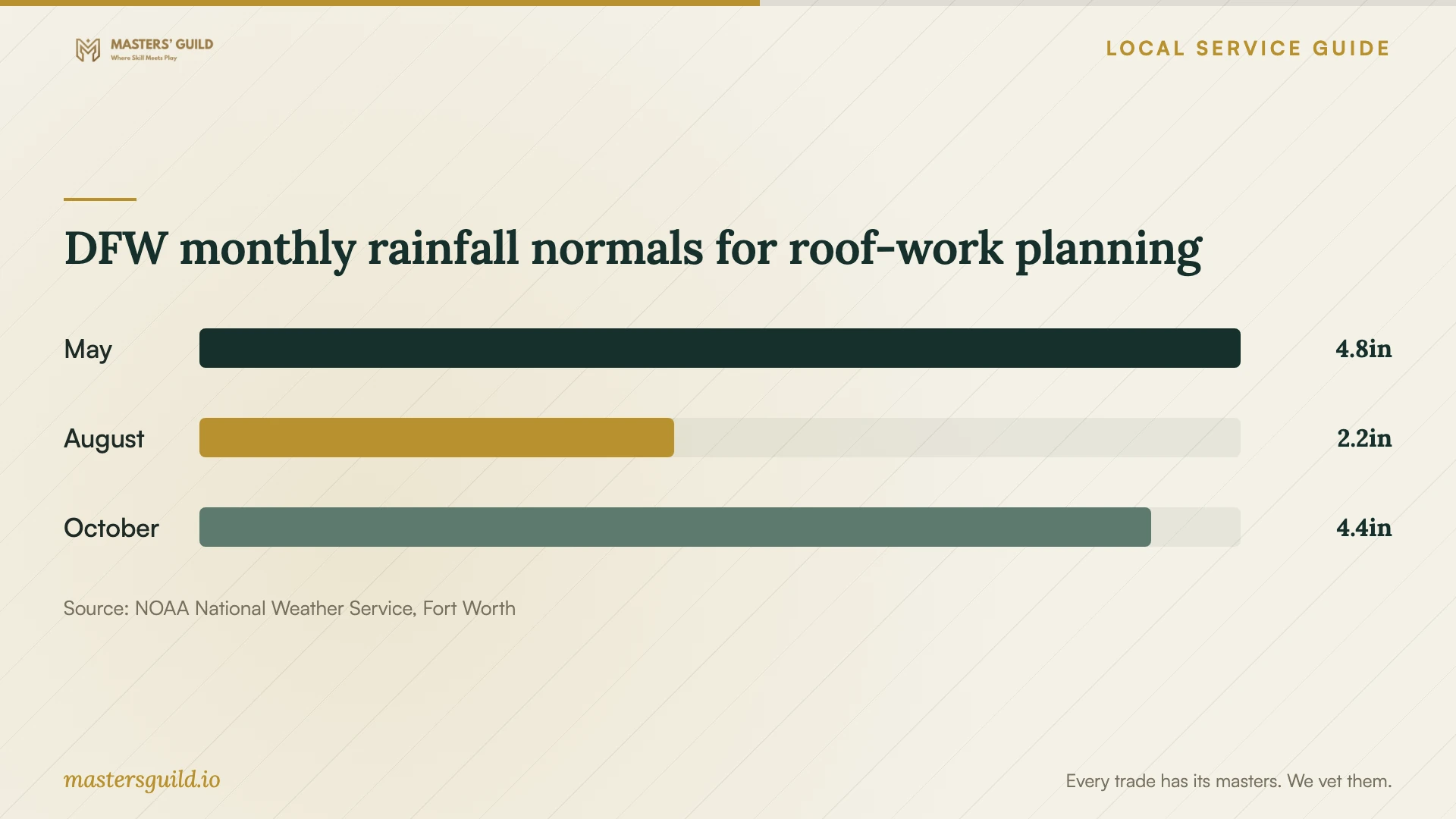
Choose a weather window with the contractor and agree on postponement terms. The National Weather Service’s DFW regional normals show 4.78 inches of precipitation in May, 2.18 in August, and 4.37 in October. Use the forecast for the actual appointment; these regional monthly averages do not establish a dry working day at your home. [4]
For insurance-funded repairs, keep claim decisions separate from the construction agreement. Texas prohibits a contractor from acting as a public insurance adjuster on a claim when that contractor also does the work. Contractors cannot offer to waive, rebate, or absorb your deductible. Contracts of $1,000 or more involving an insurance settlement must include a notice that you must pay the deductible. [3]
DFW monthly rainfall normals for roof-work planning
Local details that affect your job
Verify the roofer’s Garland registration
Garland requires roofers to register as General Contractors and provide proof of insurance naming the City of Garland as certificate holder. Ask the roofer to confirm that registration before you approve repairs, and request insurance documentation matching the business named in your contract. [1]
Prepare the documents for permitted repairs
For repairs valued at $2,000 or more, plan for a permit and provide the executed contract or insurance adjuster’s scope that Garland requires. Assign the application task in writing. For a material change, contact the city about its documentation requirements before ordering materials. [1]
Check the downspout discharge plan
Garland’s ordinance specifically addresses exterior-cleaning wastewater containing harmful cleaning substances. Before approving a chemical cleaning proposal, ask the contractor to identify the discharge route and describe the controls they will use to keep prohibited wastewater out of the storm drainage system. [2]
Choose the next step for your roof
| Situation | Next step | Before approval |
|---|---|---|
| Staining or debris without a known leak | Request an assessment and cleaning-only scope | Agree on method, expected finish, and runoff controls |
| Leak or visible roofing damage | Request a repair assessment before cleaning | Ask for photographs, repair limits, and extra-work terms |
| Repairs valued at $2,000 or more | Plan for a Garland permit | Assign application responsibility and provide the contract or adjuster’s scope |
| Change of roof material or pitch | Resolve city documentation before ordering | Material changes require a permit; pitch changes require detailed plans with the application |
| Insurance-funded work | Review the construction agreement and deductible terms | Reject deductible-waiver offers and contractor public-adjuster services on the same work |
Your hiring checklist
- Share roof photographs, known materials, prior repairs, and any leak history.
- Request separate written cleaning and repair scopes.
- Ask for the cleaning method, product names, and manufacturer-instruction check.
- Confirm contractor registration, insurance, and permit responsibility.
- Agree on wash-water containment, disposal, and protection of planting areas.
- Document extra-work approval, weather postponements, payment stages, and warranty terms.
- Request completion photographs and copies of applicable permit documents.
Frequently Asked Questions
Does every roof repair need a Garland permit?
Garland’s published guidance requires permits for roof repairs valued at $2,000 or more. It also requires a permit for changing roof materials. Describe the full proposed scope to the city before assuming a smaller repair qualifies without a permit. [1]
How much should I budget for cleaning and repairs?
Use an inspection-based written quote for your home. Ask for separate cleaning and repair prices, plus runoff controls, disposal, and applicable permit charges. Compare contractors using the same scope and ask them to state how they will price concealed damage before you approve work.
Can the cleaner let rinse water run into the street drain?
Do not approve an unspecified discharge plan. Garland prohibits specified exterior-cleaning wastewater containing harmful cleaning substances from entering its storm drainage system. Ask the contractor to explain containment and disposal for the products and method they propose. [2]
Can my roofer waive my insurance deductible?
No. Texas prohibits contractors from offering to waive, rebate, or absorb a property insurance deductible. The Texas Department of Insurance also says a contractor doing the work cannot act as your public insurance adjuster on that claim. [3]
Sources and scope
This guide combines the sources below with practical planning guidance. Figures apply to the stated geography and period; request a written quote for your property.