
Local service guide
Duct and Vent Cleaning in Garland, TX
Arrange Duct and Vent Cleaning for your Garland business by requesting an inspection, evidence of the problem, and a written scope before approving work. Separate cleaning from mechanical repairs: Garland requires a state-licensed HVAC contractor to obtain a commercial mechanical-repair permit, with a permit-validation route when a general contractor already holds the construction permit. Ask who will handle that coordination before accepting repair add-ons. [1]
Start with an inspection and a defined problem
Tell the contractor what prompted the request: debris at supply grilles, an odor, renovation dust, or a concern raised during HVAC maintenance. Ask which system serves the affected rooms and request photographs tied to those locations. Describe the symptoms without deciding in advance that cleaning will solve them.
EPA’s home duct-cleaning guidance identifies substantial visible mold, vermin infestation, and excessive dust or debris as reasons to consider cleaning. It also explains that dusty return grilles alone do not establish heavy contamination inside ducts. These are useful inspection questions for a business owner, but the publication addresses homes and does not establish a commercial cleaning interval. [2]
Ask the contractor to explain any moisture finding before quoting treatment. EPA advises correcting the underlying causes of contamination and replacing wet or moldy duct insulation that cannot be cleaned. Ask how the proposed approach accounts for your duct materials and who will assess any replacement work. [2]
Get a quote you can compare
Request a written list of the systems, supply ducts, return ducts, grilles, and equipment components included. Ask the contractor to mark exclusions, inaccessible areas, and optional work. If you also want dryer exhaust cleaning, describe that as a separate item so the contractor can quote its route and access needs.
EPA’s residential guidance describes cleaning as potentially covering ducts, registers, coils, drain pans, fans, and air-handler housings. It warns that leaving a contaminated component uncleaned can contaminate the system again. Ask each bidder to explain whether the proposed work addresses the affected system and whether the crew has the qualifications for each component. [2]
Ask for the total price, anticipated hours, shutdown periods, and the approval procedure for extra work. Identify charges for access, equipment cleaning, repairs, and chemical treatment. Compare the same written scope across bidders instead of comparing an advertised vent price with a system-cleaning total.
Resolve repair permits before expanding the visit
Garland’s Mechanical Permits page applies to non-residential mechanical repairs. The city states that only a state-licensed HVAC contractor may obtain that permit. Its separate-permit instructions apply when no general contractor is on the job. Ask the proposed HVAC contractor to explain the permit route for any repair recommendation. [1]
If a general contractor already holds a construction permit, Garland directs the HVAC contractor to contact the city for permit validation, assuming the HVAC contractor already has city registration. Give the contractor the existing permit information and identify who will confirm validation before repair work starts. [1]
The city also lists air-conditioning unit replacement as requiring a permit. Neither cited city page establishes a blanket permit requirement for routine duct cleaning. Keep the original cleaning approval separate from a proposal to repair or replace equipment, and ask the city to resolve questions about the exact scope. [1] [3]
Plan access, shutdowns, and completion checks
Before booking, identify the person who can unlock equipment rooms and approve access to occupied areas. Ask the contractor which rooms staff must clear, how the crew will protect furnishings, and whether hoses or equipment will cross entrances. Agree on a shutdown window and a contact for unexpected findings.
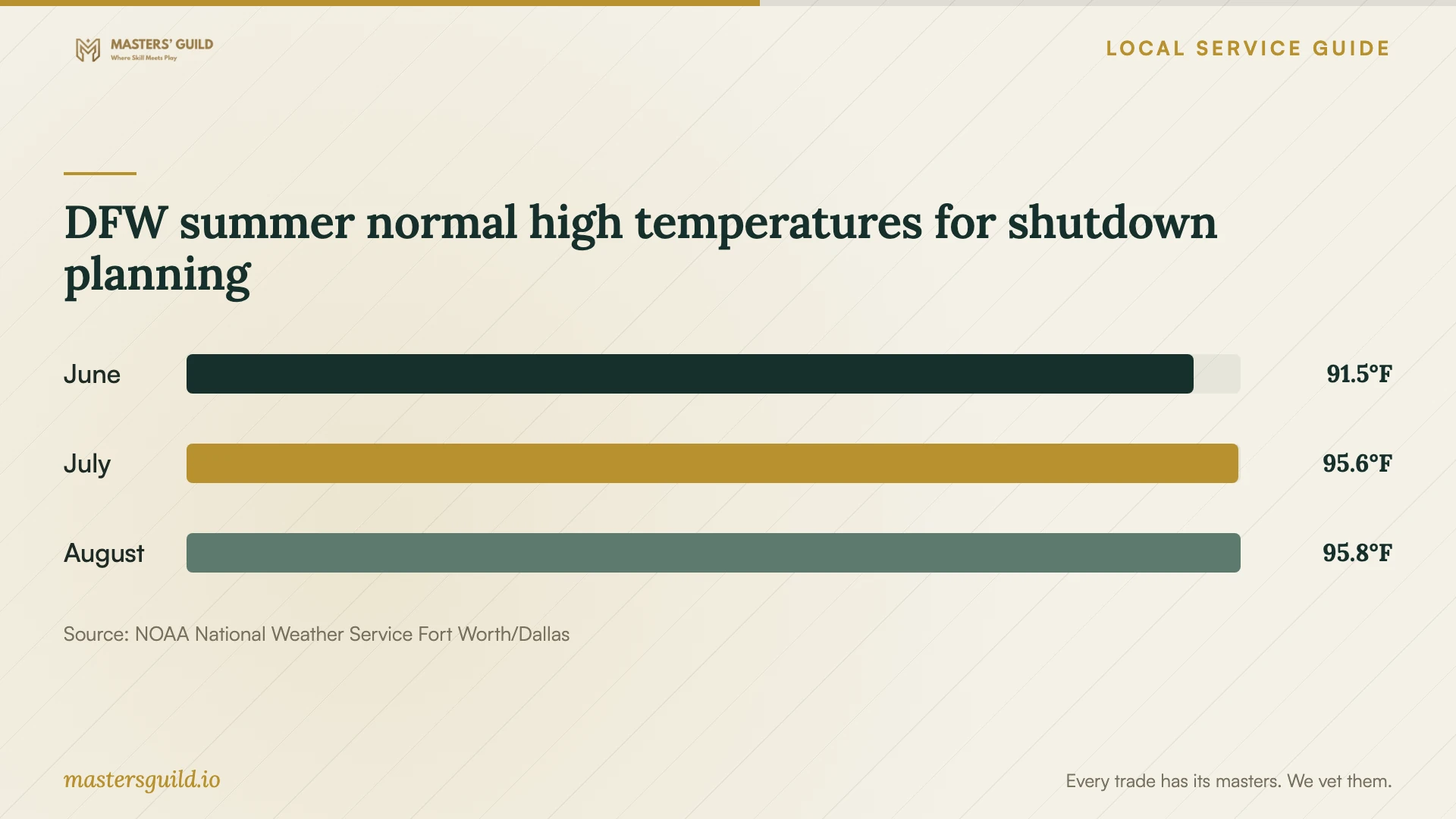
Use the regional temperature chart to discuss comfort during shutdowns. The National Weather Service reports DFW normal highs above 90°F from June through August. Ask whether the contractor can sequence systems or schedule the interruption around your occupancy needs; the climate averages do not establish a required cleaning season. [4]
EPA’s residential guidance recommends outdoor vacuum exhaust or HEPA vacuum equipment when exhausting indoors, protection of furnishings, and cleaning methods suited to duct materials. Ask a commercial bidder to explain its containment method and material precautions rather than assuming that a household procedure covers your premises. [2]
At completion, request photographs of the agreed locations and a walkthrough of accessible components. EPA recommends visual inspection to assess cleaning and checking that registers are reattached and the system operates after the work. Record any inaccessible areas, damage, or unfinished items before signing off on the agreed scope. [2]
DFW summer normal high temperatures for shutdown planning
Local details that affect your job
Commercial repairs without a general contractor
Garland directs the state-licensed HVAC contractor to obtain a mechanical-repair permit when no general contractor is on the job. If a cleaning inspection leads to a repair proposal, ask that contractor to identify the permit responsibility before you authorize the expanded scope. [1]
Repairs within an existing construction project
If your general contractor already has a construction permit, Garland provides a validation route for the HVAC contractor, assuming city registration. The city lists 972-205-2300 for that coordination. Share the construction permit information with the HVAC contractor and ask for confirmation of validation. [1]
Equipment replacement needs a separate decision
Garland identifies replacement of air-conditioning units as requiring a permit. If a bidder proposes replacement during the cleaning assessment, request a separate equipment proposal and permit plan before approving it. [3]
Match the finding to your next step
| Finding or proposal | Next step |
|---|---|
| Dust on return grilles | Request an inspection before approving system cleaning. EPA’s residential guidance says grille dust alone does not establish heavy duct contamination. |
| Wet or moldy duct insulation | Ask for a moisture assessment and replacement proposal. EPA says wet or moldy insulated ducts cannot be effectively cleaned. |
| Commercial mechanical repairs | Ask the state-licensed HVAC contractor to identify Garland’s permit or existing-permit validation route. |
| Air-conditioning unit replacement | Request a separate proposal and permit plan; Garland lists replacement as requiring a permit. |
Your hiring checklist
- Describe the symptoms and identify the affected rooms before requesting quotes.
- Request location-specific photographs and an explanation of the proposed cleaning.
- List included systems, components, exclusions, and optional dryer exhaust work.
- Agree on the total price and written approval for additional work.
- Ask who will coordinate permits if the scope expands into mechanical repairs or replacement.
- Arrange keys, equipment access, room clearance, and the shutdown window.
- Request completion photographs, an operating check, and a list of unfinished items.
Frequently Asked Questions
Does routine duct cleaning require a Garland mechanical permit?
The supplied city guidance addresses commercial mechanical repairs and air-conditioning replacement. It does not establish a blanket rule for routine cleaning. Describe any proposed cutting, repairs, or equipment changes to the city and ask which requirements apply before approving that work. [1] [3]
Should I accept a disinfectant or mold-treatment add-on?
Ask for evidence of the contamination, identification of the duct material, the product label, and an explanation of the proposed use. EPA’s residential guidance cautions about chemical treatments and states that no biocides are registered for fiberglass duct board or fiberglass-lined ducts. Ask the contractor to substantiate suitability for your system. [2]
Can cleaning guarantee lower bills or healthier indoor air?
EPA’s home guidance says duct cleaning has not been shown to prevent health problems and finds little evidence that cleaning ducts alone improves system efficiency. Ask the bidder to define an observable result, such as removal of documented debris, rather than promising health outcomes or savings. [2]
Sources and scope
This guide combines the sources below with practical planning guidance. Figures apply to the stated geography and period; request a written quote for your property.