
Local service guide
Commercial Building Cleaning in Garland, TX
Arrange Commercial Building Cleaning in Garland, TX by walking the premises with prospective cleaners, defining tasks and visit frequency, and comparing written totals that include applicable sales tax. Before approving carpet extraction, floor washing or exterior work, ask how the crew will collect and dispose of wastewater. Garland prohibits commercial floor and carpet cleaning wastewater from entering its storm sewer system. [1] [4]
Define the work before requesting prices
Start your walkthrough at the entrance and follow the route employees and customers use. Identify the rooms the cleaner may enter, the surfaces to clean and the items staff will handle. Specify restrooms, break-room counters, interior glass, bins and floors by area. Ask bidders to list furniture moving, appliance interiors and high glass as included tasks or exclusions.
Separate recurring visits from restoration work. Request distinct prices for the initial deep clean, ongoing service, carpet extraction and floor stripping or recoating. Identify the floor material and ask the cleaner to confirm the proposed method before applying chemicals. For a clinic, food preparation area or production space, ask for a separate scope that addresses your facility procedures and restricted areas.
Choose an initial schedule around occupancy and your own observations. Tell bidders where bins fill, where tracked-in dirt collects and which restrooms need attention between visits. Agree on a review after the first service period, with a process for changing individual tasks or frequencies.
Compare the complete quote
Ask each bidder to state the service charge, visit frequency, supplies, consumables, equipment charges and applicable tax. The Texas Comptroller directs cleaning businesses to collect state tax plus applicable local taxes on their service charges. Its examples include cleaning offices and warehouses, washing windows and floors, picking up trash, and pressure washing buildings, sidewalks and parking lots. [4]
For a recurring agreement, ask how many visits the monthly charge covers and how the cleaner handles holidays, missed visits and extra work. Identify who purchases liners, paper towels and soap. Ask for written approval before the crew adds a chargeable task, and check the notice period for cancellation or price changes.
Request evidence of insurance appropriate to the proposed work and ask whether employees or subcontractors will enter the building. Discuss responsibility for damaged finishes, lost keys and accidental alarm calls. Ask for references from premises with comparable access restrictions and cleaning needs.
Plan access, drying and handover
Name a building contact and a cleaning supervisor. Agree on arrival and departure windows, alarm procedures, key control and rooms that must remain locked. Keep access instructions separate from a general task sheet. Tell the crew which desks, documents, electronics and personal items they must leave untouched.
Before wet cleaning, agree on barriers, alternate walking routes and the time occupants may return. Ask the contractor to explain drying or curing requirements for the selected method. Photograph existing floor or glass damage together and record any test-area approval before the crew treats the remaining surface.
Use a short inspection sheet for handover: check the agreed surfaces, replenished supplies, secured doors and any unresolved spots. Establish how you will report a missed task and when the supervisor will respond. For recurring work, review specific omissions with the supervisor before changing the entire service schedule.
Allow for weather when scheduling exterior work
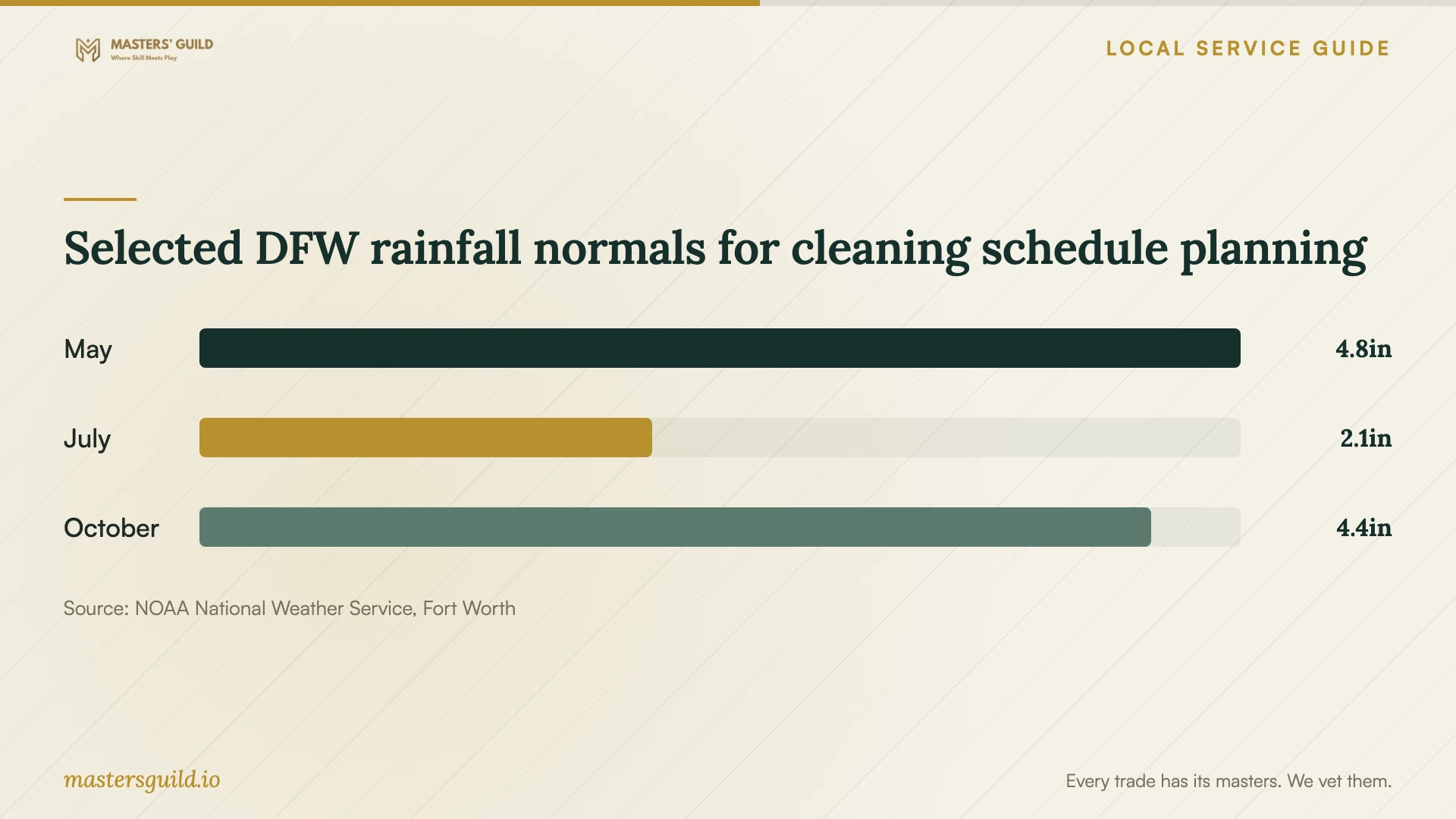
The National Weather Service reports DFW precipitation normals of 4.78 inches in May, 2.08 inches in July and 4.37 inches in October for 1991–2020. These regional averages provide context for planning entrance care and exterior cleaning in Garland. Ask for a weather rescheduling policy and use the forecast when choosing the actual workday. [5]
Keep a plan for entrance mats and tracked-in moisture during wet weather. Ask who will move mats during cleaning and return them before opening. For exterior work, agree on how the contractor will protect customer access and keep collected wastewater contained if rain interrupts the job.
Selected DFW rainfall normals for cleaning schedule planning
Local details that affect your job
Confirm wastewater handling before wet cleaning
Garland’s municipal code prohibits commercial floor, rug and carpet cleaning wastewater from entering the municipal storm sewer system. It also prohibits building-exterior wash water containing harmful cleaning substances from entering that system. During the walkthrough, identify nearby storm drains and ask the contractor to describe collection equipment and the proposed disposal destination. Have the contractor confirm that destination’s requirements; do not assume a drain on the property accepts cleaning wastewater. [1]
Assign dumpster-area cleanup and preserve collection access
Garland holds property owners responsible for keeping the area around a commercial container clean; sanitation drivers do not clean up items left on the ground. The City instructs businesses to keep vehicles at least 10 feet from all sides of the container and unlock the enclosure on collection day. Include enclosure sweeping in the cleaning scope if you want the crew to handle it, and coordinate parking and gate access with your collection schedule. [2]
Separate bagged trash, liquids and hauled debris
The City lists general office trash and carpet among accepted non-hazardous solid wastes, while prohibiting liquid waste and hazardous waste in commercial containers. Specify how the cleaner will handle leftover chemicals and recovered liquids. If a cleanout includes off-site waste hauling, verify that the hauler has an active City franchise agreement before approving removal. [2] [3]
Match the scope to the work you need
| Your need | Scope to request | Point to settle before approval |
|---|---|---|
| Recurring office cleaning | Room-by-room tasks and visit schedule | Included supplies, tax and missed-visit arrangements |
| Carpet extraction or wet floor care | Separate treatment and drying plan | Collection and disposal of wastewater; no discharge to storm drains |
| Exterior or pavement washing | Surface method, access barriers and runoff controls | Containment of wash water containing harmful cleaning substances |
| Dumpster enclosure cleanup | Sweeping and removal of loose items | Who maintains collection access and handles excluded waste |
| Cleanout with waste hauling | Removal list and disposal responsibilities | Active City franchise agreement for the waste hauler |
Your hiring checklist
- Prepare a room list with floor materials, restricted areas and tasks staff will retain.
- Give each bidder the same recurring scope and separate requests for deep cleaning or restoration.
- Request a total that identifies applicable tax, supplies, consumables and extra charges.
- Review insurance, crew supervision, subcontracting and responsibility for damage.
- Agree on keys, alarms, wet-area barriers and reopening arrangements.
- Record the wastewater collection method and proposed disposal destination.
- Assign trash-area cleanup, inspection and missed-task follow-up.
Frequently Asked Questions
How much should I budget for cleaning?
Request a walkthrough quote for your actual premises. These sources do not establish a Garland market price. Compare the same tasks, frequency, consumables and extra-work terms, and ask for the total with applicable sales tax. Texas treats commercial building cleaning as taxable. [4]
Can the cleaner empty carpet extraction water into a storm drain?
No. Garland prohibits commercial floor, rug and carpet cleaning wastewater from entering its storm sewer system. Ask the contractor to collect the water and confirm an appropriate disposal destination before starting. [1]
Does emptying indoor bins include cleaning the dumpster enclosure?
Specify both tasks in the agreement. Garland makes property owners responsible for the area around containers, and sanitation drivers do not pick up items left on the ground. Decide whether your staff or the cleaning crew will handle that area. [2]
What should I do before an after-hours crew arrives?
Clear the agreed surfaces, secure confidential material and identify rooms the crew must avoid. Test access arrangements with the supervisor, provide an emergency contact and confirm who will check doors and set the alarm when the crew leaves.
Sources and scope
This guide combines the sources below with practical planning guidance. Figures apply to the stated geography and period; request a written quote for your property.