
Local service guide
Tile Setting in Fremont: Hiring and Planning
For Tile Setting in Fremont, give bidders the same written scope for preparation, installation and hauling, then verify their contractor licenses. California requires licensing when a project needs a building permit, uses additional workers, or reaches $1,000 in combined labor and materials. For a tile specialist, check the C-54 classification, which includes surface preparation and tile installation. [2] [3]
Choose a contractor for the full scope
California’s C-54 Ceramic and Mosaic Tile Contractor classification covers preparing surfaces and installing listed materials, including ceramic, quarry, glass mosaic and stone tiles. Request the bidder’s license number, check its status with CSLB and match the licensed business to your proposal. Have the contractor identify who will perform preparation and installation. [3]
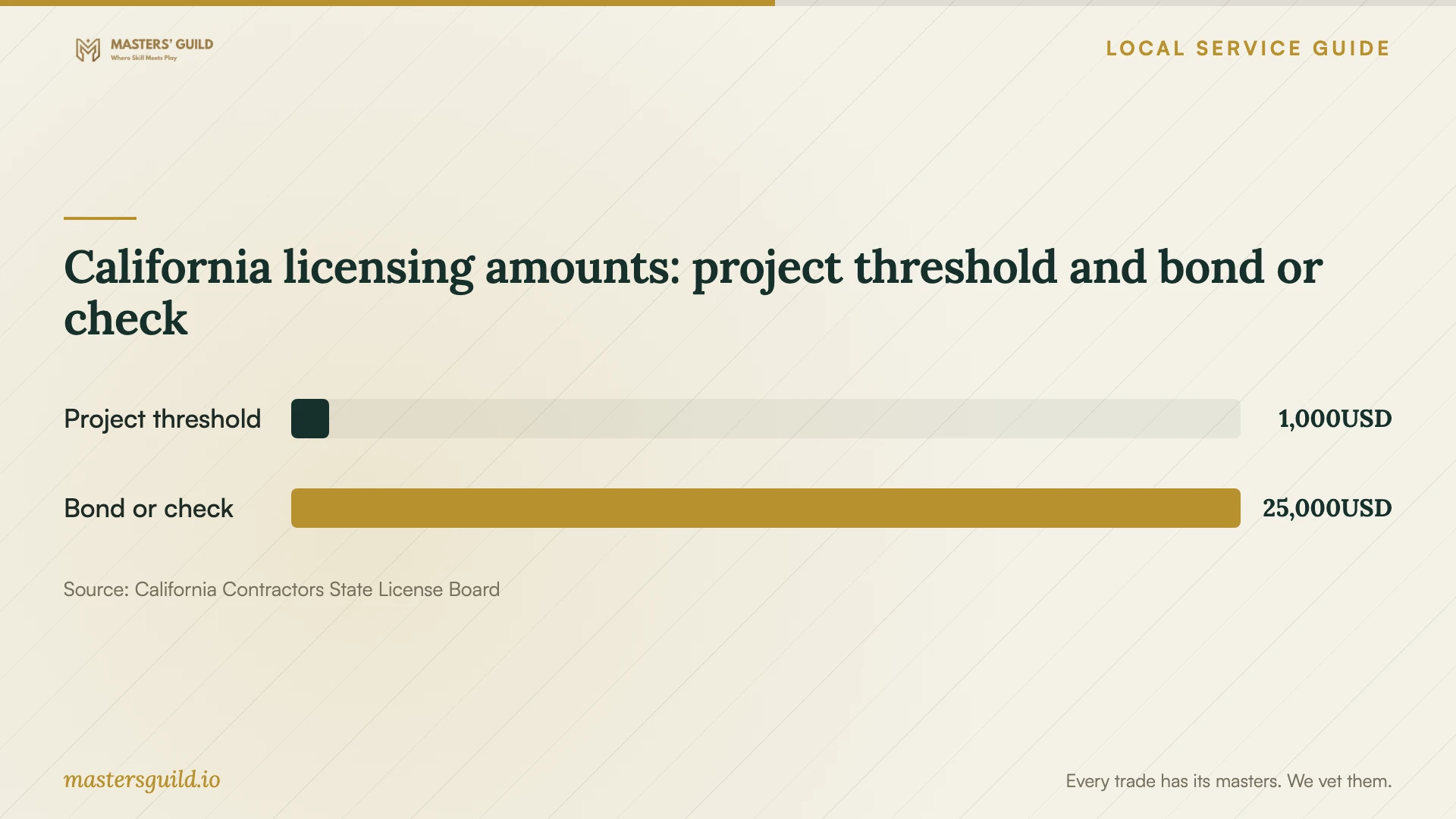
The minor-work exemption requires a project below $1,000, no required building permit and no employee labor. CSLB includes labor, materials and other costs across one or more contracts on the project. Include tile you purchase when evaluating the total; do not assess the installer’s labor charge alone. [4]
For a larger remodel, identify who coordinates the other trades. CSLB describes general building contractors as overseeing projects and coordinating licensed subcontractors, and gives plumbing, electrical and carpentry under one kitchen-remodel contract as an example. Request a proposal that names responsibility for each part of your remodel. [2]
Define preparation and finish details
Give each bidder room dimensions, photographs, your tile selection and a description of the existing finish. Include thresholds, corners, drains and damaged areas in the photographs. Specify whether you want a repair, replacement within the existing footprint or a broader renovation. Arrange a surface inspection before accepting a preparation allowance.
Request separate descriptions for removal, surface preparation, setting materials, installation, grout, trim and cleanup. Identify who supplies each item. For shower work, have the installer describe the proposed waterproofing assembly and responsibility for connections at the drain, corners and penetrations. Request the manufacturer’s installation and return-to-use instructions for the proposed products.
Approve the layout before installation. Discuss visible cuts, grout color, joint width, exposed edges and transitions to adjoining floors. Record selections in the proposal, and agree on which decisions require your approval before the installer orders materials or starts work.
Compare complete quotes and schedules
Compare each bidder’s included work and exclusions. Have them explain how they will price damage discovered after removal and obtain your written approval for added work. For owner-supplied tile, assign responsibility for checking quantities, receiving deliveries and resolving missing or damaged pieces.
Request milestones for removal, preparation, installation and return to use. Tell the contractor if this is your only bathroom or if you need a clear route through the house. Set expectations for furniture moving, appliance handling, cutting arrangements, work hours and daily cleanup.
Confirm the permit requirements for your exact scope with the city before demolition, and record who will arrange any required approvals. CSLB treats a required building permit as a licensing trigger regardless of project price. Its state guidance does not establish whether your particular tile project requires a Fremont permit. [2]
Plan separate routes for debris and surplus
Decide how much matching tile you want to keep for repairs, and label it with the product information. StopWaste recommends offering leftover boxes for reuse or donation to a building supply store. Keep that surplus separate from demolition debris while you decide where it should go. [1]
Include loading, transport and disposal charges in the quote. StopWaste lists a paid tile-recycling destination in Fremont and a restricted reuse option in San Francisco. Confirm acceptance before loading either material, and compare the regional reuse trip with offering eligible boxes to someone nearby. [1]
California licensing amounts: project threshold and bond or check
Local details that affect your job
Budget for tile recycling on Boyce Road
StopWaste lists Fremont Recycling & Transfer Station at 41149 Boyce Road for paid tile-recycling drop-off, with a separate construction and demolition drop-off area. Have your installer identify the intended destination and include hauling and disposal charges in the proposal. Confirm current acceptance and fees before delivery. [1]
Check eligibility before a regional reuse trip
StopWaste lists Building Resources at 701 Amador Street in San Francisco for free tile reuse drop-off, limited to new boxes or antique tile. This destination is outside Fremont. For qualifying surplus, confirm acceptance before making the trip; arrange a separate disposal plan for broken demolition tile. [1]
Requirements and next steps by project situation
| Situation | Requirement or listing | Your next step |
|---|---|---|
| Repair below $1,000 | The exemption also requires no required permit and no employee labor. | Check the full project cost and all exemption conditions. |
| Project at $1,000 or more | CSLB requires a contractor license at this combined labor-and-materials threshold. | Verify the bidder’s current license before hiring. |
| Tile specialist | C-54 covers surface preparation and listed tile installations. | Check the classification and get the preparation scope in writing. |
| Broken tile removal | StopWaste lists paid tile recycling at the Boyce Road facility. | Include hauling and confirm acceptance and charges. |
| Surplus for regional reuse | The Building Resources tile listing specifies new boxes or antique tile. | Confirm eligibility before arranging transport to San Francisco. |
Your hiring checklist
- Record dimensions, tile selections and photographs of existing surfaces.
- Verify the bidder’s license and identify who performs each part of the work.
- Get a written preparation scope and a process for approving added work.
- Approve layout, grout, trim and transitions before installation.
- Assign responsibility for permit inquiries and required approvals.
- Agree on access, cleanup and the return-to-use schedule.
- Include hauling charges and separate reusable surplus from demolition debris.
Frequently Asked Questions
Does a tile installer need a California contractor license?
A contractor needs a license if the project requires a building permit, uses additional workers, or totals $1,000 or more in labor and materials. The minor-work exemption requires a project below $1,000, no required permit and no employee labor. Contractors cannot split a larger project to claim the exemption. [4]
Can I compare quotes by price per square foot?
Use that figure alongside the written scope. Request descriptions of removal, preparation, materials, trim and hauling, then compare site-specific totals. Have bidders explain exclusions and how they would price concealed damage before you choose.
Where can removed tile go in Fremont?
StopWaste lists Fremont Recycling & Transfer Station at 41149 Boyce Road for paid tile recycling, with a separate construction and demolition drop-off area. Confirm acceptance and charges before delivery. [1]
Does the contractor’s bond amount tell me what my job should cost?
No. CSLB states a $25,000 contractor bond requirement and permits a $25,000 cashier’s check in lieu of that bond. That licensing requirement does not establish an installation price. Compare written proposals for your own scope. [4]
Sources and scope
This guide combines the sources below with practical planning guidance. Figures apply to the stated geography and period; request a written quote for your property.