
Local service guide
Pressure washing in Fremont: plan the job
For pressure washing in Fremont, choose a provider who explains how they will clean your surfaces, contain wash water, and arrange disposal before starting. Alameda County's Clean Water Program says mobile businesses must keep wash water out of gutters and storm drains. Ask for a written scope and check ACWD water-use restrictions before agreeing to a date. [1] [2]
Define the surfaces and the result you want
Give each provider the same description: the driveway, patio, steps, siding, or other areas you want cleaned. Include approximate dimensions and photographs of stains, cracks, peeling finishes, and nearby drains. State whether you want general cleaning or treatment of a particular stain. Ask the provider to distinguish the work they include from results they cannot promise.
Ask which method the provider proposes for each material and how they will choose pressure, cleaning products, and equipment. Request a small test area before they treat a finish you are concerned about. For siding, decks, or roofs, ask them to explain how their method follows the material manufacturer's care instructions. Keep repairs, repainting, sealing, and washing separate in the scope.
Require a wash-water plan before work starts
The Alameda Countywide Clean Water Program tells mobile businesses to determine where they will discharge wash water before starting a job. Its guidance calls for equipment such as long hoses and a sump pump, plus containment using sandbag berms, wattles, or bermed mats. It directs businesses to discharge through a sanitary sewer connection rather than a storm drain. [1]
Walk the proposed cleaning area with the provider. Point out the street gutter, driveway slope, and drains you know about. Ask them to identify the collection area and intended disposal point, explain how they will confirm the connection, and describe what they will do if water escapes containment. Do not accept a plan that ends with wash water running into the street. [1]
The same regional program offers surface-cleaner training through the Bay Area Municipal Stormwater Collaborative and says many municipalities require its certificate. Ask whether the provider has that training and whether a certificate requirement applies at your address. This regional guidance does not establish a Fremont certificate requirement. [1]
Check water-use restrictions before scheduling
ACWD's exception application states that its board adopted Ordinance No. 2026-01 on October 8, 2026, prohibiting wasteful water use under all conditions, regardless of drought status. Before scheduling, ask ACWD how the restrictions apply to the proposed surface, purpose, and cleaning method. The application page does not specify which routine pressure-washing jobs the ordinance permits. [2]
If ACWD says your proposed use requires an exception, prepare the reason for the request along with the dates, duration, and estimated water quantity. ACWD requires a critical need and grounds involving undue hardship or health, sanitation, fire protection, or safety. Its form also tells applicants to review exceptions that the ordinance already contains before applying. [2]
ACWD accepts exception requests through its application form or in writing to the Water Use Efficiency Team at 43885 S. Grimmer Blvd., Fremont, CA 94538. It says applicants with complete applications will receive a status notification within 10 business days. For questions, call the Water Conservation Hotline at 510-668-4218. Leave room in your schedule for that review if an exception is necessary. [2]
Compare the full quote and prepare access
Ask for a total quote that names the surfaces, cleaning method, stain-treatment limits, containment and disposal work, and cleanup. Confirm who supplies water and whether the provider charges for hauling or other disposal arrangements. Request evidence of liability insurance and ask who will perform the work. Agree on how the provider will handle damage concerns or additional work before accepting the quote.
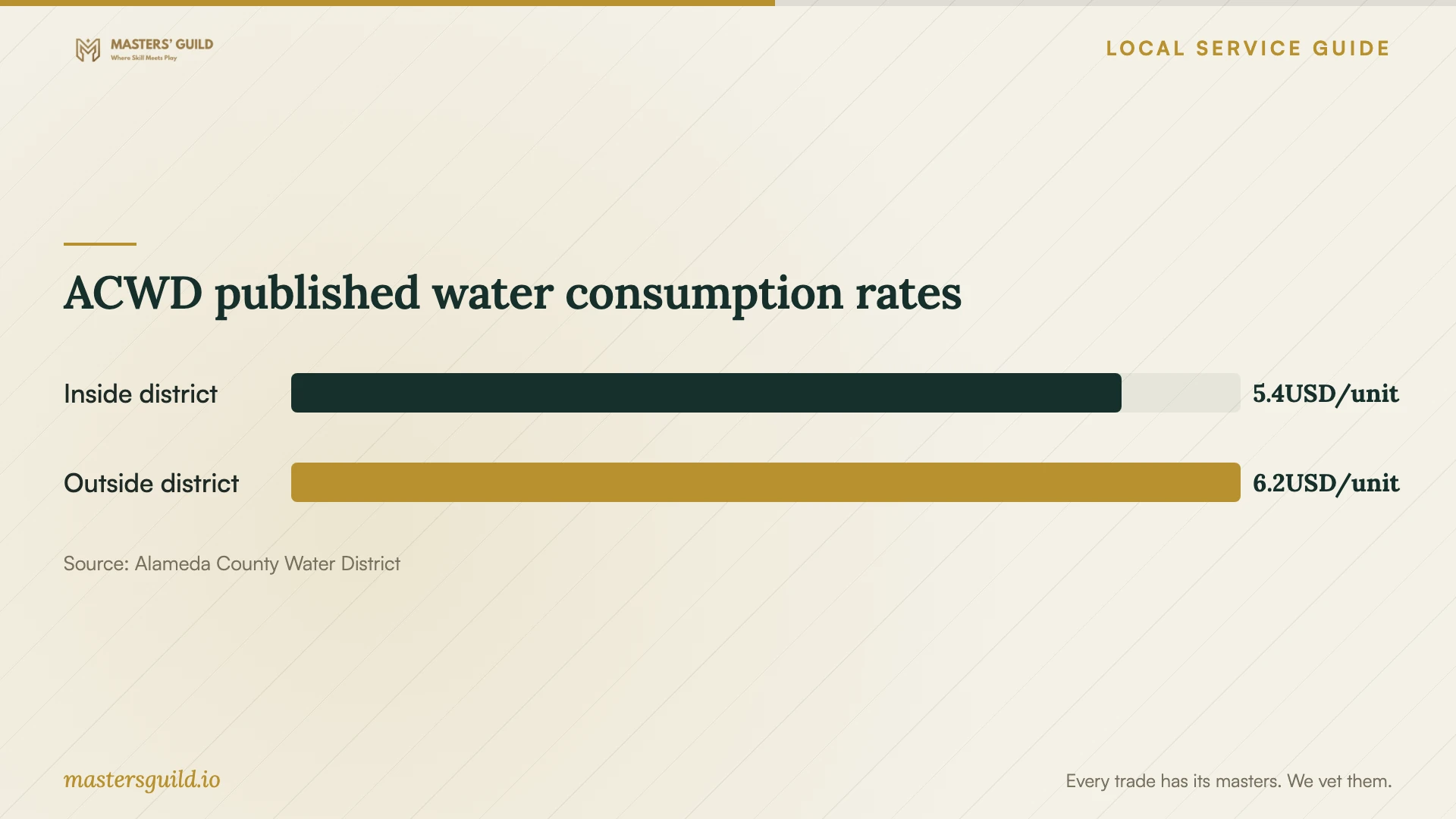
ACWD publishes an inside-district consumption charge of $5.38 per 748 gallons, effective March 1, 2026. That is a water-supply rate, not a pressure-washing service price. Use the provider's estimated water quantity to understand the supply portion of the job, while asking them to explain labor, equipment, treatment, and recovery charges in their quote. [3]
Before arrival, agree on where to park and place equipment, which water connection to use, and which areas need protection. Move vehicles, furniture, and loose belongings from the work area. Arrange access to any agreed disposal point and keep children and pets away during work. At completion, inspect the agreed areas with the provider and record any remaining stains or concerns before accepting additional treatment.
ACWD published water consumption rates
Local details that affect your job
A new ACWD rule warrants a scheduling check
ACWD's application page records adoption of its all-conditions water-waste ordinance on October 8, 2026. Before booking, confirm whether your planned cleaning complies or needs an exception. If you need one, include dates, duration, and water quantity; ACWD gives a status notification within 10 business days for a complete application. That notification is not a promise of approval. [2]
Regional runoff guidance changes the provider interview
Alameda County's Clean Water Program instructs mobile businesses to contain wash water and discharge it through a sanitary sewer connection, keeping it out of gutters and storm drains. For a driveway or patio job here, ask the provider to name the collection equipment and disposal point before you accept the scope. Confirm the disposal arrangement rather than assuming an outdoor drain connects to the sewer. [1]
Resolve these questions before accepting a quote
| Situation | Next step | Agreement to record |
|---|---|---|
| Wash water could reach the street | Ask for containment and a sanitary sewer disposal plan. | Collection equipment and disposal point. |
| You are unsure whether ACWD permits the proposed use | Ask ACWD how the ordinance applies before scheduling. | Whether the job can proceed or needs an exception. |
| ACWD says an exception is necessary | Prepare the grounds, dates, duration, and water estimate for review. | A work date that allows for the application process. |
| You want stain treatment or several surfaces cleaned | Request a separate method and scope for each area. | Included treatment, limits, and optional charges. |
Your hiring checklist
- Send the same surface list, dimensions, and photographs to each provider.
- Ask for the cleaning method and a test area for finishes you are concerned about.
- Have the provider identify containment equipment and the proposed disposal point.
- Confirm applicable ACWD restrictions before setting the work date.
- Request a written total covering treatment, recovery, disposal, and cleanup.
- Confirm insurance, water access, equipment placement, and protection of nearby belongings.
- Inspect the agreed areas with the provider when work finishes.
Frequently Asked Questions
Can the provider let driveway wash water enter the gutter?
Alameda County's Clean Water Program says mobile-business wash water must not enter gutters or storm drains. Ask the provider how they will contain it and arrange discharge through a sanitary sewer connection before cleaning starts. [1]
Does pressure washing require an ACWD exception?
The supplied application page does not establish a blanket exception requirement for pressure washing. It says the ordinance contains some exceptions and requires applicants to review it before applying. Ask ACWD about your proposed use; its Water Conservation Hotline is 510-668-4218. [2]
How much does the water itself cost?
ACWD's inside-district consumption rate is $5.38 per 748 gallons, effective March 1, 2026. The district also charges a separate fixed meter service charge. Ask the provider for estimated gallons and who supplies the water; these utility rates do not establish the contractor's price. [3]
What should I ask about a stubborn stain?
Ask the provider to identify the proposed treatment, offer a test area, and explain the result they will agree to deliver. Put any extra treatment charge and stopping point in writing before work starts.
Sources and scope
This guide combines the sources below with practical planning guidance. Figures apply to the stated geography and period; request a written quote for your property.