
Local service guide
Interior Design in Fremont, CA: Plan and Hire
Arrange Interior Design in Fremont by choosing the help you need: advice, a room plan you will execute, or purchasing and installation coordination. Give candidates the same written scope and request separate design, furnishing, delivery, installation, and tax amounts. California taxes some design fees connected to merchandise sales, so ask each designer to explain those charges before comparing totals. [1]
Choose the help you want to buy
Write a brief naming the rooms, the problems you want to solve, and the furniture you plan to keep. Describe how you use the space, including working from home, hosting guests, storing equipment, or accommodating mobility needs. Give the designer a total spending limit that includes purchases and installation.
For advice alone, request a consultation with written priorities. For a room plan, ask for measured layouts, product specifications, and a shopping list. For purchasing support, assign responsibility for orders, substitutions, deliveries, and damage claims. Confirm which of these services each candidate includes in the agreement.
Compare fees and purchasing terms
Request separate amounts for design work, merchandise, purchasing fees or markups, delivery, installation, and tax. Ask how the designer charges for revisions and site visits. With hourly billing, agree on a spending allowance and require your approval before the designer exceeds it.
CDTFA excludes professional services unrelated to merchandise sales from tax. It taxes fees directly related to acquiring and providing merchandise that the designer sells to you. Ask the designer to explain the work behind each fee and its connection to your purchases; naming a charge a design fee does not establish its tax treatment. [1]
For custom draperies, request separate fabrication and installation charges. CDTFA treats making new draperies as taxable fabrication and hanging them after delivery as nontaxable installation labor. Ask the designer to obtain an itemized subcontractor invoice when someone else makes and installs them. [1]
Review layouts and samples before ordering
Ask candidates to explain a project with a similar scope and show a sample deliverable. Discuss furniture clearances, storage, finish selection, and installer coordination. Judge whether you can understand the proposed drawings and product specifications, then ask how the designer handles questions after delivery.
Check furniture dimensions against both the room and the delivery route. Measure doors, stairs, elevators, and tight turns. Review finish samples in your rooms. Put responsibility for final measurements, custom-order approvals, cancellations, and returns in writing before anyone places an order.
Specify lighting by brightness
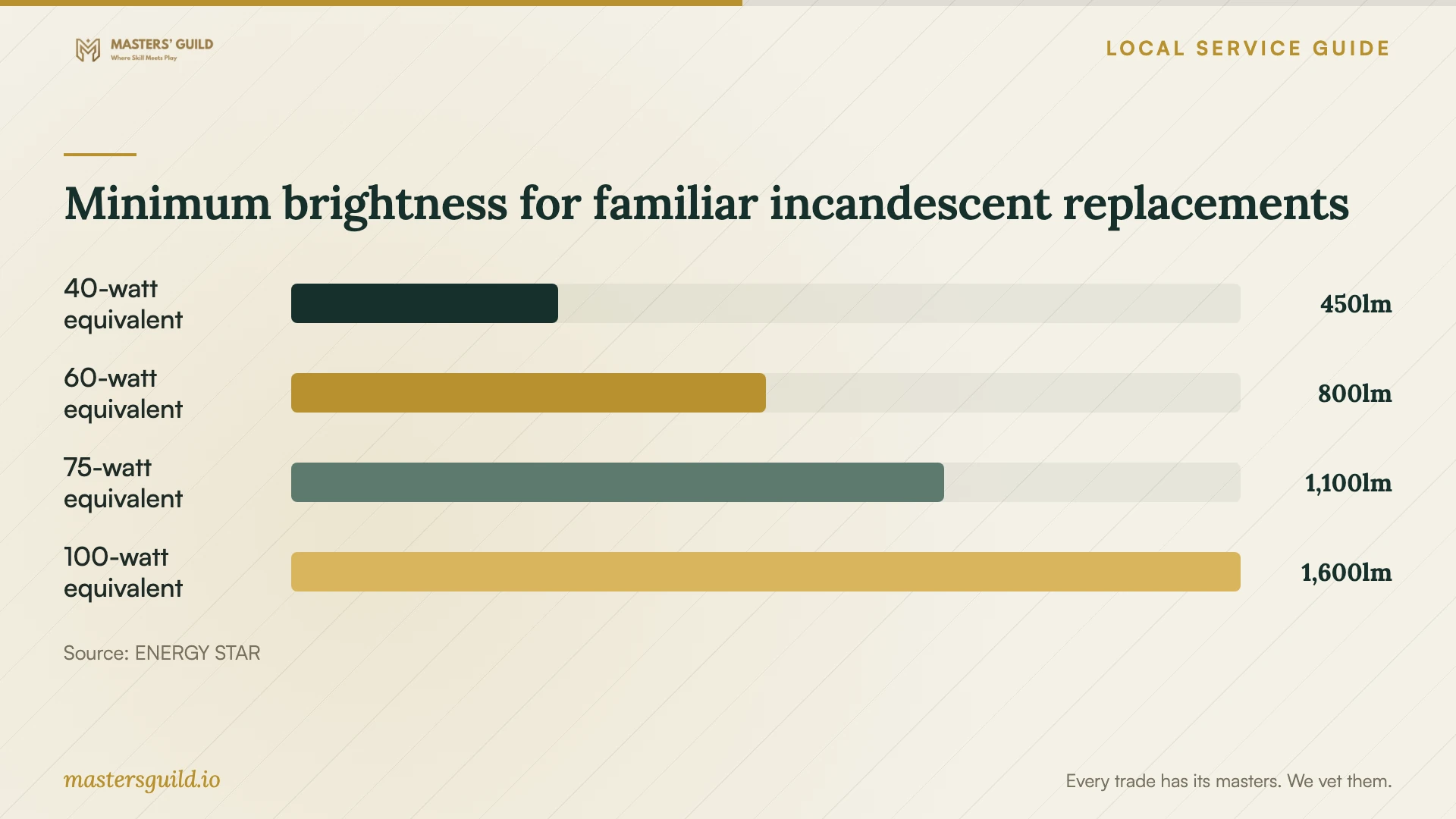
Ask the designer to specify bulb brightness in lumens. ENERGY STAR measures light output in lumens and recommends choosing the brightness you need before comparing wattage. Its national reference table pairs a traditional 60-watt incandescent bulb with a minimum of 800 lumens. [4]
Use the chart to discuss bulb replacements. Ask the designer to assess reading areas, food preparation surfaces, and general lighting, then document fixture placement, bulb appearance, and dimmer compatibility. Try a sample bulb before approving a larger purchase.
Set approvals and construction responsibilities
Agree on approval points for layouts, finishes, product lists, and orders. Request a schedule naming your decision deadlines alongside design, delivery, and installation stages. Require approval for substitutions and ask how the designer will handle unavailable products.
If you include construction, ask who will prepare drawings, confirm permit requirements, engage trades, and answer site questions. Have the designer identify work outside their agreement. Keep approved specifications, order confirmations, warranties, and a list of unresolved items for the final handoff.
Minimum brightness for familiar incandescent replacements
Local details that affect your job
Verify tax before approving furnishing purchases
CDTFA’s table effective October 1, 2026 lists Fremont at 10.250%, compared with 10.750% for Newark and Union City. The page warns that these rates may be outdated and provides an address lookup. Use the Fremont figure as a dated budget reference, then ask the seller to verify the applicable transaction rate and identify taxable purchases and related fees before you approve orders. [1] [2]
Get ACWD approval before eligible multifamily toilet work
ACWD lists a $70-per-toilet multifamily rebate for replacing existing toilets rated at least 1.6 gallons per flush with qualifying ultra-high-efficiency toilets. It requires at least three conversions and places the program under Commercial Rebates, which require pre-approval. If you coordinate a bathroom redesign with your association or property manager, confirm that the property is an eligible ACWD customer, verify qualifying fixtures, and obtain required approval before starting work or committing purchases. The minimum concerns toilet replacements, not the number of homes. [3]
Match the agreement to your project
| Your priority | Scope to request | Confirm before signing |
|---|---|---|
| Resolve layout or color questions | Consultation with written recommendations | Questions, follow-up notes, and revisions included |
| Purchase furnishings yourself | Measured room plan and product list | Responsibility for dimensions and unavailable selections |
| Have the designer buy furnishings | Design and purchasing support | Merchandise pricing, related taxable fees, and order approvals |
| Commission custom draperies | Specifications and fabrication and installation coordination | Itemized taxable fabrication and nontaxable installation labor |
| Include construction | Design work with named construction responsibilities | Responsibility for permit checks, drawings, and trade coordination |
Your hiring checklist
- Prepare room photos, measurements, a keep list, and a total spending limit.
- Request sample plans and a written list of deliverables.
- Agree on revision limits and approval requirements for additional charges.
- Separate design, merchandise, purchasing fees, delivery, installation, and tax.
- Assign final measurements, ordering, returns, and damage claims.
- Check delivery access and building or association arrangements.
- Approve finish samples and lighting specifications before ordering.
- For a proposed ACWD rebate, confirm customer and fixture eligibility and obtain required pre-approval before work or purchase commitments.
Frequently Asked Questions
How should I set an interior design budget?
Request proposals using the same scope and separate allowances for professional fees, furnishings, delivery, installation, and tax. Ask for hourly rates or fixed fees, revision limits, purchasing charges, and approval points for extra spending. Decide which purchases you can defer before signing.
Does California tax an interior design consultation?
CDTFA excludes professional services unrelated to merchandise sales from tax. It taxes fees directly related to merchandise the designer sells to you. Request separate descriptions of consultation work and purchasing services so you can understand the invoice. [1]
Can I count on ACWD’s rebate for one toilet?
The listed multifamily program requires at least three qualifying toilet conversions and pre-approval. Confirm that the property is an eligible ACWD customer and that the existing and replacement fixtures qualify before starting work or committing purchases. Do not deduct this rebate from a single-toilet budget. [3]
How should I use the lighting chart?
Use it to discuss replacement bulb brightness. ENERGY STAR lists minimum lumen values for familiar incandescent wattage equivalents. Ask your designer to assess your room and tasks before choosing fixture quantities or placement. [4]
Sources and scope
This guide combines the sources below with practical planning guidance. Figures apply to the stated geography and period; request a written quote for your property.