
Local service guide
Car Washing in Fremont, CA: Choosing and Booking
For Car Washing in Fremont, choose a commercial facility that recycles water, or book a mobile washer after confirming how they will capture and dispose of wash water. Union Sanitary District recommends commercial washing to keep pollutants out of creeks, and Alameda County Water District recommends facilities that recycle water. Before booking, agree on the cleaning tasks, total price, access needs, and treatment of stains or existing damage. [1] [3]
Choose the location before the package
Start by deciding where the washer can handle dirty water. USD explains that washing in a driveway or street can send oil, automotive fluids, and metal-containing brake and exhaust dust into creeks. Its residential guidance recommends commercial car washes, which treat wash water before discharging it to the sanitary sewer. [1]
For mobile service, send a photo of the proposed work area and identify nearby gutters or drains. Ask the washer to describe containment, collection, and the intended disposal destination. If they cannot explain the arrangement, choose a facility or resolve the disposal question with USD before scheduling.
At a shared driveway, apartment parking area, or condominium, confirm permission to use the space and any water or power connection. Give the washer the parking location, clearance constraints, and an agreed arrival window. Arrange access without asking neighbors to move vehicles at the last minute.
Define the cleaning work in the quote
Describe the result you want instead of relying on a package name. For an exterior visit, ask the provider to list washing, drying, wheel cleaning, glass cleaning, and any wax or sealant. For interior work, specify vacuuming, mats, seats, cargo space, and the surfaces you want cleaned.
Send photographs of pet hair, spills, stains, or heavy soil before accepting a quote. Ask which areas the provider will treat, what they exclude, and whether they require inspection before confirming the price. For odors or stains, request an explanation of the proposed treatment and its limits rather than accepting a promise of complete removal.
Request a total that identifies travel, vehicle-size charges, condition-related charges, and optional work. Ask the provider to obtain your approval before adding tasks. Agree on the expected finish time and, for wet interior cleaning, when they expect you can use the seats.
Ask specific questions about water handling
At a fixed facility, ask about water recycling and treatment as separate questions. ACWD recommends recycling water. USD requires commercial washes within its service area to meet wastewater discharge limits and maintain their on-site treatment systems. A recycling claim alone does not answer your treatment question. [2] [3]
USD's commercial guidance covers coin-operated, automated, manual, and service-station facilities in Fremont, Newark, and Union City. It requires professional pump-out of all interceptor chambers at least twice a year, with some facilities needing more frequent service. If you want to assess a facility's practices, ask how it maintains that interceptor. [2]
For a home wash, USD advises using water without soap and choosing a lawn or other unpaved surface where dirty water cannot flow into a driveway, street, gutter, or storm drain. Do not treat biodegradable soap as a solution to runoff: USD says those soaps also harm wildlife. [1]
Prepare the vehicle and agree on handover
Remove valuables, loose belongings, and items from the areas you want cleaned. Point out loose trim, damaged upholstery, paint defects, and controls that need special handling. Ask the provider to follow any care instructions you supply for wraps, coatings, or interior materials.
Before work starts, walk around the vehicle together or exchange dated photographs. Confirm the agreed tasks and any exclusions. At collection, inspect the requested areas with the provider and raise missed work before leaving. For a recurring booking, agree on the scope of each visit and how either party can change or cancel it.
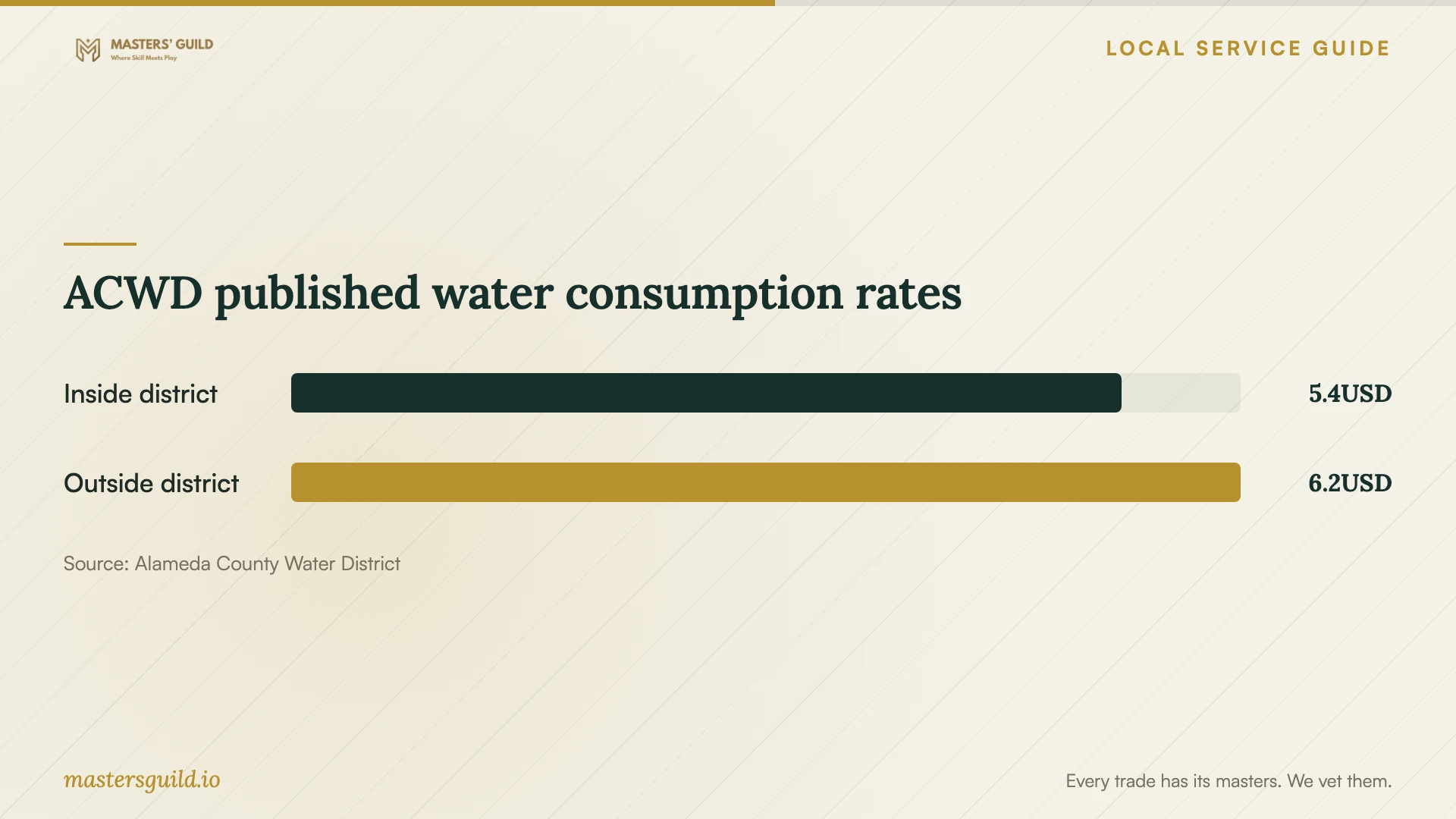
ACWD published water consumption rates
Local details that affect your job
Residential bucket disposal has a limited scope
USD tells residents to empty a bucket of soapy wash water into a sink or toilet so it reaches treatment, and specifies residential wash water only. If you hire a mobile washer, ask them to explain their own disposal arrangement rather than assuming this household instruction covers their business wastewater. [1]
Local commercial washes have interceptor duties
USD requires commercial washes in Fremont, Newark, and Union City to maintain treatment systems and arrange professional pump-out of all interceptor chambers at least twice yearly. Use that requirement to ask a fixed facility a concrete maintenance question. Do not assume the page establishes an identical process for mobile operators. [2]
Customer-supplied water needs a clear agreement
If a mobile washer requests your hose, confirm that permission in advance. ACWD lists an inside-district consumption charge of $5.38 per 748 gallons effective March 1, 2026, separate from its fixed meter service charge. Ask the washer about expected water use before trying to calculate the added consumption cost. [4]
Match the booking to your needs
| Your situation | Option to consider | Confirm before booking |
|---|---|---|
| You want a water-conscious exterior wash | A commercial facility that recycles water, as ACWD recommends | Whether the facility recycles water and how it treats wastewater |
| You need the washer to come to your home | Mobile service after reviewing the work area | Containment, collection, disposal destination, and access needs |
| You want seats, mats, or cargo space cleaned | An itemized interior-cleaning quote | Included surfaces, stain-treatment limits, and handover timing |
| You plan to wash the vehicle yourself | USD's residential water-only approach on a suitable unpaved surface | Dirty water cannot flow into a driveway, street, gutter, or storm drain |
Your hiring checklist
- Send the vehicle type, requested tasks, and photographs of problem areas.
- Confirm the work location and permission to use parking, water, and power.
- Ask how the washer will collect and dispose of dirty water.
- For a fixed facility, ask about water recycling and interceptor maintenance.
- Get the total price, exclusions, and approval process for extra work in writing.
- Remove belongings and document existing damage before handover.
- Agree on completion time and inspect the requested work at collection.
Frequently Asked Questions
Can a mobile washer use my driveway?
Assess the site and wastewater arrangement before booking. USD warns that driveway washing can carry vehicle pollutants into creeks. Ask the washer how they will contain and collect dirty water, where they will dispose of it, and whether they need your water or electricity. [1]
Does biodegradable soap make runoff acceptable?
USD says even biodegradable soaps are toxic to wildlife. Choose a wash arrangement that keeps dirty water out of gutters and storm drains rather than relying on a soap label. [1]
How much should I budget for the service?
Get a vehicle-specific written quote. Specify the cleaning tasks, vehicle condition, location, and optional treatments, then compare totals for the same work. Ask the provider to identify any charges they cannot confirm until inspection.
What should I ask a commercial wash about its environmental practices?
Ask whether it recycles water and how it maintains its wastewater interceptor. ACWD recommends recycling facilities; USD requires commercial washes in its service area to maintain treatment systems and meet discharge limits. [2] [3]
Sources and scope
This guide combines the sources below with practical planning guidance. Figures apply to the stated geography and period; request a written quote for your property.