
Local service guide
Mold Removal in Fredericton, NB: Hiring Guide
Arrange Mold Removal in Fredericton by asking a contractor to assess the affected materials, investigate the water source and separate cleanup from repairs in a written quote. For significant flood or water damage, New Brunswick says you may need to consult an air quality specialist or professional cleaner. Before demolition, settle who will assess suspected asbestos and check whether reconstruction needs a city permit. [1] [3] [4]
Choose a contractor around the actual damage
Describe the problem before requesting a price: the room, visible damage, affected materials, known leaks and whether water entered during a flood. Include photographs taken from a safe location. Ask the contractor to explain what they can assess during the first visit and what would require opening a wall or ceiling.
For significant flood or water damage, New Brunswick says you may need to consult an air quality specialist or professional cleaner. Ask prospective contractors about comparable cleanup work, liability insurance and the training of the people who will attend. Request a written explanation of how they will protect occupied rooms, handle debris and decide which materials need removal. [4]
If a contractor proposes mould sampling, ask what question the test will answer and how the result would change the work. Keep that discussion separate from asbestos assessment: WorkSafeNB states that visual inspection and building records may not establish whether asbestos is present, and identifies microscopic analysis as the reliable identification method. [3]
Handle flood damage before arranging routine repairs
After a flood, put safe access and insurance documentation first. New Brunswick advises homeowners to record damage, contact their insurer before cleanup and check structural safety. For electricity disconnection or reconnection, the province directs NB Power customers to 1-800-663-6272. Do not energize equipment that has been underwater. [4]
The province says contents are less likely to develop mould when homeowners dry them within 48 hours of water receding. Use that guidance to prioritize assessment and drying; it does not guarantee that materials remain usable. Ask your insurer how to document urgent work and obtain approval before destroying or discarding furniture or equipment. [4]
New Brunswick advises removing water-soaked walls and insulation and allowing the space and studding to dry. Before workers open those assemblies, ask them to address suspected asbestos. For basement and room cleanup after flooding, provincial guidance recommends soap or detergent and water, advises against household bleach and warns against mixing cleaning products. [3] [4]
Compare the full quote and repair schedule
Request separate amounts for assessment, any proposed testing, protection of adjacent rooms, material removal, cleaning, drying equipment, disposal and reconstruction. Have the contractor identify exclusions, taxes and charges for extra equipment days. Compare offers against the same list of tasks before choosing a price.
For concealed damage, agree on an approval process before demolition starts. Request photographs and a written price change before the crew expands the work. Clarify who handles leak repair, who coordinates other trades and whether the contractor’s price includes replacing finishes.
Ask for a schedule that separates assessment, cleanup, drying and rebuilding. Have the contractor name the checks they will use before closing walls and explain any proposed completion testing. Also settle access hours, equipment power needs, rooms you can use and arrangements for children or pets.
Agree on completion before work begins
Put the handover documents in the agreement: photographs of exposed areas, a record of removed materials, drying records, test reports if commissioned and details of moisture-source repairs. Ask who will inspect the completed cleanup and what happens if you raise a concern before reconstruction.
If reconstruction requires a building permit, Fredericton requires the owner to request a final inspection once construction is complete. The city closes the permit when the inspection identifies no outstanding issues. Keep that municipal inspection separate from the cleanup checks you agree with the remediator. [1]
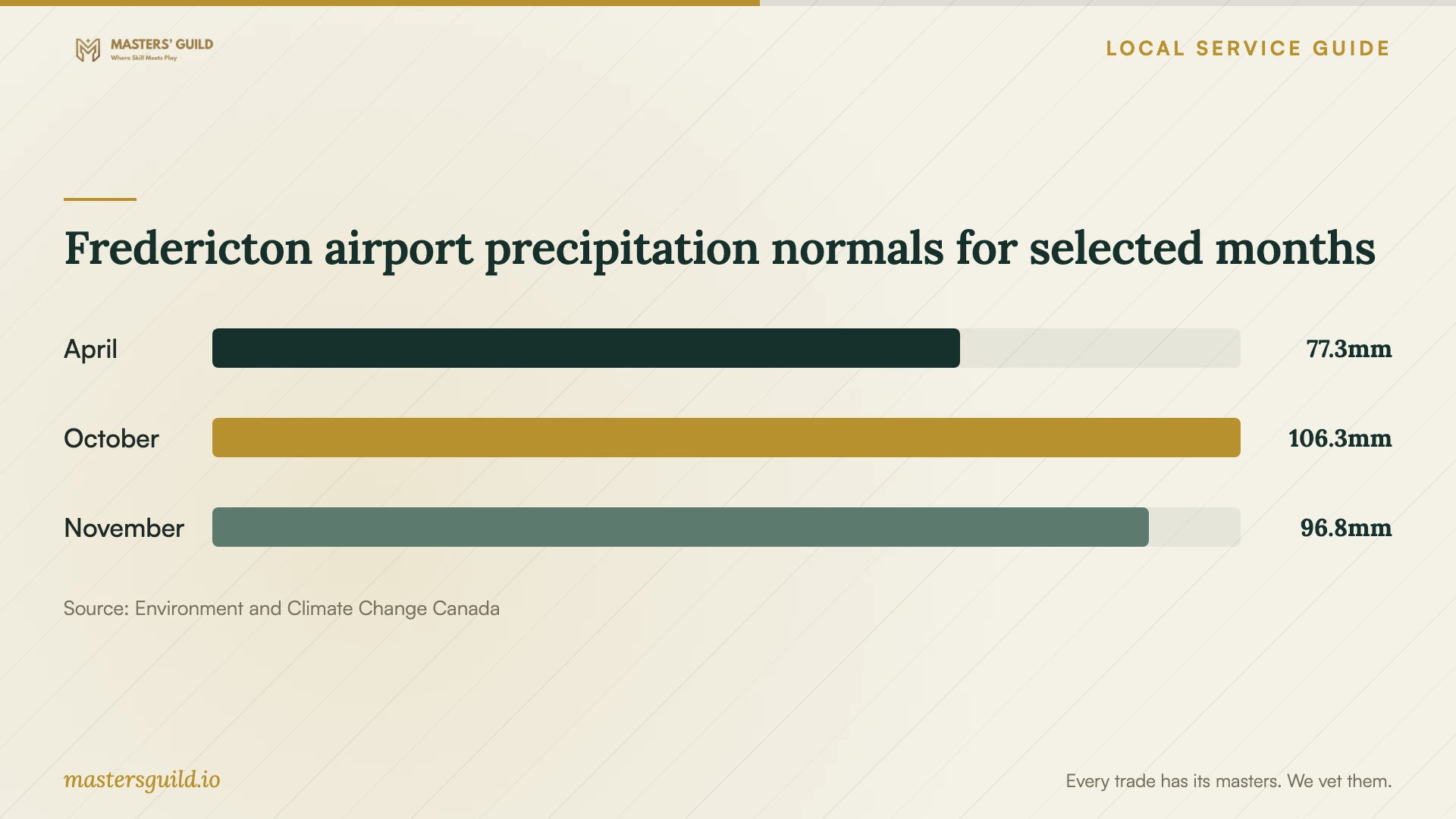
Fredericton airport precipitation normals for selected months
Local details that affect your job
Check your address for flood risk before rebuilding
The City of Fredericton provides an address-searchable Neighbourhood Flood Risk Portal through its Flood Mitigation page. Use it before agreeing to basement reconstruction, and ask your contractor how the proposed water-entry repairs relate to your property. The city describes river and stormwater mitigation measures, but its page does not establish the cause of water entry at your home. [2]
Discuss substantial repairs at City Hall
Fredericton requires building permits for significant alterations to existing buildings. The city encourages applicants to discuss project details and required plans with Building Inspections before applying, including at the ground-floor counter at City Hall, 397 Queen Street. If cleanup expands into substantial reconstruction, confirm the requirement before approving that work and name the person responsible for the application. [1]
Plan asbestos assessment before contractor demolition
WorkSafeNB’s guidance applies across New Brunswick when employees work with, near or disturb asbestos-containing materials. It says owners of places of employment, employers and contractors must follow the asbestos Code of Practice. When testing suspected materials, a competent person must collect samples for specialized laboratory analysis. Ask how the contractor will assess materials they intend to disturb and communicate findings to other crews before removal begins. [3]
Match the next step to the situation
| Situation | Next step | Question to settle |
|---|---|---|
| Floodwater affected electrical equipment | Arrange electrical safety assessment before use. | Who will coordinate disconnection, inspection and reconnection? |
| Significant flood or water damage | You may need to consult an air quality specialist or professional cleaner. | Does the scope include damaged materials and drying? |
| Workers may disturb suspected asbestos | Arrange assessment under the applicable WorkSafeNB procedures. | Who will assess materials and share findings with the crew? |
| Cleanup expands into significant alterations | Discuss the project with Fredericton Building Inspections. | Who will obtain the permit and request the final inspection? |
Your hiring checklist
- Prepare photographs, room details and a timeline of leaks or flooding.
- List previous cleanup attempts and any available inspection reports.
- Ask for insurance details and relevant worker training.
- Request a written scope with cleanup, drying and rebuilding priced separately.
- Agree on approval for hidden damage and extra charges.
- Assign responsibility for water-source repairs and permit enquiries.
- Set completion checks and required handover documents before signing.
Frequently Asked Questions
How much should I budget for mould removal?
Obtain a site-specific written quote. Ask for separate cleanup, drying, disposal, water-source repair and reconstruction amounts, plus any testing and taxes. Agree on how the contractor will price concealed damage before allowing demolition.
Does mould cleanup require a building permit?
Fredericton’s published requirement covers significant building alterations. It does not identify a blanket permit requirement for mould cleaning. Describe the proposed demolition and reconstruction to Building Inspections before work starts so the city can determine the project requirements. [1]
Should I throw away flood-damaged belongings before the contractor arrives?
Document the damage and contact your insurer first. New Brunswick advises obtaining approval from assessors, insurance agents and other relevant agencies before discarding or destroying furniture or equipment. Ask how to document any urgent removal. [4]
Can the crew identify asbestos by looking at old finishes?
WorkSafeNB says visual inspection and building records may be inadequate. Its guidance calls for competent assessment and laboratory analysis of suspected materials unless the responsible parties treat the work area as containing asbestos under the Code of Practice. [3]
Sources and scope
This guide combines the sources below with practical planning guidance. Figures apply to the stated geography and period; request a written quote for your property.