
Local service guide
Commercial Building Cleaning in Fredericton
Arrange Commercial Building Cleaning in Fredericton by walking bidders through your premises and asking for a written task schedule, access plan and itemized quote. Before awarding the contract, check WorkSafeNB coverage and agree on chemical handling and waste removal. WorkSafeNB identifies potential assessment responsibilities for principals who hire unregistered janitorial contractors. [1]
Define the work before comparing quotes
Prepare a room-by-room scope before the walkthrough. List entrances, washrooms, kitchens, work areas, stairs and storage rooms. For each area, specify the tasks you want and their frequency. Name the surfaces cleaners may touch, the items staff will clear and any rooms that require permission to enter.
Separate recurring visits from periodic work. Ask bidders to price carpet extraction, interior glass, high dusting and floor finishing as distinct items. For floor care, provide the flooring type and any manufacturer instructions you hold. Ask the cleaner to describe the proposed method and the time you must keep people off the surface.
For a clinic or another premises with specialized cleaning needs, supply your facility procedures before requesting a price. Ask the bidder to identify which tasks they can perform, which require another contractor and who will handle restricted waste. Avoid accepting an undefined promise of medical-grade cleaning.
Compare the full contract cost
Request a recurring service price alongside separate charges for the initial clean, periodic work, consumables and waste hauling. Ask whether the quote includes equipment, cleaning products, paper supplies and applicable tax. Compare the total for the same service period, including the planned periodic tasks.
Set out the rules for extra work. Require approval before a cleaner adds a visit, removes unexpected debris or changes the floor-care method. Agree on holiday service, missed visits, cancellation notice and price reviews. Ask who will inspect completed work and how you should report an unfinished task.
The published local figures below cover landfill disposal categories, not cleaning labour. For renovation cleanup, ask the bidder to separate loading, transport and disposal charges and to confirm the facility will accept the material. [3]
Check coverage and chemical procedures
WorkSafeNB states that New Brunswick employers with three or more workers at any time during the year must register for mandatory coverage, subject to its stated exceptions. Its worker count can include part-time and casual workers and non-registered contractors. Ask who will perform your work and whether the provider will use subcontractors. [1]
A small crew does not settle the coverage question. WorkSafeNB explains that a principal employer can face assessments when hiring an unregistered contractor with fewer than three workers. Before accepting a claim that coverage is unnecessary, ask WorkSafeNB how its principal-employer rules apply to your business and the proposed arrangement. [1]
Request evidence of commercial liability insurance and ask the insurer or broker to clarify any coverage questions. Separately, ask the cleaning employer about hazardous products. WorkSafeNB’s WHMIS guidance requires employers to provide employee education, instruction and training, ensure appropriate labels and provide access to up-to-date safety data sheets. [4]
During the handover, agree on product storage, access to safety data sheets and spill contacts. Ask the supervisor to explain how workers identify products transferred into spray bottles. WorkSafeNB describes workplace-label requirements for decanted hazardous products, with limited exceptions for immediate use or identified containers under one worker’s control during a shift. [4]
Plan access and inspect the first visits
Choose a cleaning window that fits your operating hours and allows for the proposed floor drying time. Identify an entrance for the crew, equipment storage and any loading arrangements. Record who holds keys, who can receive alarm instructions and who must secure the premises after the visit.
Before work starts, clear the agreed surfaces and show the supervisor restricted areas. Walk through the first completed clean together using the written scope. Record missed tasks, surface concerns and access problems, then agree on corrections. Review the schedule after the initial visits rather than adding tasks through informal requests to individual cleaners.
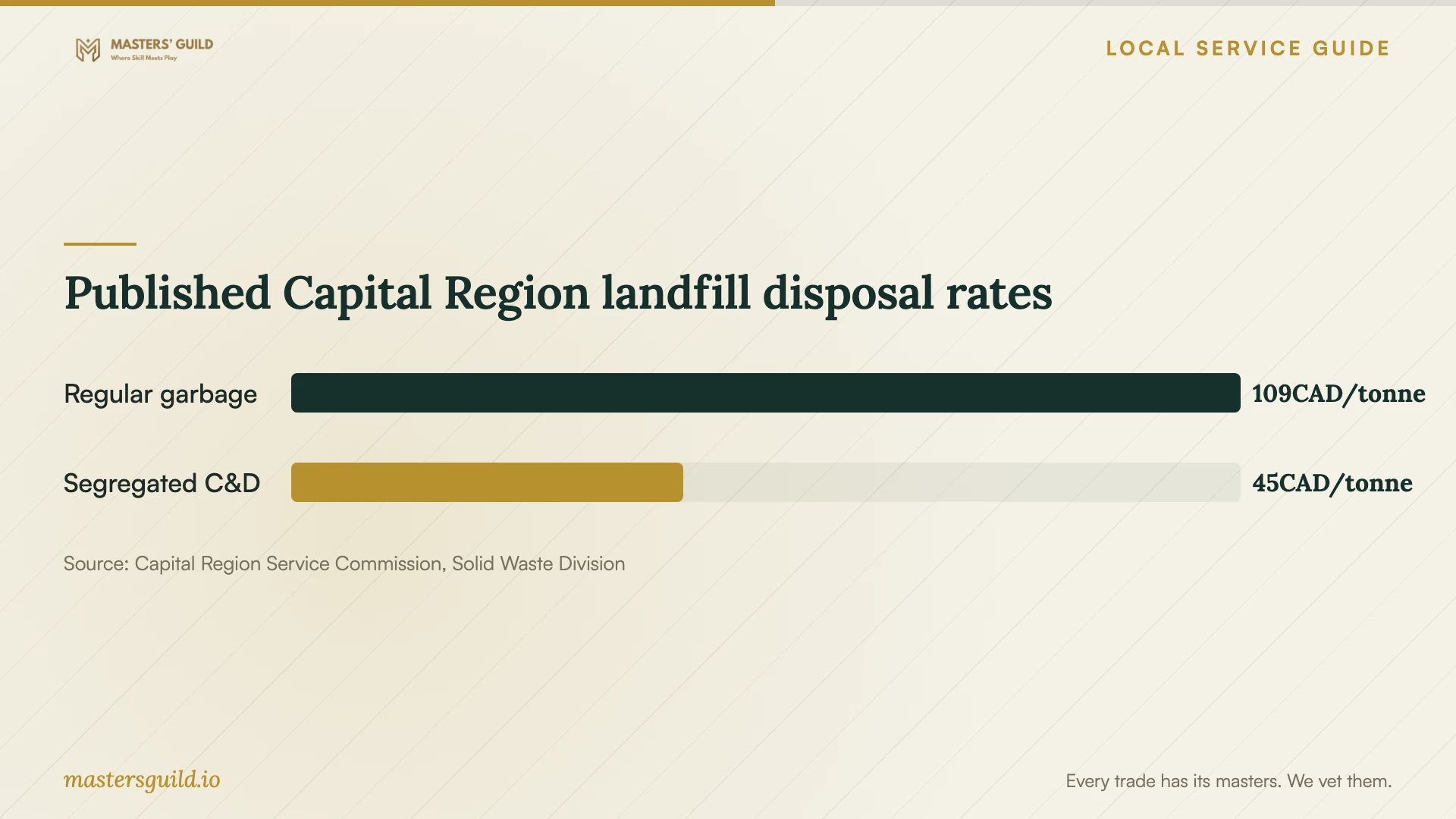
Published Capital Region landfill disposal rates
Local details that affect your job
Commercial chemicals need a separate disposal plan
The Capital Region Service Commission’s household hazardous waste program excludes industrial, commercial and institutional hazardous waste. If your cleanup includes unwanted hazardous chemicals from the business, ask the contractor to identify an appropriate disposal route and its cost before removal. Do not budget on the household program’s no-charge service. [2]
Separate renovation debris in the quote
CRSC publishes disposal rates of $109 per tonne for regular garbage and $45 per tonne for segregated construction and demolition waste. For a cleanup after renovations, ask which category the contractor expects to use and who will segregate the load. Confirm acceptance and the applicable rate before hauling; these figures do not include the cleaner’s loading or transport charges. [3]
Resolve janitorial assessment exposure before hiring
For New Brunswick principal employers, WorkSafeNB lists 80% of an unregistered janitorial contract’s gross value as the assessment base, to which the employer’s rate applies. This is not an 80% fee. Check the contractor’s registration and ask WorkSafeNB to resolve your responsibility before signing if the provider lacks coverage. [1]
Choose the scope that matches your premises
| Your situation | Scope to request | Question before hiring |
|---|---|---|
| Recurring office or shop upkeep | A room-by-room schedule with periodic tasks priced separately | Which tasks happen at each visit, and who supplies consumables? |
| Carpet or hard-floor treatment | A separate method, price and access window | Which products and equipment will you use on this flooring? |
| Cleanup after renovations | Cleaning plus a defined debris segregation and hauling scope | Will CRSC accept the load as segregated construction and demolition waste? |
| Unwanted hazardous business chemicals | An appropriate commercial hazardous-waste disposal arrangement | Which destination will accept them, given the household program exclusion? |
Your hiring checklist
- Prepare a room list with tasks, exclusions and visit frequency.
- Identify flooring types and provide available care instructions.
- Request separate prices for recurring visits, periodic work and consumables.
- Check WorkSafeNB status and resolve any principal-employer responsibility.
- Request liability insurance documentation and clarify subcontracting.
- Agree on chemical storage, waste handling, keys and alarm access.
- Set an inspection process and a named contact for corrections.
Frequently Asked Questions
How much should I budget for commercial cleaning?
Request a site-specific quote based on your task list and schedule. Ask for the initial clean, recurring service, periodic floor care, supplies and hauling as separate items. The local disposal rates on this page cover waste categories only and cannot establish a cleaning labour price. [3]
Does a cleaner with fewer than three workers need WorkSafeNB coverage?
WorkSafeNB allows voluntary coverage in some circumstances for employers with fewer than three workers. It also describes assessment responsibilities for principals hiring unregistered contractors. Ask WorkSafeNB to confirm your responsibility for the proposed contract rather than relying on crew size alone. [1]
Can the cleaner take hazardous business waste to household drop-off?
CRSC states that its household hazardous waste program does not accept industrial, commercial or institutional hazardous waste. Require the contractor to confirm an appropriate destination before including hazardous business waste removal in the job. [2]
What chemical information should I ask the provider to explain?
Ask about product labels, accessible safety data sheets, storage and spill procedures. WorkSafeNB requires education, instruction and training for employees who work with or may encounter hazardous products, including procedures for safe use, handling, storage, disposal and emergencies. [4]
Sources and scope
This guide combines the sources below with practical planning guidance. Figures apply to the stated geography and period; request a written quote for your property.