
Local service guide
Snow Removal in Fort Worth, TX: Plan for Ice
For Snow Removal in Fort Worth, hire a provider who will put driveway clearing, walkway treatment, ice-only service and return visits in writing. Ask for separate snow and ice triggers, plus an arrival window that accounts for road conditions. The National Weather Service reports a DFW annual normal snowfall of 1.6 inches for 1991–2020. Use that regional context to compare service priced by event with a seasonal commitment, and ask what happens when ice forms without enough snow to trigger clearing. [1]
Choose service around the access you need
Start with the route you need to use: the front door to the driveway, steps to the sidewalk, or an entrance needed by a household member with limited mobility. Tell the provider which area takes priority. Ask them to price that route apart from clearing the entire driveway so you can compare the work against your budget.
Request an offer priced by event and any available seasonal option. For the seasonal offer, ask about included visits, excluded work, cancellation terms and charges when no service occurs. Choose according to the access you need and the written commitment the provider offers. Ask whether the agreement includes an arrival commitment and how the provider handles delays.
Write separate instructions for snow and ice
Ask for separate descriptions of pretreatment before freezing precipitation, physical snow clearing, and treatment of bonded ice. TxDOT’s road-maintenance guidance distinguishes anti-icing, which prevents bonded snow and ice, from de-icing, which breaks an existing bond. Use those definitions to clarify a residential quote. Ask the provider to choose products and application methods suited to your surfaces and consistent with the product label. [3]
Put an ice-only trigger beside any snow-depth trigger. Ask whether the provider requires your approval before dispatch or monitors conditions under the agreement. Identify who requests a follow-up visit and whether that visit carries another charge. Specify the driveway, steps and walking route by name so the crew has a clear boundary for the work.
TxDOT explains that correct anti-icing prevents snow and ice from bonding to pavement. The agency says breaking that bond increases the materials, equipment and labor required. Ask whether the provider offers pretreatment and how they decide when to apply it. TxDOT provides this guidance for highway maintenance; request a treatment plan for your own driveway and paths. [2]
Compare quotes for the same work
Request a written total for a defined visit. Include the areas to clear, the treatment material, any minimum charge and the conditions that change the price. For hourly work, ask for a minimum bill and an approval point before the crew exceeds your budget. For event pricing, define whether an event includes one visit or several passes.
Compare property-specific offers. Give each bidder the same photos, approximate dimensions, access instructions and requested completion window. Ask them to separate clearing, pretreatment and return visits in the quote so you can see what each offer covers. Resolve exclusions before accepting an agreement.
Ask for evidence of insurance that covers the proposed work, equipment suited to the access, and a written process for reporting damage. Tell the provider about pavers, decorative finishes, irrigation components and concealed edges. Ask them to identify their proposed treatment product and explain its label restrictions before you approve use.
Prepare the property and agree on follow-up
Before the visit, move vehicles and loose items from the agreed work area when you can do so without risking a fall. Photograph existing surface damage and mark edges or obstacles the crew might miss under snow. Agree on a snow-pile location and ask the provider to keep your entrances and the walking route clear.
Ask the crew to send a completion message describing the areas cleared and treated, any areas they could not reach, and any suggested follow-up. Decide who will check conditions after the visit. Share the provider’s instructions with other household members, and ask how to request another assessment if you notice ice after treatment.
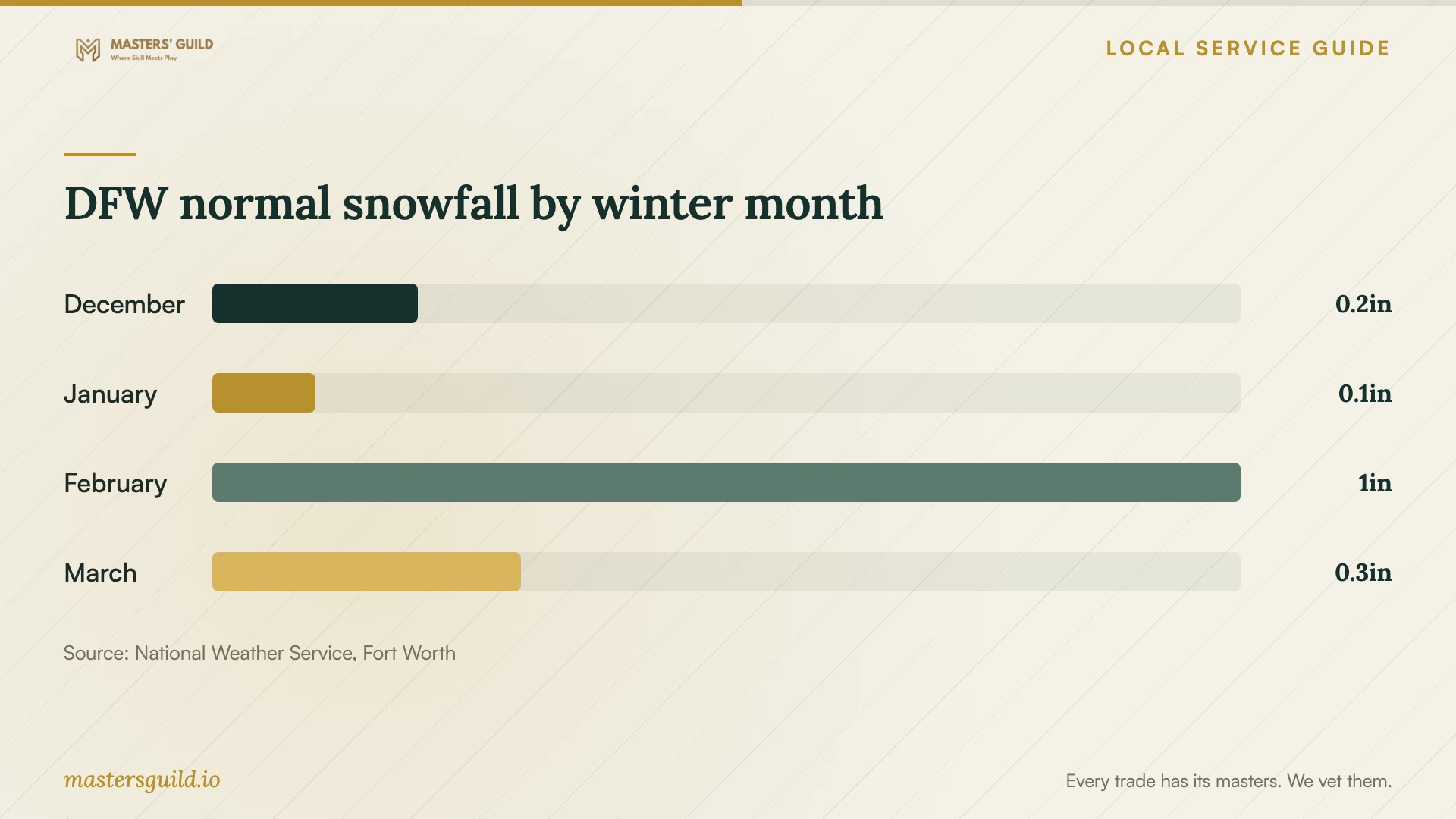
DFW normal snowfall by winter month
Local details that affect your job
Check a one-inch dispatch trigger against DFW snowfall
The National Weather Service’s DFW 1991–2020 normals report 1.6 inches of annual snowfall and 0.6 days per year with snowfall of at least one inch. These figures describe the regional climate record, not an individual Fort Worth driveway. Before accepting a plan that dispatches only after an inch of snow, ask for separate ice-only coverage and compare the commitment with an offer priced by event. [1]
Include Texas highway conditions in the arrival agreement
TxDOT’s Texas winter-preparation guidance identifies bridges and overpasses as especially vulnerable to icing. The agency directs motorists to DriveTexas or its Travel Information Line at 1-800-452-9292 for highway conditions. Ask your provider how they handle unsafe routes, when they send delay updates and whether you can cancel a delayed visit. Before leaving home, check highway conditions as well as the crew’s completion message. [4]
Match the agreement to your access needs
| Your situation | Service to discuss | Term to put in writing |
|---|---|---|
| You need help for a particular storm | A visit priced by event | Dispatch approval, areas covered and total charge |
| You need access throughout winter | A seasonal or priority arrangement | Arrival window, included visits and delay procedure |
| You want treatment before freezing precipitation | Anti-icing pretreatment to prevent bonding | Who decides timing and which surfaces receive treatment |
| Snow or ice has bonded to the surface | Clearing and de-icing to address the bond | Removal method, treatment and follow-up charge |
| You need an entrance and walking route cleared | A visit covering those areas | Exact route and excluded areas |
Your hiring checklist
- Send matching photos and approximate dimensions to each bidder.
- Name the priority route from your entrance to your vehicle or sidewalk.
- Specify separate dispatch instructions for snow and ice-only conditions.
- Confirm whether pretreatment, materials and return visits are included.
- Request a total price, minimum charge and approval process for extra work.
- Ask for insurance evidence and treatment-product information.
- Mark obstacles and agree on where the crew will place cleared snow.
- Agree on arrival updates, road-condition delays and completion messages.
Frequently Asked Questions
Should I buy a seasonal plan?
Compare it with an offer priced by event using the same areas and treatments. Ask what you pay when no visits occur and what priority service means in the agreement. DFW’s annual normal snowfall is 1.6 inches for 1991–2020, but that historical regional average does not predict the number of visits your property will need. [1]
Does snow clearing include ice treatment?
Ask the provider to list both services. TxDOT distinguishes anti-icing before bonding from de-icing after bonding. In a residential agreement, specify which treatment the crew will perform, on which surfaces and at what charge. [3]
Can I rely on an exact arrival time during a storm?
Request a window and a process for delay updates. TxDOT discourages inclement-weather driving and identifies bridges and overpasses as vulnerable to icing. Ask the provider how unsafe road conditions affect dispatch and what options you have if they cannot reach you within the agreed window. [4]
What should I send for an accurate quote?
Send photos, approximate driveway and walkway dimensions, surface types, steps, slopes and access restrictions. Identify your priority entrance, where vehicles will sit and the requested snow-pile location. Ask each provider to quote the same clearing, treatment and follow-up work.
Sources and scope
This guide combines the sources below with practical planning guidance. Figures apply to the stated geography and period; request a written quote for your property.