
Local service guide
Home Office Setup in Fort Worth, TX
For Home Office Setup in Fort Worth, choose help for the tasks you need: furniture assembly and mounting, computer and network configuration, or electrical installation. Confirm each provider's scope before booking. For new outlets or circuits, hire a licensed electrical contractor; Texas requires licensed people working through a licensed contractor for non-exempt electrical work. Choose the room and desk position before ordering furniture, then agree on installation and testing in writing. [1]
Define the work before choosing a provider
Write an equipment list with model numbers for your desk, chair, monitors, monitor arms, docking station, computer, printer, and router. Beside each item, state whether you need assembly, placement, mounting, connection, or configuration. Ask the provider which tasks they accept and which require another person.
For a standing desk, include the tabletop dimensions and assembly instructions. For a monitor arm, send the monitor model and a photo of the proposed attachment point. Ask the installer to check the manufacturer's compatibility and attachment requirements before agreeing to drill or clamp anything.
Treat changes to building wiring as a separate part of the job. TDLR includes installing, maintaining, or extending an electrical wiring system in its definition of electrical work. Have a licensed electrical contractor assess proposed outlet or circuit changes before the assembly visit. [1] [2]
Choose a room you can use through summer
Compare candidate rooms during the hours you expect to work. Sit at the planned desk position, check screen reflections, listen for household noise, and try a video call. Measure the desk footprint and leave space to pull out the chair, open storage, and reach the doorway.
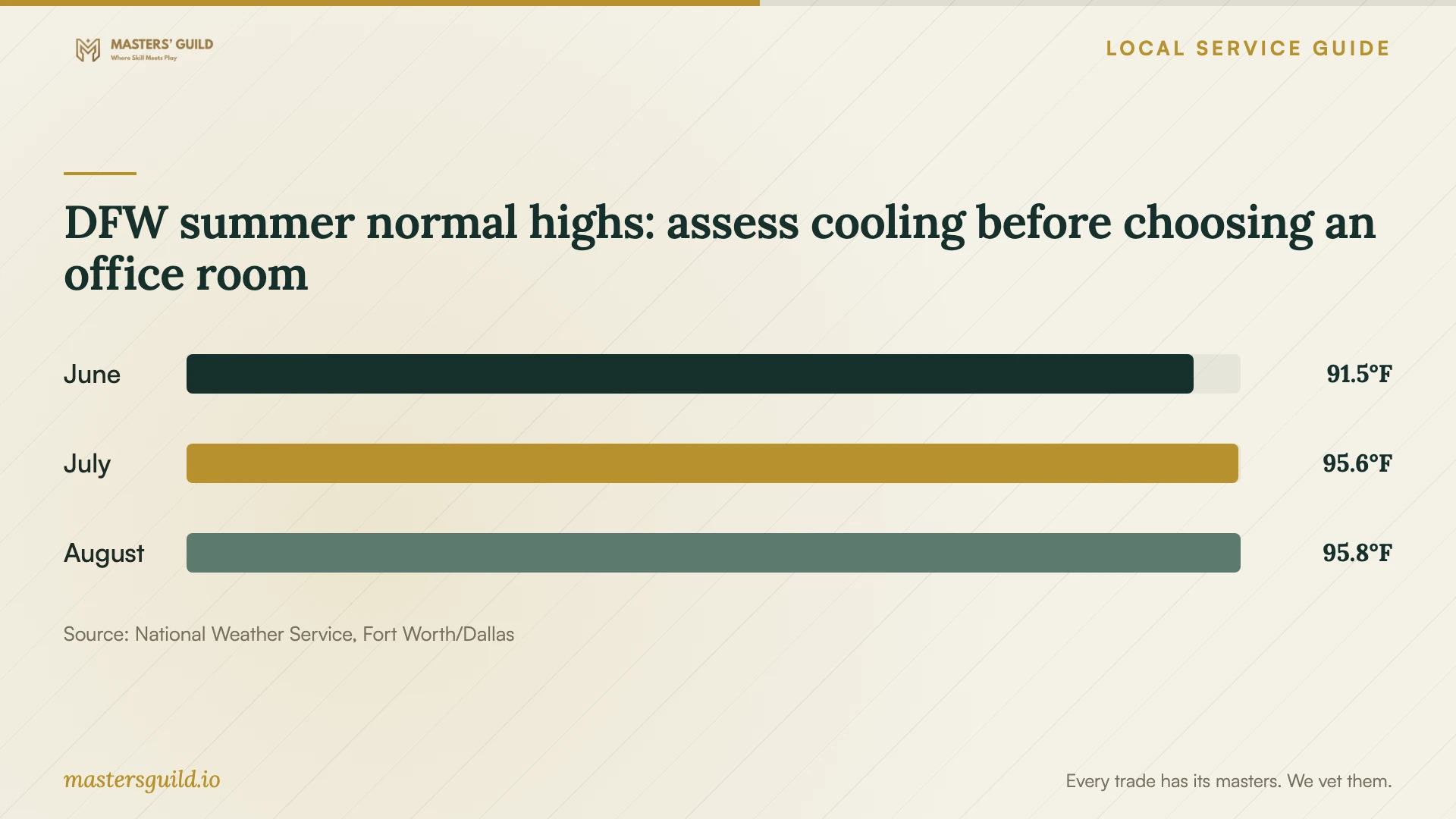
Before buying a workstation for a garage, enclosed porch, or room with limited cooling, assess temperature comfort. The National Weather Service publishes DFW regional normal high temperatures of 91.5°F in June, 95.6°F in July, and 95.8°F in August, based on 1991–2020 observations. Use these outdoor averages as a reason to check summer comfort; they do not establish the temperature inside your home. [3]
If you cannot assess the space in hot weather, ask a heating and cooling professional to evaluate it before you commit. Request separate quotes for furniture installation and any proposed room conversion. Compare those plans with using an existing conditioned room.
Compare complete written quotes
Request a quote using your equipment list and room photos. Ask whether the provider charges a fixed price or hourly rate, whether they charge a minimum visit fee, and how they seek approval for extra work. Describe stairs, parking arrangements, heavy components, and the route from the delivery location to the room.
Ask who supplies mounting hardware, adapters, cable trays, and replacement cables. Confirm whether the price covers opening boxes, removing packaging, moving existing furniture, and patching holes. For an hourly offer, ask for a time estimate and a spending limit that requires your approval to exceed.
Compare the included tasks and exclusions alongside the total. Request evidence of insurance and ask how the provider handles damage or an incomplete installation. Before choosing an offer, identify who will finish any excluded electrical or IT work.
Arrange electrical checks before installation
For new outlets or circuits, ask for the electrical contractor's business name and license number, plus the electrician's details. TDLR directs consumers to search its license database by individual or company name or license number. Match those details to the person and business named in your quote. [1] [2]
Ask the electrical contractor to confirm permit and inspection requirements for your address and proposed work. TDLR explains that state electrical licensing does not prevent municipalities from collecting building permit fees. Do not treat a license as confirmation that a particular installation needs no permit. [2]
Prepare the room and test the finished setup
Clear the installation area and delivery path. Gather instructions, hardware bags, cables, and adapters without mixing parts from different products. Confirm that deliveries have arrived before scheduling assembly. Ask for a revised plan if you find damaged components or missing hardware.
For IT work, agree on device access before the visit. Enter your own passwords and ask the provider to explain configuration changes. For an employer-managed computer, confirm with your employer's IT team which changes the installer may make.
Before the provider leaves, use the setup as you would during work. Move a standing desk through its intended travel and check cable slack. Connect the displays and test the camera, microphone, and printer if you included them in the job. Record unfinished tasks and agree on the next step before accepting completion.
DFW summer normal highs: assess cooling before choosing an office room
Local details that affect your job
Texas electrical licensing changes who you hire
For an office setup that includes new outlets or circuits, arrange electrical work alongside furniture and device installation. Texas requires a license and work through a licensed electrical contractor for non-exempt electrical work. TDLR provides verification by individual or company name or license number. Ask for both sets of details before booking that part of the job. [1] [2]
DFW summer conditions affect the room choice
Before choosing a garage or another space with limited cooling, assess summer comfort or arrange a professional evaluation. The NWS DFW regional normals put July and August highs above 95°F. Use this regional evidence to decide whether to investigate cooling before ordering furniture. It does not establish conditions in a particular Fort Worth room. [3]
Choose help by the work involved
| Your planned work | Who to consider | Confirm before booking |
|---|---|---|
| Desk and chair assembly | Furniture assembly provider | Exact models, instructions, placement, and packaging removal |
| Monitor arm or wall mounting | Installer who accepts the mounting task | Product compatibility, attachment method, and supplied hardware |
| Dock, displays, printer, and network configuration | IT support provider | Devices included, employer permissions, and completion tests |
| New outlets or circuits | Licensed electrical contractor for non-exempt work | Individual and business license details, permit assessment, and inspections |
| Garage office with limited cooling | Heating and cooling professional for an assessment | Summer suitability before furniture installation; DFW regional normal highs exceed 95°F in July and August |
Your hiring checklist
- Measure the room, desk footprint, doorway, and delivery path.
- Send model numbers, assembly instructions, and photos of mounting locations.
- List assembly, mounting, cable organization, and IT tasks as separate items.
- Flag proposed outlet or circuit changes for an electrical contractor.
- Confirm labor terms, supplied parts, exclusions, and approval for extra charges.
- Gather deliveries and check for missing parts before the appointment.
- Agree on device access and a practical completion test.
Frequently Asked Questions
Can one provider handle the whole setup?
Ask them to identify the tasks they accept and any subcontractors they plan to use. Confirm assembly, mounting, and IT work in writing. For non-exempt electrical work, Texas requires licensed people working through a licensed electrical contractor. [1]
How should I budget for the job?
Request itemized quotes using the same equipment list and photos. Separate labor, hardware, equipment purchases, and proposed electrical work. Ask about minimum charges and approval for additions. Set your budget after comparing the included tasks and total charges.
Does an electrician's license settle permit requirements?
No. TDLR explains that municipalities can collect building permit fees despite state electrical licensing. Ask the contractor to confirm requirements for your address and exact work before installation. [2]
Should I use the garage as my office?
Assess cooling and comfort before committing. DFW regional normal highs reach 95.6°F in July and 95.8°F in August. Those outdoor averages support checking summer suitability, but they cannot establish your garage's indoor temperature or cooling needs. [3]
Sources and scope
This guide combines the sources below with practical planning guidance. Figures apply to the stated geography and period; request a written quote for your property.