
Local service guide
Pest control in Fort Wayne: Hiring and Planning
For pest control in Fort Wayne, request pest identification and a written scope covering treatment, follow-up, and any entry-point repairs. For pesticide work, check the Indiana business credential and the attending worker’s applicator license or technician registration and supervision arrangement. For attic bats, ask a wildlife specialist to assess seasonal timing before anyone seals openings. Indiana has separate credential requirements for pesticide application and paid wood-destroying pest inspections. [1] [2] [3]
Identify the pest and the inspection you need
Describe the affected rooms, when you see activity, visible damage, and previous treatments. Send photographs you can take without disturbing an animal or opening a wall. Ask the provider to identify the pest and explain the evidence before you approve treatment. Include access constraints, such as a locked crawlspace or an attic hatch behind stored belongings.
For attic activity, ask the inspector to distinguish bats from rodents. Indiana DNR says bats do not chew, scratch, or nest; chewed wires, wood, or metal suggest a rodent may occupy the space. Request photographs of the evidence and a description of the openings the inspector found. [2]
If someone has requested a wood-destroying pest inspection for a property transaction, confirm the report requirements before booking. Indiana requires a licensed inspection business and a licensed wood-destroying pest inspector for that paid service. Ask the provider to separate the inspection charge from any proposed treatment. [1]
Check business and worker credentials
Indiana’s Office of Indiana State Chemist requires a pesticide business license for firms applying or offering to apply pesticides for hire. Its credential requirements include a certificate of insurance for the business location and at least one certified applicator for hire working there. Request the business name, credential information, and current insurance documentation. [1]
Ask who will attend your appointment and who will supervise pesticide use. Indiana distinguishes licensed for-hire applicators from registered technicians working under off-site supervision. Registered technicians must pass the core exam, and their employer must have a certified, licensed applicator. Ask the company to explain the attending worker’s credential and supervision arrangement. [1]
Compare quotes and prepare for the visit
Request an itemized proposal covering inspection, treatment areas, return visits, and monitoring. Ask the provider how they will assess the result and what response they offer if activity continues. Confirm the initial total, additional-visit charges, recurring payments, and cancellation terms before accepting a service agreement.
Ask for written preparation and access instructions before moving belongings or cleaning affected areas. Tell the provider about children, pets, and anyone who needs help leaving or returning to the home. For pesticide work, request instructions covering food, pet equipment, and access after application. Follow the instructions for the proposed treatment rather than assuming another household’s preparation applies.
For attic work, ask the provider to price exclusion, sealing, repairs, and cleanup as separate items. DNR identifies gaps in masonry or siding, loose soffits, and chimney-cap problems as potential bat entry routes. Bats can enter holes as small as half an inch. Request an entry-point record and a clear sequence for removal and repairs. [3]
The cited sources do not establish a local treatment-price range. Obtain quotes for your property and ask each provider to price the same scope. For wildlife work, DNR states that operators set their own rates and fees. [3]
Schedule bat work around season and exposure
Ask a wildlife specialist to assess the colony and season before setting an attic exclusion date. DNR recommends spring or autumn eviction and describes one-way devices that allow bats to leave without returning. It advises against removal from June 1 through August 15 because dependent pups may remain inside. [2] [3]
Discuss winter conditions with the specialist before booking exclusion. DNR says forced winter eviction can expose hibernating bats to starvation or cold and directs homeowners to a wildlife rehabilitator or wildlife control operator. Its guidance calls for immediate removal of bats found within living spaces during winter, with professional help to find a safe solution. [2]
If you find a bat in a room where someone slept, or with a child or someone unable to report contact, contact the local health department before releasing it. DNR says the bat may need rabies testing. Keep people and pets away and seek professional assistance. After a bite or scratch, contact a medical professional as soon as possible. [2] [3]
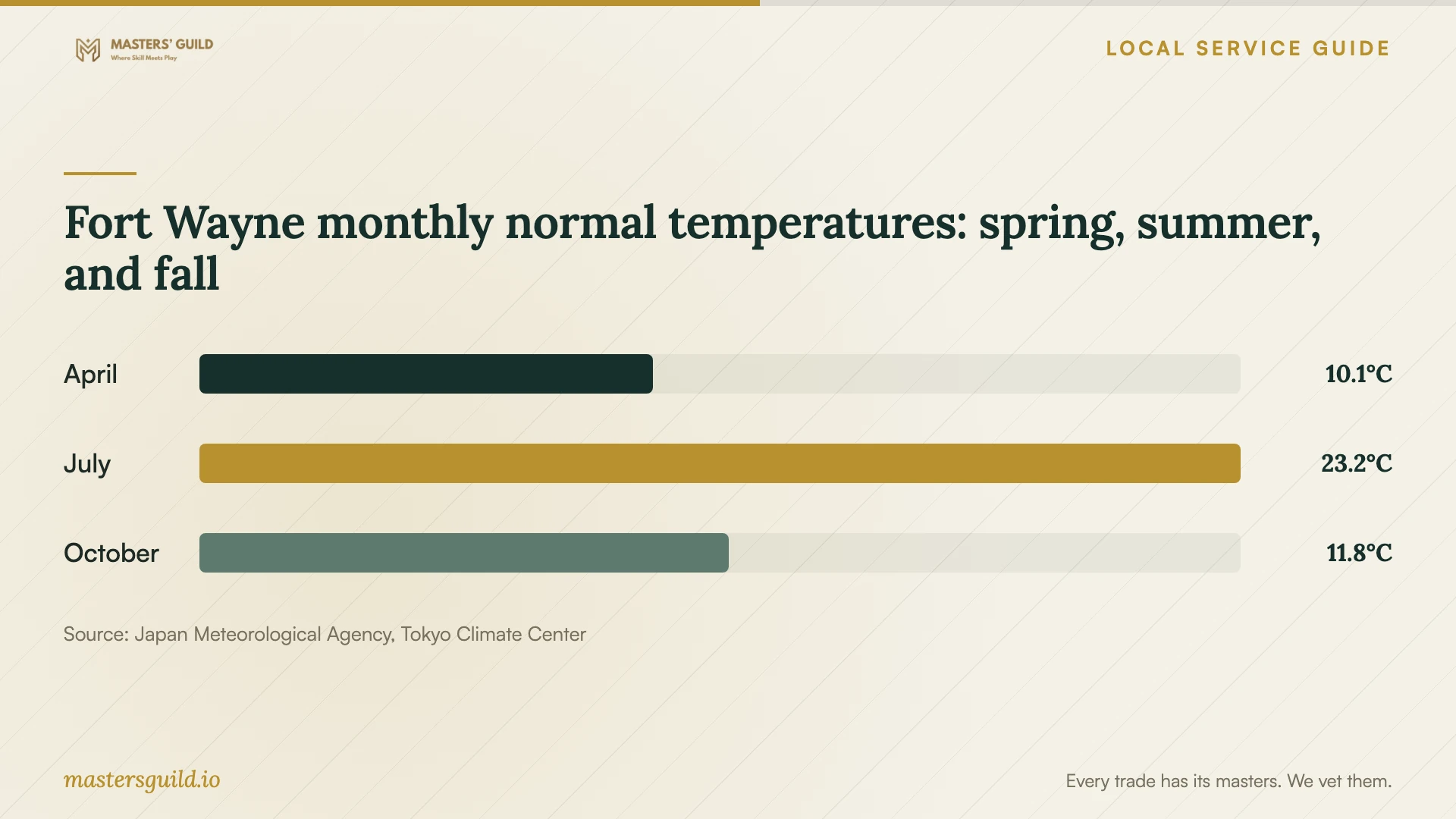
Fort Wayne monthly normal temperatures: spring, summer, and fall
Local details that affect your job
Indiana requires different credentials for treatment and inspection
For pesticide treatment here, request the pesticide business credential and the attending worker’s license or registered-technician details. For a paid wood-destroying pest inspection, request the separate inspection-business and inspector credentials. Specify both services if you need a formal inspection followed by treatment. [1]
Northern Indiana bat maternity timing affects booking
DNR says maternity timing varies with weather and location, with northern Indiana running a few weeks later than southern areas. Its June 1 through August 15 guidance advises against attic removal. For a summer attic job in Fort Wayne, ask a wildlife operator about assessment and preparation for fall exclusion before authorizing sealing. [2]
Arrange wildlife removal through an operator
Indiana DNR does not provide wildlife capture or removal services. Its bat guidance requires a permit or a wildlife control operator for larger evictions and circumstances outside its limited dwelling-removal exception. Ask the operator to explain the authorization needed for your job and include it in the proposed scope. [3]
Choose the service before booking
| Your situation | Service to request | Point to confirm |
|---|---|---|
| You want pesticide treatment | Pest identification and a written treatment proposal | Indiana pesticide business credential and applicator or supervised-technician arrangement |
| You need a paid wood-destroying pest inspection | Formal inspection with the report you need | Separate Indiana inspection-business and inspector credentials |
| You suspect an attic bat colony | Wildlife assessment and exclusion plan | Seasonal timing, entry points, authorization, and repair sequence |
| A bat was present while someone slept | Health-department guidance and professional assistance | Possible rabies testing before release |
Your hiring checklist
- Record affected rooms, activity times, damage, and previous treatments.
- Send safe photographs and request pest identification before approving work.
- Request business and worker credential details plus insurance documentation.
- Get an itemized scope covering treatment, return visits, exclusion, repairs, and cleanup.
- Request written preparation and access instructions before the appointment.
- Confirm additional charges, recurring payments, and cancellation conditions.
- For attic bats, agree on seasonal timing and the sequence of exclusion and sealing.
Frequently Asked Questions
Does every pesticide worker need an applicator license?
Indiana allows registered technicians to use pesticides under off-site supervision of a licensed applicator employed by the firm. Ask which credential the attending worker holds and who provides supervision. [1]
Can I schedule attic-bat removal during summer?
DNR advises against removal from June 1 through August 15 while females raise pups. Ask a wildlife operator to assess the situation and propose exclusion timing that accounts for northern Indiana’s later maternity season. [2]
Should I seal a suspected bat opening before the visit?
Ask the specialist to establish the exclusion sequence first. DNR describes one-way devices that allow bats to leave without returning and recommends spring or autumn eviction to limit trapping young bats inside. [3]
What should I compare besides the initial price?
Compare the identified pest, treatment areas, preparation, included return visits, monitoring, repairs, and recurring terms. Ask each provider to price the same scope and explain what they will do if activity continues.
Sources and scope
This guide combines the sources below with practical planning guidance. Figures apply to the stated geography and period; request a written quote for your property.