
Local service guide
Mold Removal in Fort Wayne, IN: Hiring and Cleanup
For Mold Removal in Fort Wayne, hire a contractor who can explain both the cleanup and the moisture repair. EPA recommends checking mold-cleanup experience and references, and using a professional for sewage-related damage. Before accepting a quote, ask who will identify the water source, remove affected materials, dry the area and handle repairs. For basement problems after rain, include your drains, sump pump and building sewer in the investigation. [1] [2]
Choose the right cleanup response
Measure the visible affected area and describe the water event before requesting help. EPA says that, in most cases, you can handle a moldy area smaller than about 10 square feet yourself. That size guideline does not replace its cautions about extensive water damage, sewage, health concerns or suspected HVAC contamination. [2]
For a small hard-surface patch, EPA advises scrubbing with detergent and water and drying the surface completely. Moldy carpet and ceiling tiles may require disposal because cleanup may not remove mold throughout porous materials. Fix leaks and other water problems, and clean and dry surfaces before painting or caulking. [2]
If you suspect mold contamination in the HVAC system, do not run it. EPA warns that operation could spread mold throughout the building. For sewage or other contaminated-water damage, choose a professional with experience cleaning and repairing buildings after that type of event. Consult a health professional before cleanup if you have health concerns. [2]
Investigate basement water before closing up repairs
Fort Wayne City Utilities identifies heavy rain and snowmelt as causes of flooding, sewer backups and drainage problems. Its preparation advice includes cleaning yard drains, driveway culverts, gutters and downspouts, then checking them again during rain because debris can return. Ask the contractor to distinguish the cleanup work from the work needed to address water entry. [1]
Tell the estimator whether water appeared near a drain, along a wall or after the sump pump stopped. Bring photographs from the event and note whether the problem has happened before. Ask who will investigate each possible source and whether that investigation forms part of the quote.
City Utilities recommends checking sump-pump operation and considering an alternate power source when a pump runs frequently even without rain. It also discusses sewer root removal and a backflow prevention device. Ask the appropriate repair provider to assess these options for your property rather than adding them to the cleanup contract without an explanation. [1]
Compare the work behind each quote
Ask each contractor to describe the affected rooms and materials, what they propose to clean or remove, and which areas they still need to investigate. Request separate prices for cleanup, moisture-source repairs and reconstruction. Ask how they will document additional damage and obtain your approval before increasing the scope.
EPA recommends hiring someone with mold-cleanup experience, checking references and asking them to follow recognized professional or government guidance. Ask which guidance they use and how it applies to your job. Request references for comparable work, such as a basement backup if that is your problem. [2]
Agree on access, disposal, protection of belongings and the condition you expect at handover. Ask how the contractor will document drying and the moisture repair before reconstruction. If a bidder proposes testing, ask what question the test will answer and how the result would change the work.
Use local rainfall history as context
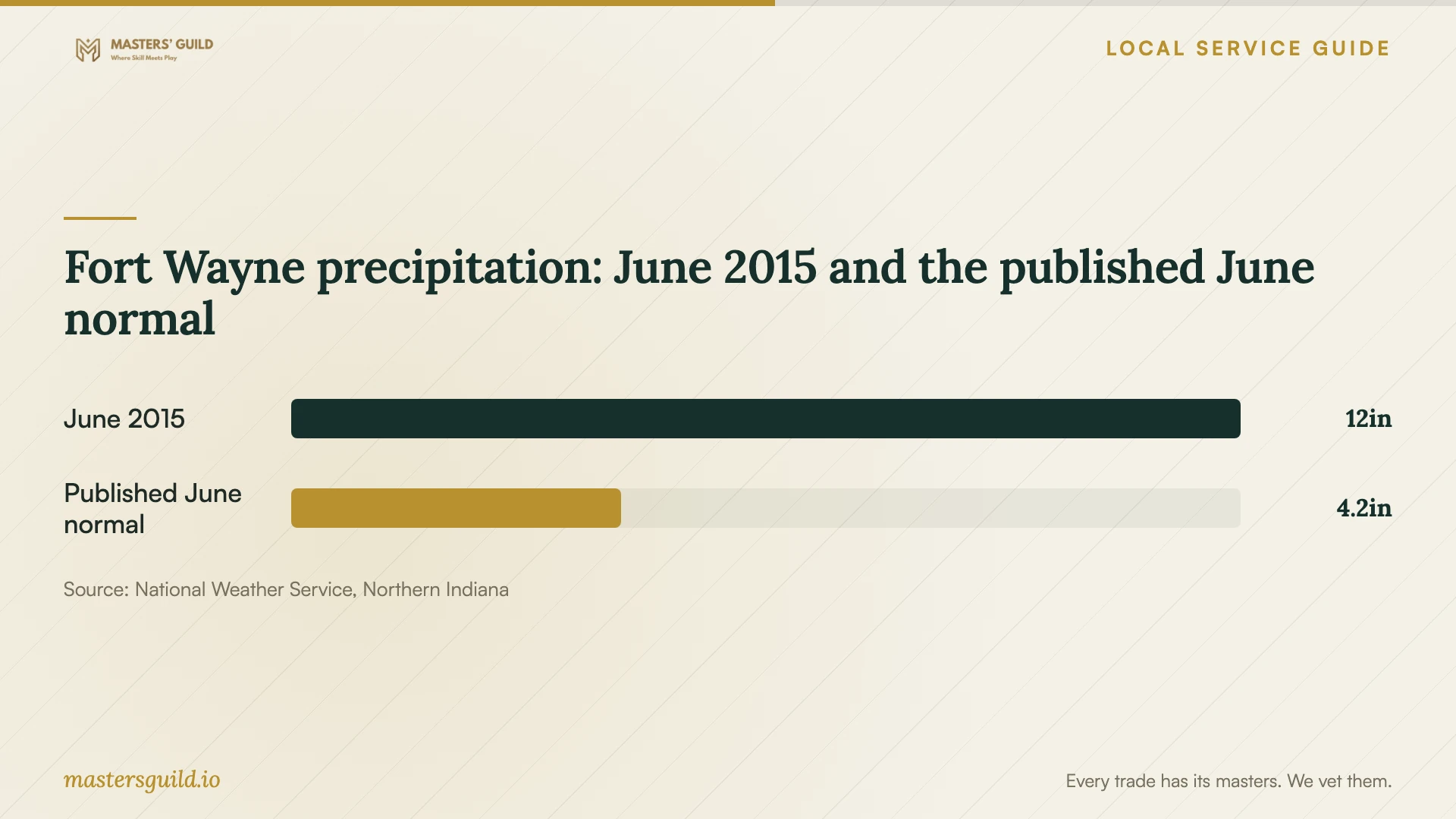
The National Weather Service recorded 11.98 inches of precipitation at Fort Wayne in June 2015. Its event table lists a June normal of 4.16 inches and identifies that month as Fort Wayne's wettest month in the record available then. This historical example supports discussing drainage and backup preparation alongside basement cleanup. [4]
Those rainfall figures do not diagnose your house, measure current mold conditions or establish a cleanup price. Ask the contractor to base the scope on your property's damage and moisture investigation. Keep photographs of water entry and completed repairs with your cleanup records.
Fort Wayne precipitation: June 2015 and the published June normal
Local details that affect your job
Arrange investigation of your private building sewer
Fort Wayne City Utilities says the building sewer between your house and the public sewer is your responsibility. It notes that owners with trees may need sewer root removal to avoid backups. If your mold problem followed a sewer backup, ask who will assess that private line and quote any repair alongside contaminated-water cleanup. [1] [2]
Report a sinkhole or storm inlet that does not take water
City Utilities directs residents to call 311 about sinkholes or a storm inlet that never takes in water. If you notice either near your property, make that report while arranging your own cleanup. Separately check the private drains on your property, which the utility asks owners to clean and recheck during rain. [1]
Use Indiana's indoor-air program for questions
The Indiana Department of Health's Indoor Air Quality program offers public education and consultation at 317.351.7190. Its page describes inspection and enforcement for schools and state agencies under 410 IAC 33. For a home cleanup, use the program to ask indoor-air questions; agree on the contractor's completion documentation instead of assuming the state will inspect your job. [3]
Choose your next step
| Situation | Next step | Discuss before work |
|---|---|---|
| Small hard-surface patch under about 10 square feet | Consider homeowner cleanup under EPA guidance | Water-source repair, detergent cleaning and complete drying |
| More than 10 square feet or extensive water damage | Consult EPA's broader remediation guidance and discuss professional help | Affected materials and the proposed cleanup scope |
| Sewage or contaminated-water damage | Hire a professional experienced with contaminated-water cleanup | Cleanup and investigation of the backup source |
| Suspected mold contamination in HVAC | Do not run the system | Assessment before further action |
| Sinkhole or storm inlet that never takes water | Report it to Fort Wayne's 311 service | Private-drain checks alongside the public report |
Your hiring checklist
- Photograph affected materials and record where water entered, without disturbing mold to expose hidden areas.
- Describe any sewage backup or suspected HVAC involvement when contacting contractors.
- Ask for mold-cleanup references and the guidance each contractor follows.
- Request separate written scopes for cleanup, moisture repairs and reconstruction.
- List belongings you want the contractor to assess before disposal.
- Agree on access, work-area arrangements and approval of additional charges.
- Request photographs and drying documentation before approving reconstruction.
Frequently Asked Questions
Can I clean a small bathroom patch myself?
EPA says homeowners can handle many mold patches smaller than about 10 square feet. For hard surfaces, use detergent and water and dry completely. Address the moisture problem. For recurring shower mold, EPA suggests increasing ventilation and cleaning frequency. [2]
Should I hire the lowest bidder?
Compare the written work first. Ask whether each price includes material removal, drying, disposal, moisture repairs and reconstruction. Resolve exclusions and the process for approving extra work before choosing a contractor.
Who handles a backup from the sewer line outside my house?
Fort Wayne City Utilities says owners are responsible for the building sewer between the house and the public sewer. Arrange assessment of that private line, and choose a cleanup professional experienced with contaminated-water damage. [1] [2]
Can the Indiana health department answer mold questions?
Its Indoor Air Quality program offers public education and consultation. The program describes school and state-agency enforcement separately, so ask what assistance it can provide for your home rather than assuming it will inspect or approve the remediation. [3]
Sources and scope
This guide combines the sources below with practical planning guidance. Figures apply to the stated geography and period; request a written quote for your property.