
Local service guide
junk removal in Fargo, ND: Pickup and Disposal
For junk removal in Fargo, hire a crew when you want someone to carry items out and load them; request a written price covering that work and disposal. Before booking, compare the city's paid, call-in large-item collection with its no-charge resident transfer station. Separate chemicals and electronics, and confirm a disposal route for refrigerant appliances. [1] [2] [3]
Choose who will carry and load the items
Start with an inventory and decide how much work you want to do yourself. Photograph the whole pile, then photograph bulky items and the route out of the house. Ask a removal crew to specify whether its quote includes carrying from rooms, stairs, disassembly, loading and disposal. If you want a curbside price, describe where you will place the items and who will move them there.
For municipal collection, call Solid Waste at 701.241.1449 before setting out a large item. The city lists furniture, appliances, automotive parts and small amounts of building material among items it may collect for a fee. Ask about your exact items, placement and collection date. Apartment residents should ask their landlord about large-item disposal, as the city directs. [2]
Check the resident transfer station before paying for hauling
Fargo residents can bring eligible household items to the Residential Transfer Station at the landfill, 4501 7th Avenue North, at no charge. The city accepts furniture, household garbage, cardboard, automotive batteries, specified metal objects and all-in-one recycling. Residents must sort items into the appropriate bins and provide a qualifying utility bill. [1]
The city allows up to two appliances without Freon per month, such as washers, dryers or dishwashers. It excludes appliances with Freon, commercial waste and building materials from this program. If you hire a hauler, ask where it will take your items and what disposal charges it includes. Do not assume your resident eligibility gives a contractor access to the same no-charge program. [1]
Give chemicals and electronics their own disposal plan
Fargo and Cass County residents can use the city's household hazardous waste facility at no charge during its business hours. The city accepts household quantities or up to 220 pounds per month per residence. Examples include paints, thinners, automotive fluids, pesticides and fluorescent bulbs. The facility is at 606 43 1/2 Street North; its phone number is 701.281.8915. [3]
The facility also accepts one computer set, including tower, monitor and accessories, plus one television per resident per month. The city does not collect electronics or household hazardous waste during Cleanup Week. Tell your hauler about these items before accepting a quote, and ask it to identify which items it will take and which you must handle yourself. [3]
Use a construction container only for an agreed load
The city offers 20-yard and 30-yard roll-offs for commercial accounts and residential construction projects. Both measure 22 feet long by 8 feet wide; their listed depths are 42 and 62 inches. The published charge is $120 per haul plus $57 per ton in landfill fees, with no delivery charge. Each requested emptying incurs the haul and weight charges. [4]
The city excludes large appliances, all metal, including regular metal and scrap metal, tires, cardboard, batteries and hazardous waste from these containers. It accepts concrete only as a clean concrete-only load for recycling. For concrete or dirt, the city instructs users to have the container emptied at half full because of weight. Describe demolition debris separately from furniture when comparing a container with a removal crew. [4]
Compare quotes for the same work
Send each hauler the same inventory and access photos. Request a total price, a list of excluded items and the conditions that could change the price. Ask whether the crew charges by item, volume, weight or labor, and how it will confirm the final amount before loading. Specify stairs, tight doorways, parking access and any item that needs dismantling.
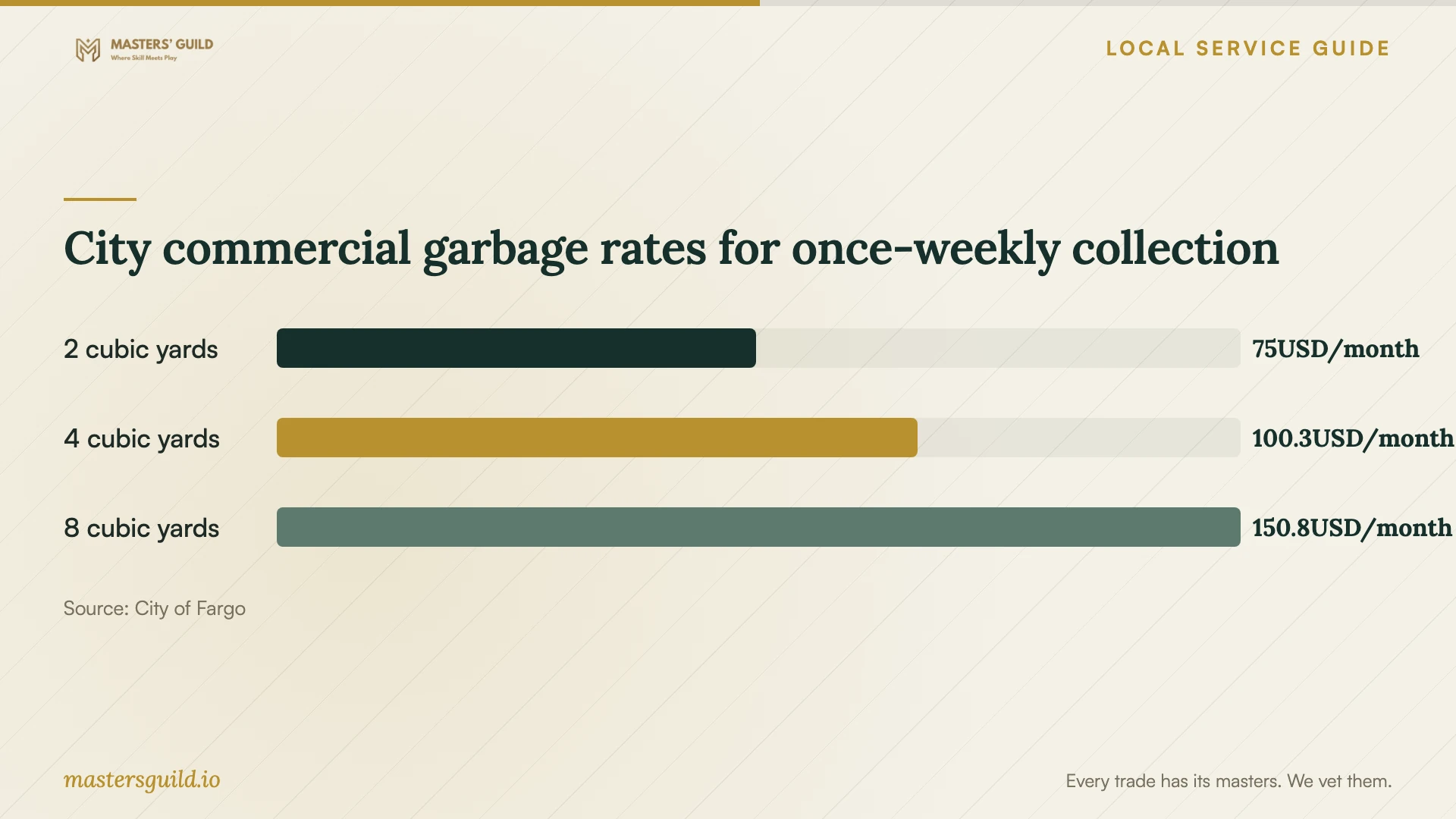
The chart shows city commercial garbage rates for recurring service. The city publishes monthly rates by container capacity and collection frequency. Use these figures to understand an ongoing waste account when comparing disposal options; request a separate quote for a one-time cleanout and indoor carrying. [5]
City commercial garbage rates for once-weekly collection
Local details that affect your job
Bring proof from the address that generated the debris
The transfer station requires a Fargo utility bill dated within six months from the address where the debris originated. Check that document before loading your vehicle. Building materials and commercial waste do not qualify for this resident program, so keep renovation debris out of a household drop-off load. [1]
A refrigerator needs a separate acceptance check
The resident transfer station excludes appliances with Freon, and city roll-offs exclude large appliances. The city lists appliances as possible paid call-in collection items. Describe your refrigerator or other refrigerant appliance to Solid Waste before choosing that route, or require your hauler to confirm its destination and fee. [1] [2] [4]
Check which side of the river qualifies
The Fargo household hazardous waste page extends eligibility to Cass County and Valley City residents. It directs Moorhead residents to the Clay County facility at 218.299.5077. If you are arranging disposal for another property, use that property's location when checking eligibility. [3]
Choose a disposal route for your load
| Your situation | Route to consider | Confirm before arranging |
|---|---|---|
| You want items carried out of the house | A removal crew | Indoor labor, loading, disposal and the final price |
| You can transport eligible household items | Residential Transfer Station | Fargo utility bill within six months; no building materials or Freon appliances |
| You want city collection of bulky items | Paid call-in large-item collection | Item acceptance, placement, date and amount-and-weight fee |
| You have paint, chemicals or electronics | Household hazardous waste facility | Residency eligibility and monthly quantity limits |
| You have a residential construction project | City roll-off service | Container access, prohibited materials and charges for each emptying |
Your hiring checklist
- Photograph the pile and write an item list, including appliances, electronics and chemicals.
- Decide whether you want indoor carrying, curbside loading or a container you will fill yourself.
- Describe stairs, doorways, parking and any disassembly in the quote request.
- Ask each hauler to name the disposal destination and identify excluded items.
- Request a written total and the conditions that could change it before loading starts.
- Confirm any city collection arrangement or facility acceptance before moving the load.
- Mark items that must stay and clear the agreed carrying route.
Frequently Asked Questions
Can I leave a sofa beside my garbage cart?
Arrange large-item collection first. The city offers furniture collection for a fee on a call-in basis. Ask Solid Waste for placement instructions and a collection date before moving the sofa outside. [2]
Can I take renovation debris to the free transfer station?
The resident transfer station program excludes building materials. The city lists small amounts of building material as possible paid call-in collection items and offers roll-offs for residential construction projects. Describe the material and quantity before choosing either route. [1] [2] [4]
Does Cleanup Week cover paint and televisions?
The city does not collect household hazardous waste or electronics during Cleanup Week. Use the household hazardous waste facility if you qualify, and check its limits before bringing a load. [3]
How much should I budget for a private removal crew?
Request a written quote for your inventory and access conditions; municipal disposal rates do not establish private crew prices. Ask the hauler to include carrying, loading, hauling and disposal in its total, and identify any items or work it excludes.
Sources and scope
This guide combines the sources below with practical planning guidance. Figures apply to the stated geography and period; request a written quote for your property.