
Local service guide
Duct and Vent Cleaning in Fargo, ND
Start Duct and Vent Cleaning in Fargo with an assessment before booking. EPA says to consider cleaning for substantial visible mold inside hard-surface ducts or on other heating and cooling components, vermin infestation, or ducts clogged with excessive dust and debris and/or particles released through supply registers. Correct underlying contamination or moisture causes before cleaning, then compare written scopes and total prices. [1]
Decide whether cleaning addresses your problem
Describe what you have noticed: particles coming from supply registers, suspected growth, pests, or water damage. Have the provider inspect the affected areas and show you the evidence. EPA identifies qualified contamination conditions as reasons to consider cleaning; it does not recommend routine duct cleaning. [1]
You can vacuum or remove and clean dusty return grilles without committing to whole-system service. EPA says ordinary dust on return registers does not demonstrate heavy contamination inside ducts. Duct cleaning has not been shown to prevent health problems, and EPA reports little evidence that cleaning ducts alone improves system efficiency. [1]
Have an expert assess suspected mold; appearance alone may not confirm it, and laboratory analysis may be necessary. Correct the moisture source before cleaning. Arrange replacement of wet or moldy internal insulation because EPA says cleaning cannot restore it. [1]
Get estimates for the same scope
EPA recommends written estimates from at least three providers. Have each company identify the supply and return ducts, registers, grilles, blower, coils, drain pans, and air-handler housing it proposes to clean. Leaving a contaminated component untreated can contaminate the system again. [1]
Compare how crews will dislodge debris and collect it. EPA recommends equipment that exhausts particles outdoors, or HEPA vacuum equipment when exhaust stays indoors. The crew should protect furnishings and seal and reinsulate access openings. Discuss experience with your duct material, including methods that protect fiberglass lining. [1]
Request separate lines for dryer-exhaust cleaning and proposed repairs. Have the provider list exclusions, added-work approval terms, and expected time on site. For a per-vent quote, establish how the company counts returns and whether the total includes trunk ducts and equipment components.
Review proposed disinfectants or interior coatings before approving them. EPA describes unresolved questions about chemical treatments and advises against routine encapsulating sealants. Before agreeing to a biocide, review the product label, the reason for treatment, and whether the intended use matches your duct material. [1]
Prepare the house and check the completed work
Clear access to registers and mechanical equipment. Tell the crew about water damage, fragile finishes, and spaces they cannot enter. Agree on equipment routes, where pets will stay, and who must approve a change in price.
Arrange a walkthrough or photographs showing the cleaned components. EPA recommends visual inspection, including supply and return surfaces, registers, grille attachments, and access openings. Have the provider demonstrate that the heating and cooling system functions after cleaning. [1]
Tell the provider to stop before disturbing suspected asbestos-containing material. EPA says specially trained and equipped contractors must handle those materials using specialized procedures. [1]
Plan filtration and heating maintenance
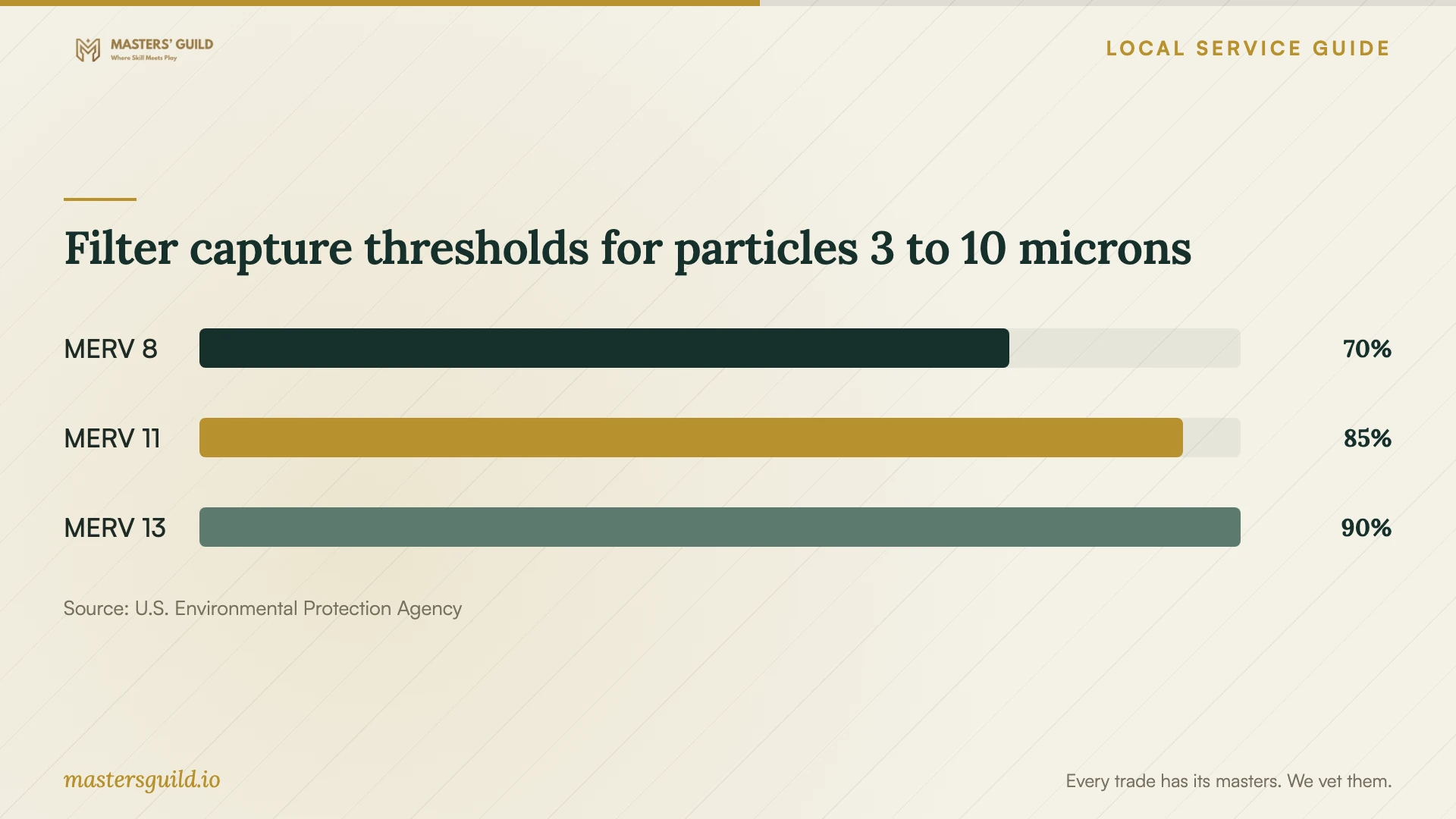
Choose filters your equipment can accommodate. EPA advises MERV 13 when upgrading, or the highest rating your system fan and filter slot can support. Consult an HVAC technician about compatibility and follow the manufacturer's replacement guidance. The chart compares filter capture thresholds, which do not establish whether your ducts need cleaning. [4]
Include heating-appliance service in your maintenance plan. EPA recommends inspection and service of fuel-burning furnaces, stoves, and fireplaces before each heating season to protect against carbon monoxide poisoning. Confirm who will perform that inspection when arranging duct work. [1]
Filter capture thresholds for particles 3 to 10 microns
Local details that affect your job
Fargo rental dryer-exhaust requirements
For a rented house or apartment, involve the owner or manager before authorizing vent corrections. Fargo's rental inspection guidance requires vented clothes dryers to exhaust independently of other systems and discharge outdoors according to manufacturer specifications. It prohibits plastic venting and allows listed and labeled ductless dryers. Notify management of suspected defects in writing and allow a reasonable response time. If management does not resolve the issue, the city directs tenants to rental housing inspectors at 701.476.6708. [2]
Confirm the residential process for added mechanical work
Fargo's commercial HVAC permit page describes a Mechanical Permit Application, rough-in inspection before insulation and sheetrock, and final inspection. It says a licensed and insured mechanical contractor should obtain the permit when doing the work. Homeowners should confirm the applicable residential process with Inspections if a cleaning proposal includes duct installation or alteration. This page does not establish whether ordinary cleaning requires a permit. [3]
Disclose flood exposure before accepting a cleaning scope
NDSU Extension's 2011 North Dakota flood-recovery guidance recommends professional HVAC service before reuse. It says contractors can clean metal ductwork but should dismantle it to remove water, mud, and contaminants; it recommends replacing flooded flexible ducts. For a flood-affected home here, disclose the exposure and request an assessment using current equipment instructions. Have the proposal distinguish metal-duct cleaning, replacement materials, and equipment assessment. [5]
Choose the next step before booking
| What you find | Next step | Scope to discuss |
|---|---|---|
| Dust on return grilles | Clean accessible grilles and assess the system. | Grille dust alone does not establish heavy duct contamination. |
| Vermin infestation or ducts clogged with excessive debris | Have the provider document the condition and correct its cause. | Consider cleaning the affected system components. |
| Wet or moldy internal insulation | Arrange assessment and replacement of affected insulation. | Correct moisture sources before cleaning. |
| Plastic dryer vent in a Fargo rental | Notify the owner or manager about correction. | City rental guidance prohibits plastic venting. |
| Flooded flexible ductwork | Request a replacement assessment. | NDSU's 2011 flood guidance recommends replacement. |
Your hiring checklist
- Describe the symptom and have the provider show you the affected area.
- Identify duct materials and disclose water damage or flooding.
- Compare written scopes and total prices after inspection.
- Separate dryer-exhaust cleaning, repairs, and chemical treatments.
- Confirm the residential permit process for proposed installation or alteration.
- Agree on access, household protection, and approval of added work.
- Review photographs or walk through the completed work before acceptance.
Frequently Asked Questions
How much should I budget?
Get a written estimate after the contractor inspects your system. Compare the same components, access work, system count, and exclusions. Request separate prices for dryer-exhaust work and repairs, and agree on approval terms for additional work.
Should I schedule duct cleaning every year?
EPA recommends cleaning as needed rather than on a routine schedule. Continue regular filter changes and heating-equipment inspections, and investigate specific evidence of contamination before booking duct cleaning. [1]
Does EPA certify duct cleaners?
EPA does not certify, endorse, or approve duct-cleaning companies. Check relevant credentials, references, experience with your duct material, and the proposed cleaning procedure. [1]
Can I clean flooded ducts with bleach?
NDSU Extension's 2011 flood-recovery guidance advises against chlorine bleach on HVAC components because it is corrosive and recommends HVAC-approved cleaning agents. Arrange professional assessment using current equipment instructions before attempting flood cleanup or restarting affected equipment. [5]
Sources and scope
This guide combines the sources below with practical planning guidance. Figures apply to the stated geography and period; request a written quote for your property.