
Local service guide
Data Recovery and Backup in Fargo, ND
For Data Recovery and Backup in Fargo, choose help around the problem: restoring an existing backup, recovering files from a device, or responding to ransomware. Ask the provider to define the work, approval limit, data-handling terms and restoration test before you hand over equipment. For suspected ransomware, isolate affected systems from the network and involve your incident response team before starting a restore. CISA recommends isolation and recovery on a clean network. [2]
Define the recovery job before authorizing work
Give the provider a short account of what happened: deletion, a device that no longer opens files, an accident, or a ransom message. List the equipment, operating system, missing folders and any steps you have taken. Identify the records you need first, such as current invoices or customer appointments, rather than asking for an undefined recovery of everything.
Ask the provider to separate diagnosis from recovery authorization. Request a written explanation of the proposed method, the files they will attempt to recover and how you will check the result. Agree on whether partial recovery counts as success and what happens if the files you need remain unreadable.
For suspected ransomware, contact your IT or security provider through a separate channel, such as a phone call. CISA recommends coordinated isolation and communication outside affected systems. Its guidance reserves powering down for situations where you cannot disconnect affected devices from the network, because shutting down loses potential evidence in memory. [2]
Compare quotes by scope and responsibility
Ask for separate amounts for diagnosis, recovery work, return storage, shipping and any priority service. Request the charge if you decline the recovery quote or the provider cannot recover the agreed files. Compare written scopes before choosing a provider; do not treat an initial diagnostic amount as the total authorized spend.
Confirm where the technician will work and who will hold your equipment. Ask about transfers to another facility, tracking during shipment, access to recovered files and the date the provider will delete retained copies. For sensitive records, request a secure handover method and a named contact responsible for the device.
For ongoing backup management, include security responsibilities in the contract. CISA recommends formalizing security requirements for third parties and limiting their access to the devices and servers within their assigned role. Ask who monitors backup failures, who can delete backups and who approves a restore. [2]
Specify a backup setup you can restore
Ask the installer to document which files and systems they will protect, how often they will make copies and how long they will retain older versions. Define the amount of recent work you could afford to lose and the time you could operate without access. Have the provider explain how the proposed setup meets those needs.
CISA recommends frequent backups to a secure external drive or a vetted cloud service. For an external backup drive, it advises disconnecting the drive when you are not making backups, because ransomware can use the connection to delete or corrupt copies. Ask the installer to show you the routine you or your staff will follow. [3]
Include a restore test in the handover. Ask the technician to retrieve representative files and have the staff member who uses them check that they open and contain the expected information. CISA recommends testing backup availability and integrity in a disaster recovery scenario. Agree on who will repeat that test and record the result. [2]
Before enabling encryption, back up the data and arrange safe storage for recovery keys and passwords. CISA recommends completing those preparations before initiating encryption. Ask for instructions that an authorized colleague can follow if the usual account owner is unavailable. [3]
Arrange the handover and completion check
Prepare an equipment list and obtain a receipt identifying each device you hand over. Provide the recovery priorities through the provider's agreed secure channel. Ask what credentials they need and how you should supply them; avoid adding passwords to an ordinary job description.
Before accepting completion, check the agreed priority files on the return media and record any exceptions. Obtain the backup instructions, account ownership details, restore procedure and support arrangements. Decide who will keep the original device and when you will authorize erasure or destruction.
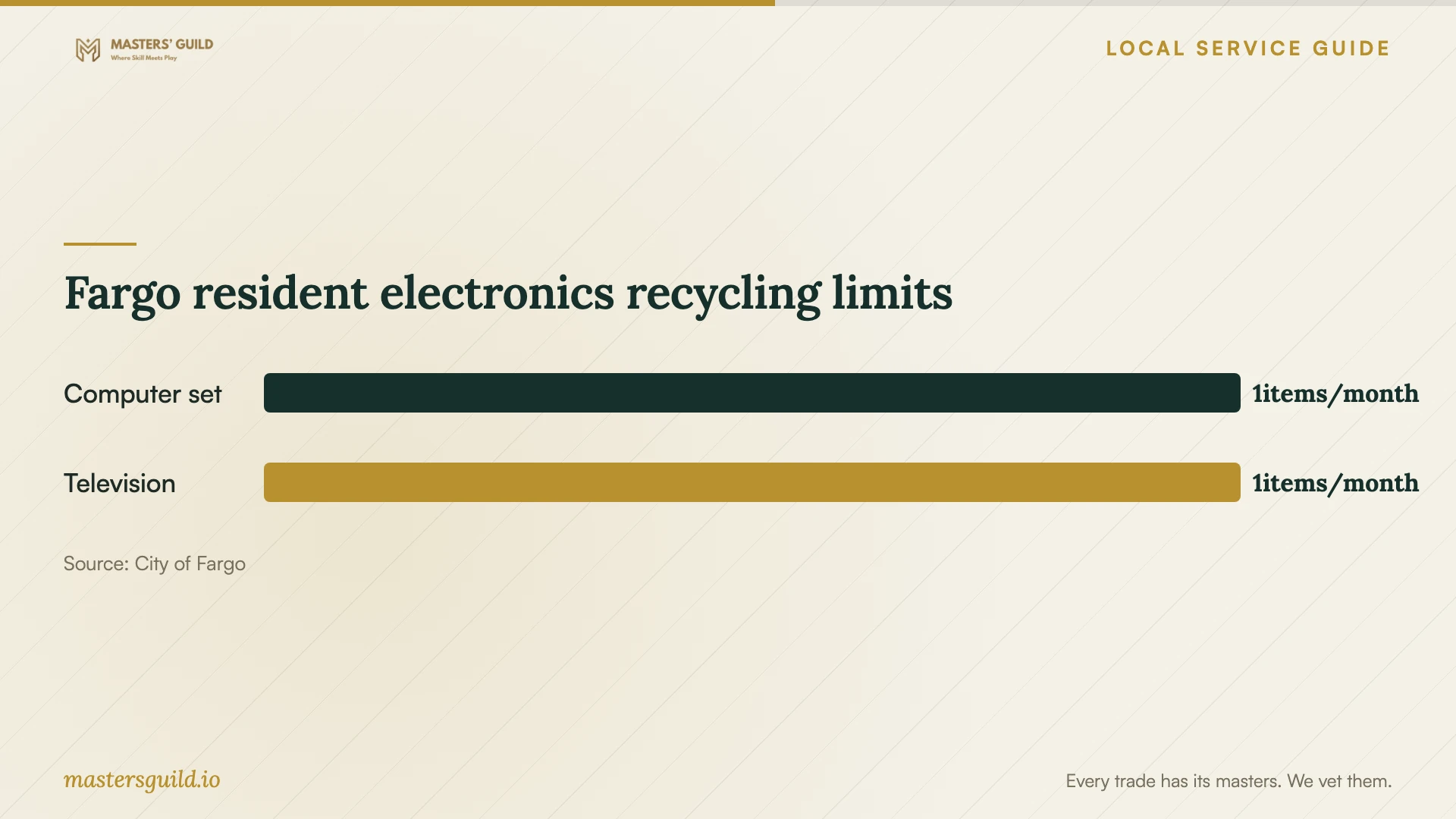
Fargo resident electronics recycling limits
Local details that affect your job
Fargo's recycling allowance applies to residents
The City of Fargo says its household hazardous waste facility accepts one computer set, including tower, monitor and accessories, plus one television per resident per month from Cass County and Valley City residents throughout the year. A business owner should confirm a commercial disposal arrangement rather than assume this resident allowance covers office equipment. The page does not establish secure data destruction, so arrange data handling before surrendering storage devices. [1]
North Dakota insurance businesses need incident documentation
If you operate an insurance agency or another organization licensed by the North Dakota Insurance Department, assess reporting obligations alongside recovery. The Department requires qualifying cybersecurity-event notification within three business days of determining that an event occurred. Its triggers include a North Dakota domicile with required resident notice, or an event involving at least 250 North Dakota consumers that also requires notice to another specified authority. Ask the incident provider to document discovery, affected information and remediation. These requirements concern insurance licensees; they do not establish a deadline for every Fargo business. [4]
Match the provider to the immediate task
| Situation | Help to request | Question before approval |
|---|---|---|
| You have a backup and need files restored | Backup restoration and a usability check | Can you show that the priority files open before closing the job? |
| You cannot access needed files on a device | An assessment with a defined recovery scope | Who performs recovery, and what will I owe for partial or unsuccessful work? |
| You suspect ransomware | Incident response, isolation and recovery on a clean network | How will you preserve evidence and prevent reinfection during restoration? |
| You need ongoing backup management | Documented backup coverage and restore testing | Who monitors failures, controls access and performs scheduled restore tests? |
| An insurance-licensed business has a cyber incident | Incident investigation and reporting documentation | Can you supply the facts needed to assess North Dakota's notification triggers? |
Your hiring checklist
- List affected devices, missing folders and the files you need first.
- Record the symptoms and steps you have taken.
- Identify existing backups and locate encryption recovery keys.
- Get a written scope, approval limit and partial-recovery terms.
- Confirm custody, subcontracting, return delivery and retained-copy deletion.
- Assign an authorized person to check recovered files.
- Require a demonstrated restore and written backup instructions.
- Confirm data destruction and the applicable equipment disposal route.
Frequently Asked Questions
Can I restore a backup myself?
Consider it if you know the restore procedure and can check the result. For suspected ransomware, involve your incident response provider first. CISA recommends restoring on clean systems and taking care to avoid reinfection during recovery. [2]
Should I leave my external backup drive connected?
CISA advises disconnecting an external drive when you are not backing up data, because ransomware can reach and corrupt connected backups. Ask your installer to explain how you will make frequent copies while following that precaution. [3]
Does Fargo electronics recycling include secure erasure?
The city's cited page describes electronics acceptance and resident limits, but it does not establish an erasure service. Ask your recovery provider to arrange and document erasure or destruction before disposal, and confirm whether the receiving facility accepts business equipment. [1]
How should I agree on a recovery deadline?
Request separate dates for assessment, quote approval, recovery and return delivery. Explain which files you need first and ask whether the provider can deliver those before the remaining work. Have the provider state dependencies and update arrangements in writing.
Sources and scope
This guide combines the sources below with practical planning guidance. Figures apply to the stated geography and period; request a written quote for your property.