
Local service guide
Art Instruction in El Paso: Choosing Lessons
Choose Art Instruction in El Paso by matching your goal, age group and schedule before committing to a course or private instructor. The El Paso Museum of Art offers children’s classes for ages 6 to 13 and classes for teens and adults, with materials included in those class categories. For individual feedback or lessons at home, ask a prospective instructor for a lesson plan, relevant teaching examples and a written total price. Compare that proposal with the museum’s course format and cancellation terms. [1] [2]
Choose a format around your goal
Start with something you want to learn: drawing proportions, mixing paint, shaping clay or completing a particular project. Ask the instructor how they would teach that skill and how much lesson time you would spend practicing. If you want individual critique, ask how the instructor handles feedback and whether you can bring work made outside class.
EPMA combines gallery exploration with studio work in its children’s and teen/adult classes. Its workshops include gallery tours, discussions and studio time, and the museum welcomes beginning and advanced students to workshops and master classes. Choose this approach if you want to connect looking at art with making your own; confirm the specific medium and prerequisites before enrolling. [1]
For private instruction, describe your preferred medium, current experience and desired location. Ask whether the instructor offers the format you need, then agree on an initial lesson before purchasing a longer package. For siblings or friends learning together, ask how the teacher would handle different skill levels.
Compare total costs before paying
Check EPMA’s current tuition before enrolling, and request a written quote for private lessons. Compare the number of meetings, length of each meeting, supplies, equipment access and any charges for travel or finished-work collection.
EPMA states that children’s and teen/adult class tuition includes materials, and its camp FAQ says the museum supplies camp materials. Ask about supplies for your selected workshop or private lesson. For ceramics, ask whether the quoted amount covers clay, glazing and firing, and when you can collect your work. [1] [2]
Read cancellation terms against your household schedule. EPMA does not offer participant refunds, but says participants may receive credit toward another class or camp, usable within one year. If the museum cancels a class, it provides a full refund. For private lessons, ask about notice periods, rescheduling, missed meetings and package expiration before paying. [2]
Check the teacher’s fit for your medium
Ask for examples of the instructor’s work in the medium you want to study and examples of how they teach learners at your level. Describe the kind of help you need, such as demonstrations, guided exercises or critique. For a child, ask about experience teaching that age group and how the instructor responds when a student needs a break.
EPMA’s faculty page gives you specific backgrounds to compare. Aryk Gardea has training in ceramics, painting and sculpture and teaching experience at museum and university levels. Alexis Ruiz studied printmaking and graphic design and teaches printmaking at the museum. Angie-Michelle Barraza’s listed experience includes painting, drawing, mixed media and art jewelry. Use those biographies to prepare questions, then confirm who will teach your selected course. [4]
Plan attendance and the lesson space
Check each meeting against school, work and transportation commitments. As of October 14, 2026, EPMA listed Saturday painting for teens and adults and ceramics open studio from October 31 through December 5, both from 10 a.m. to 1 p.m. Its Sunday pottery wheel workshop, October 25 through November 29 from 11 a.m. to 2 p.m., carried a sold-out notice. Confirm current availability and ask whether the course includes any skipped dates. [3]
For lessons at home, agree on the work area before the instructor arrives. Ask about table space, lighting, water access, floor protection and cleanup. Confirm who brings equipment and where wet work can dry. If the learner is a child, agree on adult presence, breaks and communication with the parent.
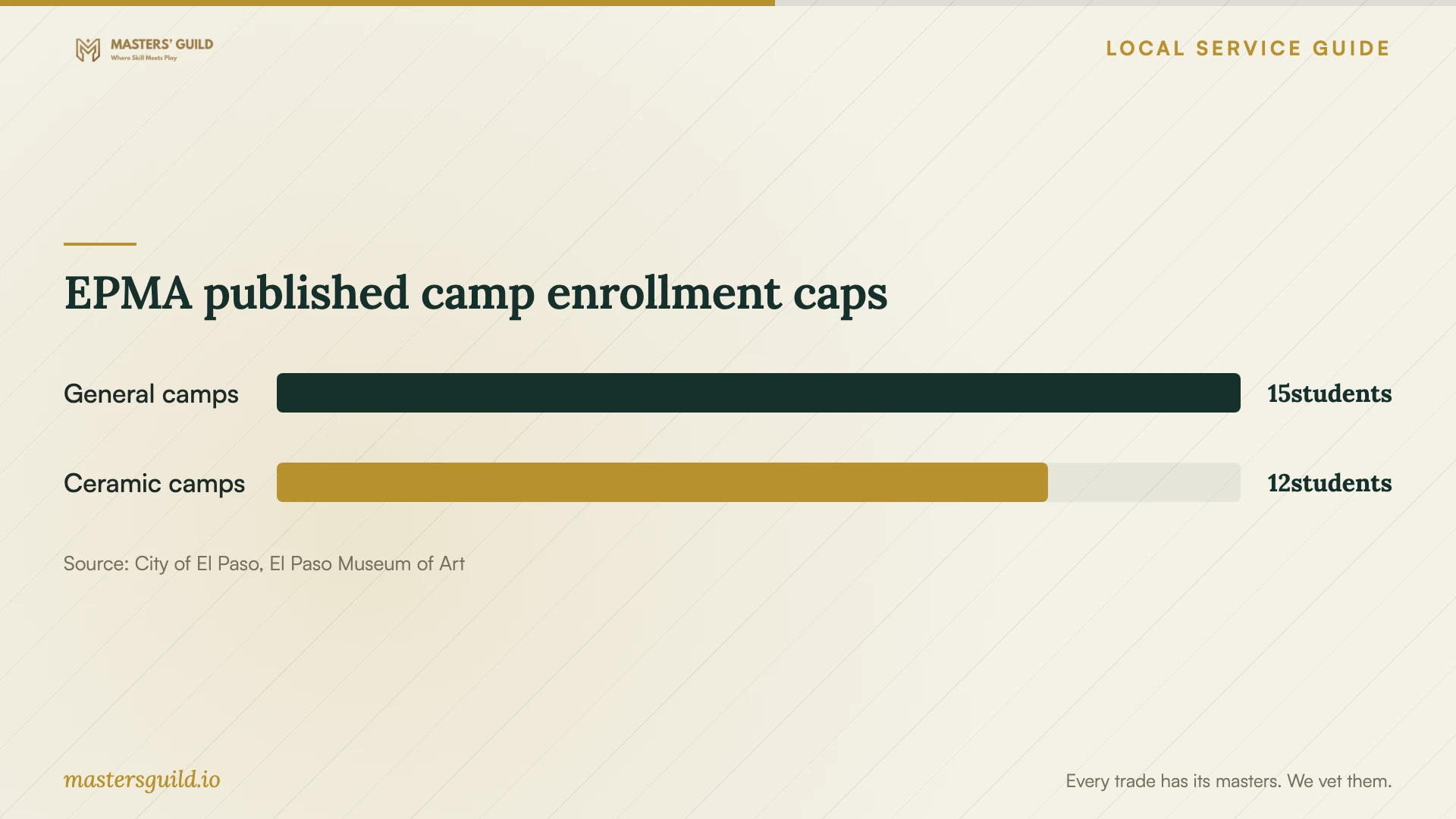
EPMA published camp enrollment caps
Local details that affect your job
Youth scholarships and accommodation discussions
EPMA offers scholarships for any youth class or camp and provides an application through its scholarship page. Ask about the application process before committing your budget. The museum also says it will make reasonable modifications for children with special needs. Discuss your child’s readiness and required support with the education team before registration, and follow the museum’s guidance to choose the child’s designated age group. [2]
Downtown camp pickup requires planning
EPMA describes camp drop-off and pickup on West Main Drive beside the museum, with staff signing children in and escorting them to the Art School. Staff provide this service 15 minutes before and after camp. Parents who escort their children can use the Mills Parking Garage, Convention Center Parking Garage or metered parking. Confirm that these camp arrangements apply to your booking, and name authorized pickup adults on the first day. [2]
Parent attendance and medication affect camp suitability
EPMA does not allow parents to stay in the classroom, and museum staff cannot dispense medication. A parent may come during class to administer it. If your child needs medication or your presence during instruction, discuss those needs before choosing camp and compare the arrangement with a prospective private instructor. [2]
Match the instruction format to your needs
| Your priority | Format to consider | Confirm before committing |
|---|---|---|
| Gallery visits alongside making art | EPMA children’s or teen/adult class | Medium, age group, schedule and current tuition; materials are included |
| A workshop experience | EPMA workshop or master class | Specific topic, prerequisites and materials; beginners and advanced students are welcome |
| Individual feedback or instruction at home | Ask about private lessons | Teaching plan, location, equipment, full price and cancellation terms |
| A youth camp with supervised attendance | EPMA camp | Age fit, support needs and pickup plan; parents cannot stay in the classroom |
Your hiring checklist
- Describe the learner’s age, experience, preferred medium and goal.
- Confirm the named instructor and ask about relevant teaching experience.
- Request a total price with supplies, equipment and travel charges identified.
- Check each meeting date and ask about missed-session arrangements.
- Read refund, credit, rescheduling and package-expiration terms.
- Discuss accessibility, adult presence and medication needs before registration.
- Agree on pickup arrangements or prepare the home work area.
Frequently Asked Questions
Can a beginner take a museum workshop?
EPMA describes its workshops as suitable for beginners and advanced students, and welcomes both groups to master classes. Check the individual offering for its topic, equipment and prerequisites before registering. [1]
Are art supplies included?
EPMA includes materials in children’s and teen/adult class tuition and provides camp supplies. Ask about the specific workshop or private lesson rather than extending that policy to other offerings. [1] [2]
Can I get a refund if my plans change?
EPMA says participant refunds are unavailable, though you may receive credit for another class or camp and must use it within one year. The museum provides a full refund if it cancels a class. Ask a private instructor for their own written terms. [2]
How large are the museum’s camp groups?
EPMA caps camps at 15 students and ceramic camps at 12. These are camp limits. Ask about the enrollment limit for an ordinary class and how the instructor divides demonstration and feedback time. [2]
Sources and scope
This guide combines the sources below with practical planning guidance. Figures apply to the stated geography and period; request a written quote for your property.