
Local service guide
Pest Control Services in Edmonton: Hiring Guide
Arrange Pest Control Services in Edmonton by identifying the pest, requesting a written treatment and follow-up plan, and checking Alberta pesticide credentials before accepting pesticide work. Ask for the business’s pesticide service registration, appropriate applicator certification and current insurance. For a suspected rat, report the sighting to 311 before arranging ordinary rodent treatment. [1] [2] [5]
Identify the pest before choosing treatment
Send the contractor a clear photo, the rooms or outdoor areas affected, and the dates you noticed activity. Describe what you have seen rather than naming a pest you cannot identify. Include earlier treatments and any suspected entry points. Ask whether the contractor needs an inspection before proposing a method.
Edmonton’s insect guidance distinguishes problems that warrant professional help from insects you can manage through cleaning or exclusion. The City recommends professional control for carpenter ants in buildings, food storage and housekeeping for pantry beetles, and sealing gaps and removing stray strawberry root weevils without insecticide spraying. [3]
Avoid spraying unidentified ants while awaiting advice. The City warns that typical insecticides can cause pharaoh ant colonies to fragment and spread. For ants associated with water-damaged wood, ask the contractor to assess the moisture problem as part of the inspection; the City describes moisture ants as a symptom of leakage or condensation. [3]
Check the business and the person doing pesticide work
Alberta requires any business advertising or providing a pesticide service to hold pesticide service registration. The province cancels registration if the service’s insurance lapses or the business lacks a certified applicator with the appropriate certificate class. Request registration details and insurance documentation before accepting the quote. [1]
Ask who will attend, whether that person holds an applicator certificate or works as an assistant, and who supervises the application. Alberta allows certified applicators to supervise authorized and non-certified assistants under specified conditions. Some applications require the certified applicator to remain on site throughout the work. [2]
If you own a rental dwelling or condominium, mention that setting when requesting advice. Alberta requires applicator certification for Schedule 3 pesticide applications in rental dwellings and condominium common indoor and outdoor areas. Ask the provider to explain how its proposed staffing and product use meet the requirements for your property. [2]
Compare the scope and total price
Request a written quote that names the pest, treatment areas, proposed method and included visits. Ask the provider to separate inspection, treatment, monitoring, entry-point repairs and cleanup charges. Confirm whether you are buying one visit or a continuing service, and ask for the total payable amount before agreeing.
Ask what the provider will do if activity continues: inspect again, repeat treatment, change the method or charge for another visit. Request the written conditions of any guarantee, including your preparation duties and exclusions. Compare offers against the same affected areas and follow-up scope rather than choosing from headline prices alone.
For a wasp nest, describe its position and access without disturbing it. The City distinguishes free-hanging nests from nests attached to structures or underground, where removal may not be possible. It advises seeking a professional removal company when in doubt. Ask whether the quote covers treatment, physical removal or both. [3]
Plan access, preparation and follow-up
Get preparation instructions before booking the visit. Ask what you should move, clean, cover or leave untouched, and whether occupants or pets need to leave. Request the proposed product names, applicable re-entry instructions and a contact for questions after treatment. Tell the provider about children, pets and any access constraints.
For suspected wildlife in a roof, wall or under a deck, request a wildlife assessment and ask about removal and entry-point repairs. Edmonton encourages property deterrence or private wildlife and pest control help for small nuisance animals. For problem wildlife, the City directs residents to Animal Care and Control through 311. [5]
Keep the inspection findings, treatment record and follow-up dates together. Ask the contractor which signs you should track and when to report continued activity. Before agreeing to repairs, have the provider identify the openings it proposes to close and explain the order of removal, monitoring and repair work.
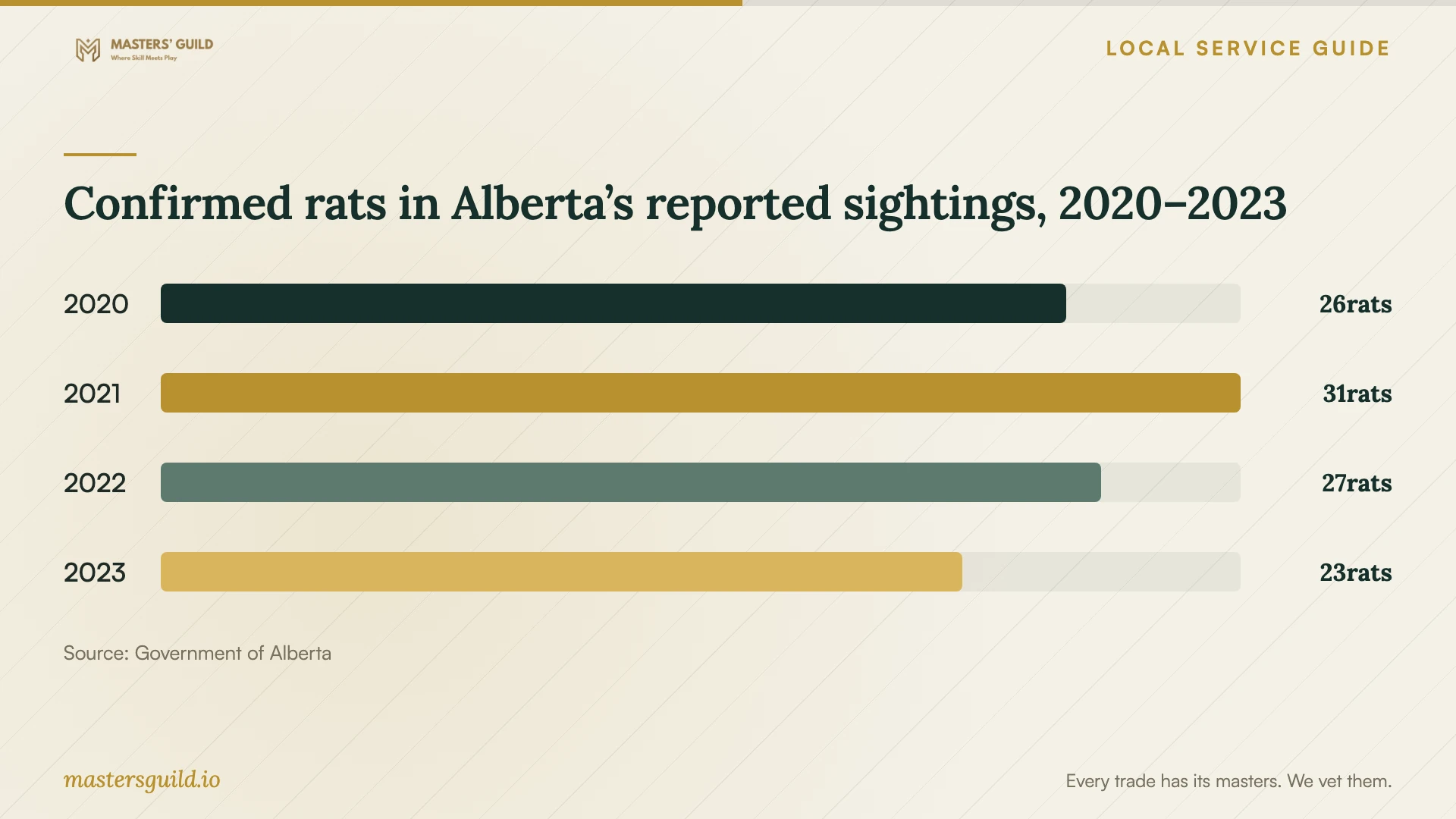
Confirmed rats in Alberta’s reported sightings, 2020–2023
Local details that affect your job
Use the City’s insect identification service
You can submit a description and photo through the City’s insect identification request. For specimen drop-off, use a sealed, see-through hard container labelled with your name and contact information. The location is 12304 107 Street NW, Monday to Friday, 7am to 3pm. The City aims to identify most specimens within three business days. Use this option before accepting a treatment quote for an unfamiliar insect. [3]
Report suspected rats through 311
Edmonton asks residents to report suspected Norway rat infestations to Animal Care and Control at 311. If safe, take a photo and note the location. Alberta investigates reported rat sightings to verify identification and establish control measures; many suspected sightings involve other rodents. Report the suspicion rather than treating a contractor’s initial guess as confirmation. [4] [5]
Route injured wildlife to the right service
For an injured or distressed wild animal, Edmonton directs residents to WILDNorth at 780-914-4118. The City says most wildlife species require a permit for possession, even for a short period. Contact the wildlife service for guidance before attempting to contain an animal or arranging routine pest removal. [5]
Choose the next step for your situation
| Situation | Next step | Question before hiring |
|---|---|---|
| Unfamiliar household insect | Use City identification help before selecting treatment. | Will you confirm the species before recommending a product? |
| Carpenter ants inside a building | Arrange professional assessment and control. | Will you locate the nest and assess affected wood? |
| Suspected Norway rat | Report the sighting to Edmonton 311. | Has anyone confirmed the animal’s identity? |
| Wasp nest attached to a structure or underground | Seek professional advice about treatment and removal. | Does the quote include removal, treatment or both? |
| Small nuisance wildlife on your property | Consider property deterrence or a private wildlife service. | Does your scope include entry-point repairs? |
Your hiring checklist
- Photograph the pest or signs of activity without disturbing a nest or animal.
- List affected rooms, outdoor locations, dates and earlier treatments.
- Request pesticide registration details, applicator or supervision details, and insurance documentation.
- Get a written scope covering inspection, treatment, repairs and included follow-up.
- Confirm the total price and charges for additional visits.
- Obtain preparation, occupant, pet and re-entry instructions before the appointment.
- Keep the treatment record and agree on when to report continued activity.
Frequently Asked Questions
Can I handle pantry insects without paying for spraying?
The City recommends food storage and cleaning for merchant and sawtooth grain beetles and advises against stronger pesticide sprays. For Indian meal moths, it says spraying is neither required nor recommended. Identify the insect first, inspect stored foods and ask for an assessment if you cannot find the source. [3]
Does everyone who applies pesticides need their own applicator certificate?
Alberta allows assistants to work under certified applicator supervision, with restrictions on products and supervision. Ask the business to name the supervising applicator and explain the attending worker’s status. Do not assume that an assistant working without a certified applicator beside them breaches the rules. [2]
Should I request termite treatment for damaged wood?
Get the insect and damage identified first. The City’s guidance states that there are no termites in Edmonton and identifies carpenter ants as a local structural pest. Ask the inspector to document the cause before agreeing to a pest-specific treatment. [3]
Should I accept a recurring pest-control contract?
Ask the provider to explain the purpose of each scheduled visit, how it will assess results, and when you can stop the service. Compare a defined treatment and follow-up plan with the recurring offer. Read cancellation terms and request separate prices for repairs or additional treatments.
Sources and scope
This guide combines the sources below with practical planning guidance. Figures apply to the stated geography and period; request a written quote for your property.