
Local service guide
Mold Removal in Edmonton: Hiring and Repair Planning
For Mold Removal in Edmonton, hire a remediation contractor for dense mould covering more than 3 square metres, and include moisture-source repair in the plan. Alberta Health Services says homeowners can usually clean 1 to 3 small patches, each under 1 square metre, themselves. Consider professional help sooner when occupants have health risks, and flag floodwater or sewage before anyone starts cleanup. [1]
Decide whether to clean or hire
Start by recording the number of patches, their approximate dimensions and the affected materials. Alberta Health Services treats more than 3 patches, or patches measuring 1 to 3 square metres, as a medium amount. Homeowners may handle medium areas with appropriate protection and procedures, but the agency recommends considering a professional. It recommends professional cleanup for medium amounts in rental homes, businesses and public facilities. [1]
Tell the contractor about babies, older adults, breathing problems, mould allergies or a weakened immune system in the household. Alberta Health Services recommends considering professional help for buildings mostly used by people with these health risks. Keep anyone with breathing problems or a weakened immune system away from the cleanup area. [1]
Describe any flood or sewer backup when requesting an assessment. Alberta Health Services warns that these moisture sources may involve harmful bacteria. For mould in heating, ventilation or air-conditioning equipment, contact an HVAC company for help. [1]
Compare quotes for the complete job
Ask each contractor for a written scope that separates assessment, work-area isolation, cleaning, material removal, drying and rebuilding. Identify who will repair the leak or drainage problem, who will coordinate that work, and which tasks the price excludes. Agree on how the contractor will handle additional damage discovered after opening a wall.
Discuss materials before accepting a quote for surface treatment alone. Alberta Health Services says workers can clean non-porous materials with soap and water. Porous materials such as carpet, ceiling tiles and drywall usually require removal, although a small amount on drywall may wipe clean without removal. Ask the assessor to identify which materials they plan to retain and why. [1]
Request proof of liability insurance and details of the crew's remediation training. Ask for a written explanation of any testing charge and the decision the result would inform. Alberta Health Services usually discourages air testing for mould, especially when you can see growth. [1]
Prepare the home before cleanup
Agree on access, the work boundary, waste removal and which rooms your household can use. Ask whether you should move belongings before the crew arrives. For more than a small amount of mould, Alberta Health Services advises floor-to-ceiling plastic isolation and sealing air pathways into the work area, including vents and gaps around pipes. [1]
If you handle a small cleanup yourself, follow Alberta guidance: wear a tight-fitting N95 mask, gloves and eye protection; use soap and water on suitable surfaces; bag and seal mouldy waste; and dry the area completely. The agency advises against using biocides such as bleach to clean mould from surfaces. Do not mix cleaning chemicals. [1]
Before anyone cuts or removes older building materials, discuss asbestos with the contractor. Alberta Health Services cautions that some buildings built before the mid-1990s contain asbestos. Ask how the crew will address that concern before disturbing suspect materials. [1]
Plan moisture repairs and completion
For recurring basement dampness, ask the assessor to consider exterior drainage alongside indoor damage. Edmonton identifies settlement of grading beside foundation walls, runoff and snowmelt as possible drainage problems. The City advises homeowners to clear eavestroughs, extend downspouts past the foundation and move snow away from window wells, downspouts and foundation walls during snowmelt. [4]
Request separate, site-specific quotes for remediation, moisture repairs and restoration so you can compare the same work across offers. Ask for an estimated schedule that distinguishes cleanup, drying and rebuilding, and agree on who will coordinate the repair contractors.
Before accepting completion, walk through the work area with the contractor and ask for a record of removed materials, retained surfaces and moisture repairs. Alberta Health Services says the finished area should be clean, dry and mould free. Agree in advance on how the contractor will demonstrate drying and address remaining concerns before rebuilding. [1]
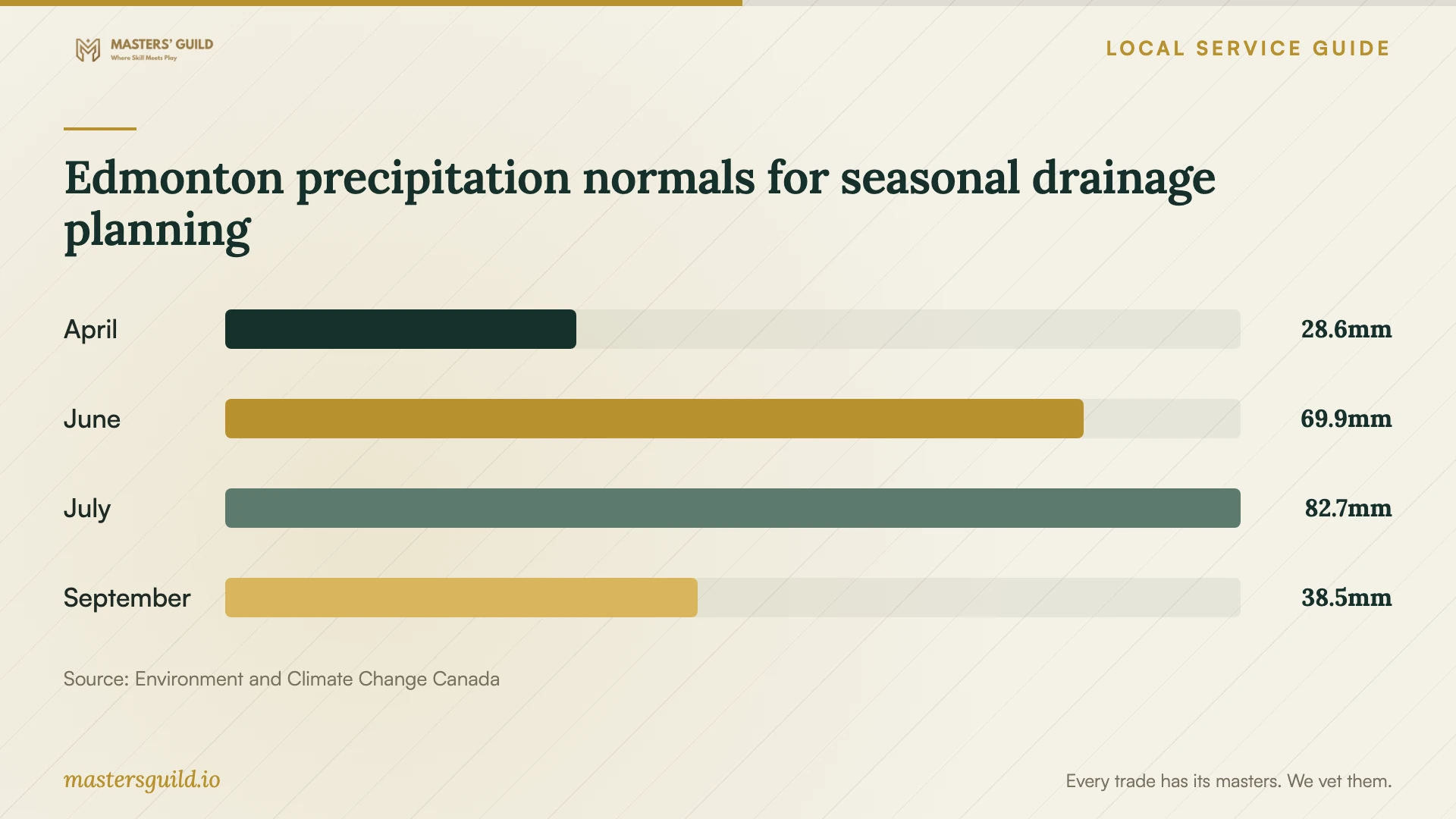
Edmonton precipitation normals for seasonal drainage planning
Local details that affect your job
Backwater-valve funding and paperwork
EPCOR's Edmonton program offers up to $800 for an interior or exterior backwater valve. Eligibility requires no existing valve, no previous subsidy at the address and a separately serviced single-family dwelling or duplex. EPCOR targets homes built before 1989, homes with previous sanitary sewer-backup flooding and areas with neighbourhood flooding. A professional plumber must install an eligible valve model. After installation, submit the application, the City's acceptable green sticker with permit number and a paid installation invoice showing the valve model and a City business licence or GST number. On October 14, 2026, EPCOR's page stated that it had suspended the pre-approval inspection requirement until further notice. Funding remains first-come, first-served without a guarantee; confirm conditions before committing. [2]
Permits for the plumbing repair
Edmonton requires a plumbing permit for installing or altering plumbing equipment, including backwater valves. The City exempts like-for-like fixture replacement or maintenance in the same location. For work limited to plumbing, apply for a standalone plumbing permit; when the project includes other interior or exterior alterations, include it with the appropriate building permit. Contractors must hold a City licence. Obtain required permits before work starts and arrange the listed inspections before closing affected walls. [3]
Drainage help has a specific role
Contact Edmonton's 311 service for lot-grading requirements or suspected drainage-bylaw violations. City lot-grading staff identify violations and explain procedures; they do not design repair solutions or respond to urgent runoff problems or active storms. For an active drainage problem, arrange a private professional. If you own a condominium, raise site-grading concerns with the condo board or management company because the association maintains site grading. [4]
Choose the next step by condition
| Condition | Next step | Planning point |
|---|---|---|
| 1 to 3 patches, each under 1 m² | Consider homeowner cleanup | Use Alberta's protection and cleaning procedures; fix moisture. |
| More than 3 patches or patches of 1 to 3 m² | Consider a remediation contractor | Alberta recommends professional cleanup for medium amounts in rentals. |
| Dense mould over 3 m² | Hire a remediation contractor | Include material removal, drying and moisture repairs in the scope. |
| Flood or sewer-backup moisture | Flag contamination during assessment | Alberta warns that harmful bacteria may be present. |
| Mould in HVAC equipment | Contact an HVAC company | Arrange help for the affected system. |
Your hiring checklist
- Photograph affected areas and record patch dimensions without opening walls.
- Describe leaks, rain-related dampness, flooding or sewage when requesting an assessment.
- Tell the assessor about household health concerns and building age.
- Request an itemized scope, exclusions and a process for approving additional work.
- Identify who will repair the moisture source and coordinate any required permits.
- Agree on room access, belongings, cleanup boundaries and waste removal.
- Request completion records and agree on drying checks before rebuilding.
Frequently Asked Questions
Do I need an air test before booking cleanup?
Alberta Health Services usually advises against air testing, especially when you can see mould. If a contractor proposes it, ask which decision the result would change and request the testing cost as a separate item. [1]
Can the contractor clean mouldy drywall?
Alberta guidance says porous materials usually need removal. A small amount on drywall that wipes clean with soap and water may not require removal. Ask the assessor to explain the condition of the material and the proposed treatment. [1]
Does the backwater-valve subsidy pay for mould removal?
EPCOR describes the subsidy as assistance for backwater-valve installation. Budget remediation separately. The installation subsidy is up to $800 and depends on eligibility, documentation and available funding. [2]
Who should I contact about mould in a rental?
Alberta Health Services advises tenants to speak with their landlord about mould or moisture. For unresolved health concerns in rental homes, contact Environmental Public Health. The agency recommends professional cleanup for medium amounts of mould in rental homes. [1]
Sources and scope
This guide combines the sources below with practical planning guidance. Figures apply to the stated geography and period; request a written quote for your property.