
Local service guide
Lawn mowing in Edmonton: scheduling and hiring
Lawn mowing in Edmonton should start with an agreed cutting height, a schedule that follows grass growth, and a written plan for clippings. Have providers quote the same lawn areas, trimming and cleanup tasks. The City recommends a 6-8 cm cut and removing only one-third of each blade; during peak growth, it advises mowing about every 4-5 days. Choose a provider who explains how they handle rain delays and extra cuts before you commit to a recurring plan. [3]
Compare quotes for the same work
Use property-specific quotes to set your budget. Send each provider photos of the front, back and side lawns, along with approximate lawn dimensions and gate width. Identify slopes, steps, narrow passages and areas you want excluded. Have the provider confirm access before you agree to a price.
Request a written breakdown covering mowing, trimming around fences and beds, edging beside paved surfaces, and clearing clippings from paths. Specify whether the quote includes bagging or removal. List leaf cleanup, weed treatment and other lawn care as separate items unless you want them in the agreement.
Compare the billing terms as well as the visit price. Establish whether you pay per completed visit or under a seasonal agreement, how the provider charges for extra cuts, and what you owe when they skip a visit. For a seasonal proposal, record the included lawn areas, visit arrangements and process for changing the schedule.
Request proof of liability insurance and a written process for reporting damage. Before accepting a recurring plan, review cancellation terms, payment timing and who will tell you when the crew changes its arrival day.
Choose a schedule that follows growth
Choose an interval that lets the crew maintain the agreed height without removing too much grass at one visit. The City recommends mowing to 6-8 cm and cutting off only one-third of the blade length. It advises mowing about every 4-5 days during peak growth, then once a week or less when growth slows. [3]
For a weekly or biweekly proposal, have the provider explain how they will follow the one-third guidance between visits. Agree on who checks growth, who approves an extra cut and what that visit costs. Include a way to reduce visits when growth slows. [3]
Include rain delays in the agreement. The City recommends mowing dry grass because wet grass can clump. Establish whether the provider postpones a wet visit, how they notify you and when they expect to return. Discuss who corrects clumps after a cut. [3]
Separate an overgrown cut from weed control
Photograph tall grass and unfamiliar plants before requesting a cleanup. The City says owners should not have unkempt grass or weeds higher than 10 cm under the Community Standards Bylaw. It distinguishes noxious weeds, which owners must control, from prohibited noxious weeds, which owners must destroy. [1]
Identify suspected regulated weeds before agreeing to treatment. The City says mowing is often enough to control noxious weeds, but prohibited noxious plants require destruction to prevent spread. Use the City's weed lookup or identification service if you are unsure what is growing, then agree on the treatment and disposal scope. [1]
For long grass, the City advises starting with a higher mower setting and mowing again at a lower setting. Request a separate price for that initial work and have the provider explain their cutting approach. Decide how they will handle the clippings before the crew arrives. [3]
Agree on clipping disposal before the visit
Choose whether you want the crew to leave short clippings on the lawn. The City recommends going bagless and explains that clippings return nutrients to the soil. It also recognizes that wet weather or infrequent mowing can make bagging necessary. [3]
For bagged service, name who supplies bags, who moves them to the collection point and who pays for removal. Edmonton accepts ordinary grass clippings in seasonal yard waste collection. Between collection days, residents can add yard waste to the food scraps cart with the lid closed or take it to an Eco Station. [4]
Keep regulated weeds separate from ordinary clippings. The City directs residents to put regulated or noxious weeds in the black garbage cart, not the green food scraps cart or home compost. Tell the provider about suspected weeds before they mix material together. [1]
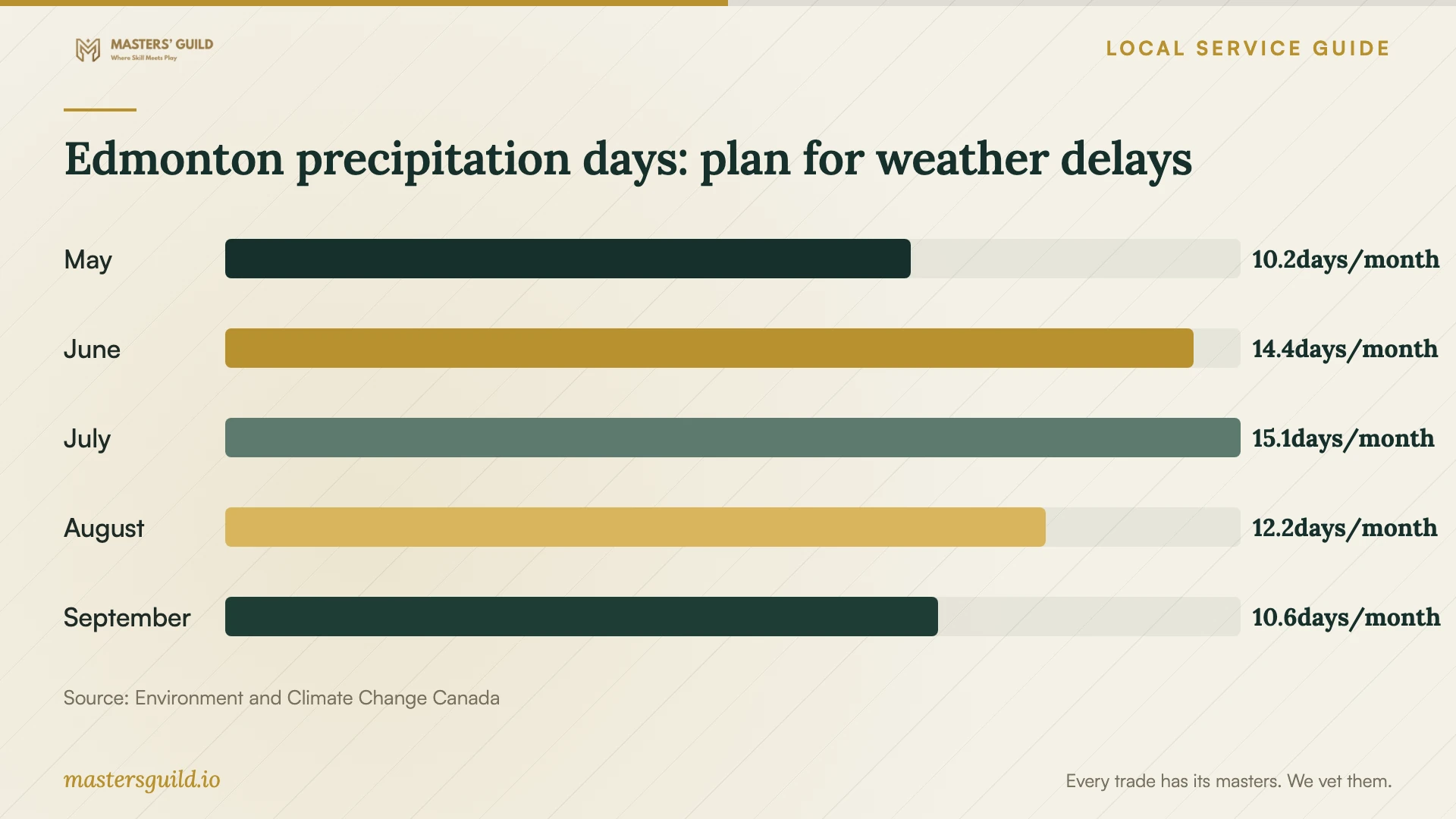
Edmonton precipitation days: plan for weather delays
Local details that affect your job
Set the crew's arrival window
Edmonton permits grass-cutting noise between 7 am and 10 pm, seven days a week. Record a suitable arrival window within those hours, including weekends. The City also regulates noise that disturbs another person's peace, so discuss nearby bedrooms or other noise concerns when arranging access. [2]
Match bagging to your collection dates
Edmonton gives curbside residents two yard waste collection days in spring and two in fall on selected Mondays. Check your address in WasteWise before scheduling bagged cleanup. Use double-ply paper bags or see-through plastic bags, keep each under 20 kg, and set them out by 7 am on your collection day. Have the crew follow those requirements if they leave bags for you. [4]
Identify weeds before choosing disposal
The City does not regulate nuisance weeds such as dandelions on private property, but owners must control or destroy regulated weeds according to their classification. Seek identification help if you are unsure what is growing. The City's identification request provides information and does not initiate a bylaw complaint. [1]
Choose the service arrangement for your lawn
| Your situation | Arrangement to discuss | Confirm before accepting |
|---|---|---|
| Grass grows fast between visits | A flexible recurring schedule; City guidance suggests cuts about every 4-5 days during peak growth | Who approves extra visits and what they cost |
| Grass growth has slowed | A longer interval; City guidance allows once a week or less during slower growth | Who checks growth before skipping a cut |
| Grass is long or wet and clippings clump | A higher initial cut for long grass; delay wet mowing or discuss another pass and bagging | Initial-cut scope, return arrangements and clipping handling |
| You suspect regulated weeds | Identification and a separate control or destruction plan | Separate disposal in the black garbage cart rather than compost or the green cart |
| You want bagged clippings left for collection | Bagging matched to your address's seasonal collection day | Accepted bags, bag weight and who sets them out |
Your hiring checklist
- Send current photos, approximate lawn dimensions and gate width.
- Mark sprinkler heads, hidden obstacles and areas the crew should avoid.
- Record mowing, trimming, edging and paved-surface cleanup in writing.
- Agree on cutting height, visit frequency and approval for extra cuts.
- Choose whether the crew leaves, bags or removes clippings.
- Set arrival times, rain-delay communication and return arrangements.
- Clear toys and pet waste, secure pets and arrange gate access.
- Review insurance, payment terms, cancellation terms and damage reporting.
Frequently Asked Questions
Is weekly mowing enough?
Check grass growth between visits. Edmonton's guidance recommends mowing about every 4-5 days during peak growth and once a week or less when growth slows. Have the provider explain how they keep cuts within the one-third blade-length limit and arrange extra visits when needed. [3]
Can a provider mow on Sunday morning?
Edmonton permits grass-cutting noise from 7 am to 10 pm, seven days a week. Agree on an arrival time within that window. The City also regulates noise that disturbs another person's peace, so discuss nearby noise concerns with the provider. [2]
Should I pay for bagging every visit?
Decide after discussing the lawn's condition and your disposal preference. The City recommends leaving clippings on the lawn, but notes that wet weather or infrequent mowing can require bagging. Request bagging as a separate quote item and establish who handles the bags. [3]
When should I end a seasonal plan?
Agree on an end date and a process for changing it according to lawn conditions. The Edmonton City climate normals list September 25 as the average first fall frost date, using frost-average observations from 1991-2017. That historical average does not establish a final mowing date for your property or predict this year's weather. [5]
Sources and scope
This guide combines the sources below with practical planning guidance. Figures apply to the stated geography and period; request a written quote for your property.